📋 In this article
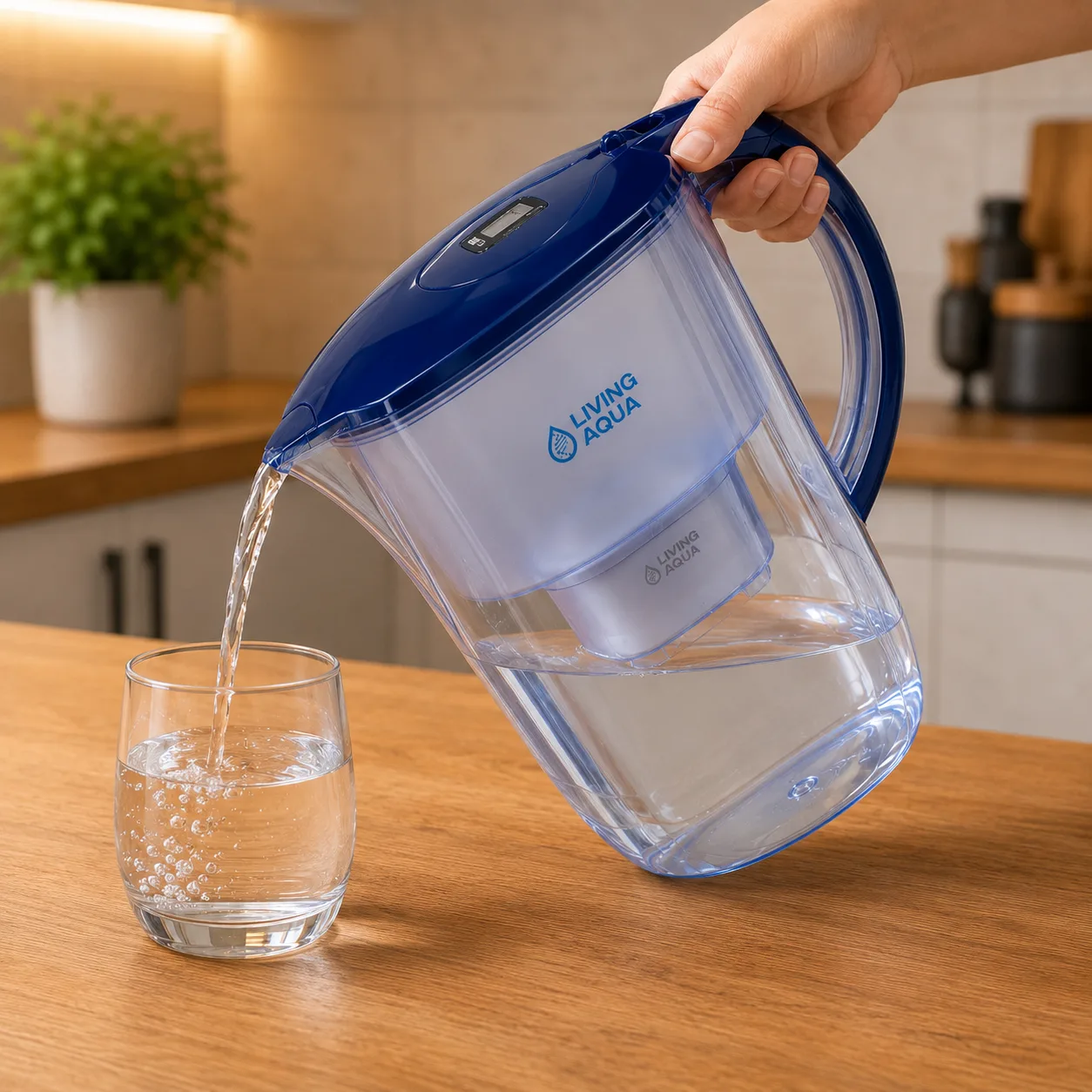
The Living Aqua Hydrogen-Rich Alkaline Water Pitcher works without electricity: as water passes through its four-stage filter, a magnesium–ceramic mineral blend reacts with it, releasing molecular hydrogen (H₂), raising the pH and bringing the oxidation-reduction potential (ORP) down to negative values — in about 2 minutes. Replace the filter every 6–8 weeks or after 300–350 L (79–92 gal) of water, whichever comes first.
It looks like an ordinary filter pitcher, but it does much more than just purify water — all with no electricity, no outlet and no complicated settings. Below: the chemistry, what the numbers mean, first use and daily care, and exactly when to change the filter.
How it works: a mineral filter instead of electrolysis
Most “hydrogen” devices on the market plug into the wall — they split water with an electric current. The hydrogen alkaline pitcher takes a different route: all the work is done by a mineral filter.
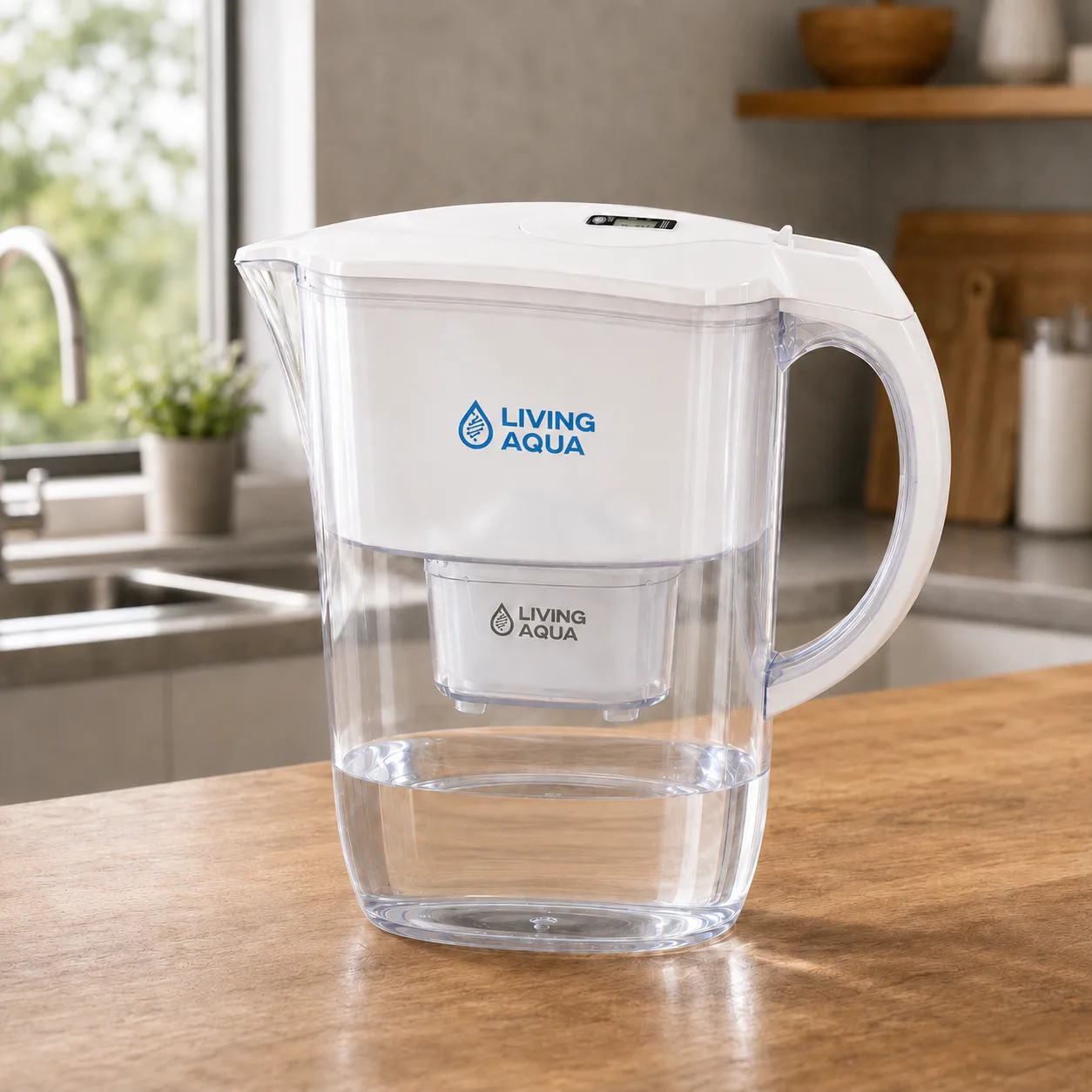
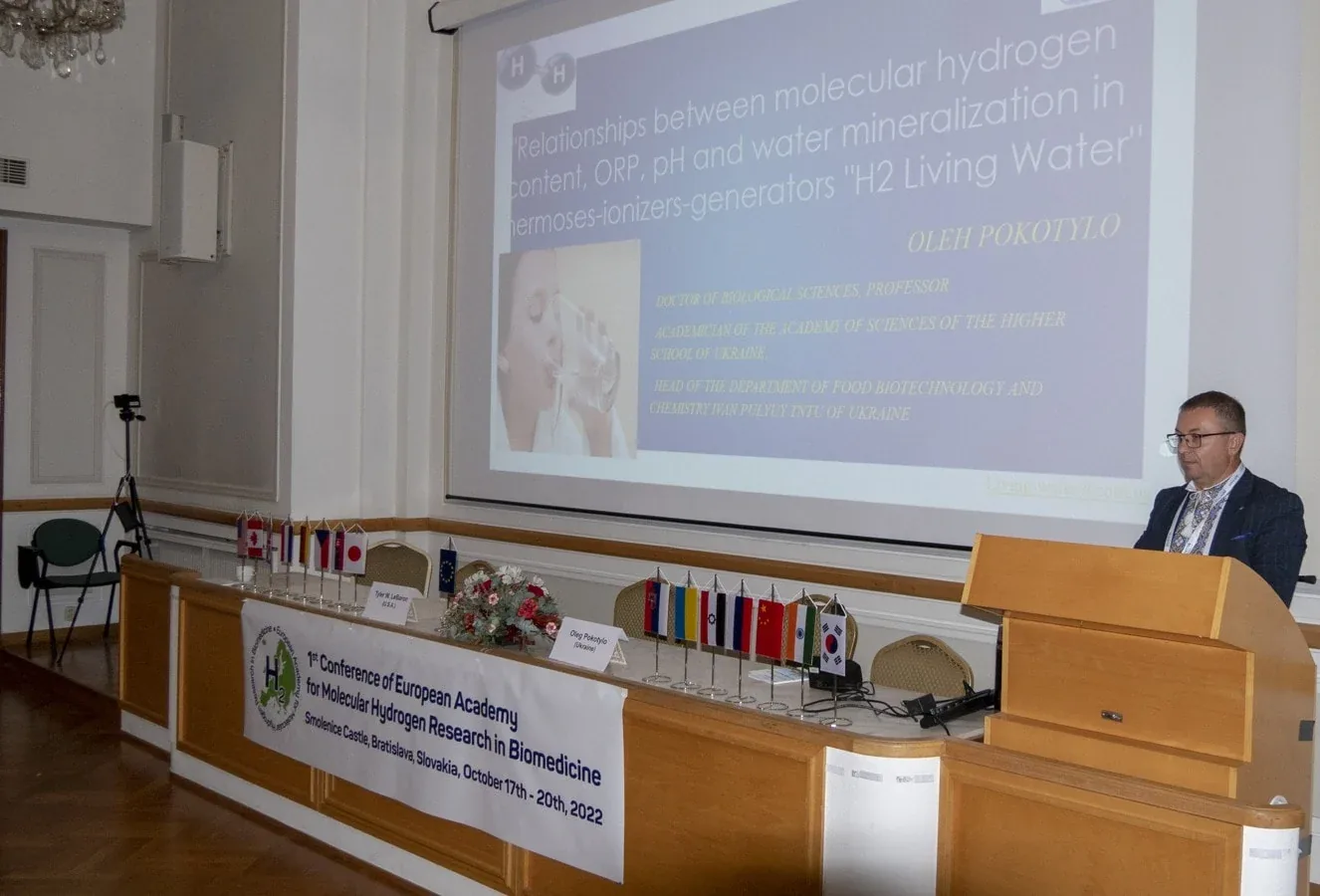
Inside the filter is a proprietary magnesium–ceramic mineral blend developed by Prof. Oleh Pokotylo — Professor, Academician, Doctor of Biological Sciences. When water comes into contact with it, a gentle reaction starts:
- the water is filtered, reducing chlorine and particles, and minerals are put back;
- the pH rises to 7.5–9.5 — the water becomes mildly alkaline;
- molecular hydrogen (H₂) is released and dissolves in the water;
- the ORP goes down to −300 mV — the water takes on reducing properties.
In short: you pour in regular tap or bottled water, wait about 2 minutes — and you have hydrogen water. We explained what makes it special in What is hydrogen water.
The chemistry in one line
The hydrogen comes from a classic reaction between magnesium and water:
Mg + 2H₂O → Mg(OH)₂ + H₂
Magnesium gives up electrons, water molecules split, hydrogen gas is released, and magnesium hydroxide is left behind. That one reaction explains all three changes you can measure:
- Hydrogen: the H₂ it produces dissolves in the water.
- pH: magnesium hydroxide gives water a slight alkaline reaction, nudging the pH up.
- ORP: dissolved hydrogen is an electron donor, so the ORP drops below zero. A 2022 scientific review of electrolyzed water concluded that H₂ — not the alkaline pH — is what makes the ORP negative, and Prof. Oleh Pokotylo’s book makes the same point: the more molecular hydrogen water contains, the more negative its ORP.
It also explains why a filter has a limited life: the magnesium is gradually used up as it makes hydrogen.
Where the idea comes from
In 5 Fundamental Postulations of Drinking Water, Prof. Oleh Pokotylo describes two ways to change water’s ORP: electrochemical activation — what electric ionizers do — and letting water interact with magnesium. He also notes that water with similar properties forms underground, where there are magnesium ores. The same kind of reaction happens naturally in a handful of rare springs known for hydrogen-rich water — in Japan, Mexico, Spain and India.
Why no electricity is an advantage
Electric ionizers make hydrogen by electrolysis: a current splits water at two electrodes, and hydrogen isn’t the only gas that forms. As the book points out, manufacturers add membranes or extra filtration to keep the other gases out of the drinking water, which makes such machines more expensive. Researchers reviewing electrolyzed water also recommend measuring how much H₂ it actually contains, to make sure it’s comparable to the levels used in studies.
The magnesium route skips all of that:
- Safety. No heating elements and no cords — you can put the pitcher anywhere, or even take it with you to a cabin.
- Simplicity. No buttons, no modes: pour in the water, get the result.
- Savings. You don’t pay for electricity, and the only consumable is the replacement filter.
- Reliability. No electronics — nothing to break.
What the numbers mean: pH, H₂ and ORP
Our pitcher page lists typical readings of pH 9.0 · H₂ 0.6 ppm · ORP −300 mV. Here’s how to read them:
- pH 7.5–9.5. Mildly alkaline; the exact figure depends on your source water.
- H₂ 0.3–0.8 ppm on average after about 2 minutes, and 1.0 ppm and above in favorable conditions. For scale, water at room temperature can hold only about 1.6 ppm of hydrogen at most.
- ORP down to −300 mV. Ordinary drinking water usually reads positive — roughly +100 to +400 mV, according to the book.
None of these numbers is fixed: they depend on the quality, mineral content and temperature of your source water. If you want an exact hydrogen figure, use a dedicated dissolved-hydrogen test — researchers caution against relying on ORP-based hydrogen meters. For the difference between pH and hydrogen, see Alkaline water and hydrogen water: what’s the difference; for ORP itself, see Oxidation-reduction potential (ORP): why it should be negative.
How much water the pitcher makes
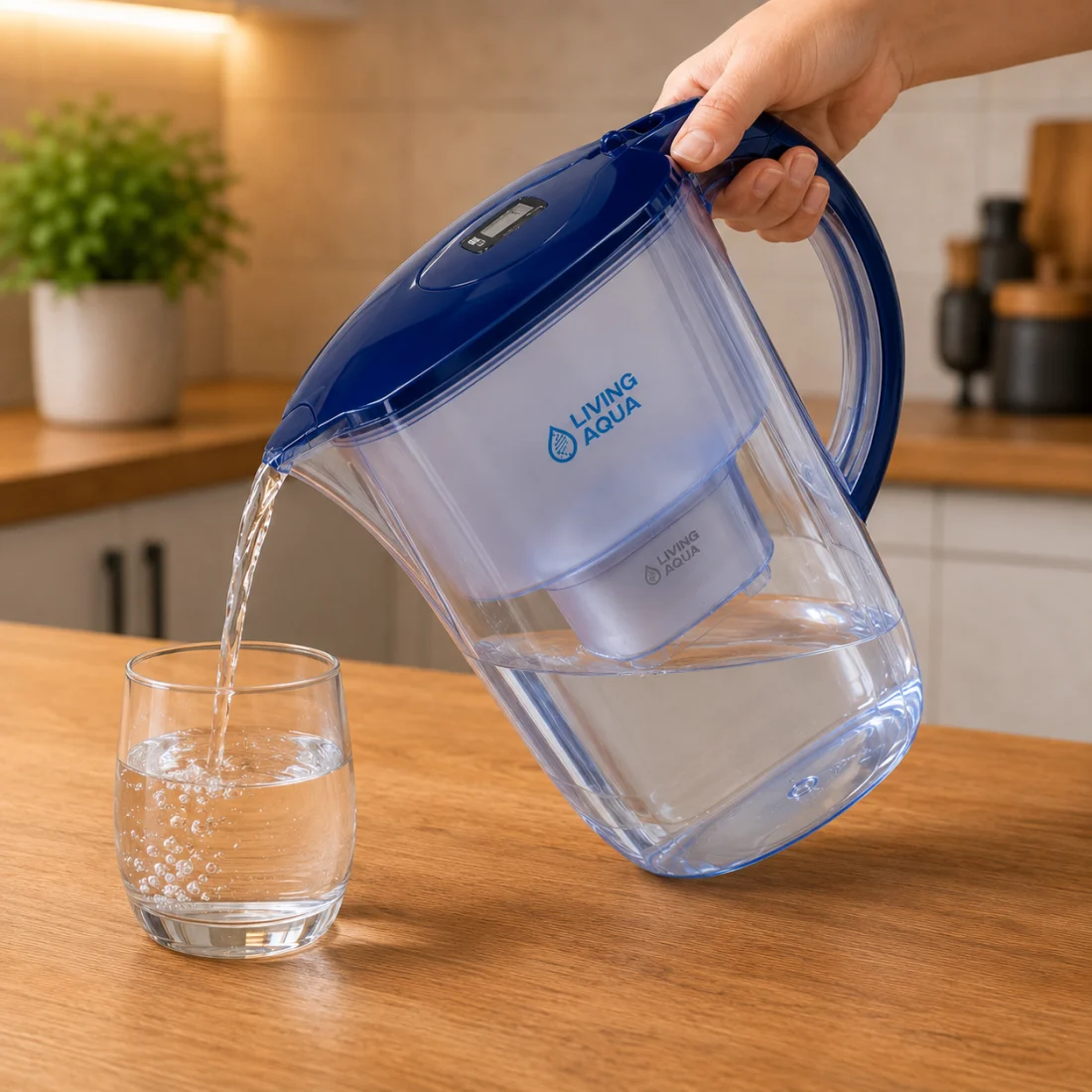
The pitcher holds 3.8 L (128 oz). That’s enough to cover the daily water needs of one or two people: make it in the morning, drink it through the day, refill it in the evening.
One important detail: hydrogen is a volatile molecule. Its concentration is highest in freshly made water, so it’s handy to keep the pitcher within reach in the kitchen and pour a glass right before you drink it. Poured into a closed container, the water keeps its properties for up to 5–6 hours; in an open glass, for about 1 hour.
Step by step: first use and everyday routine
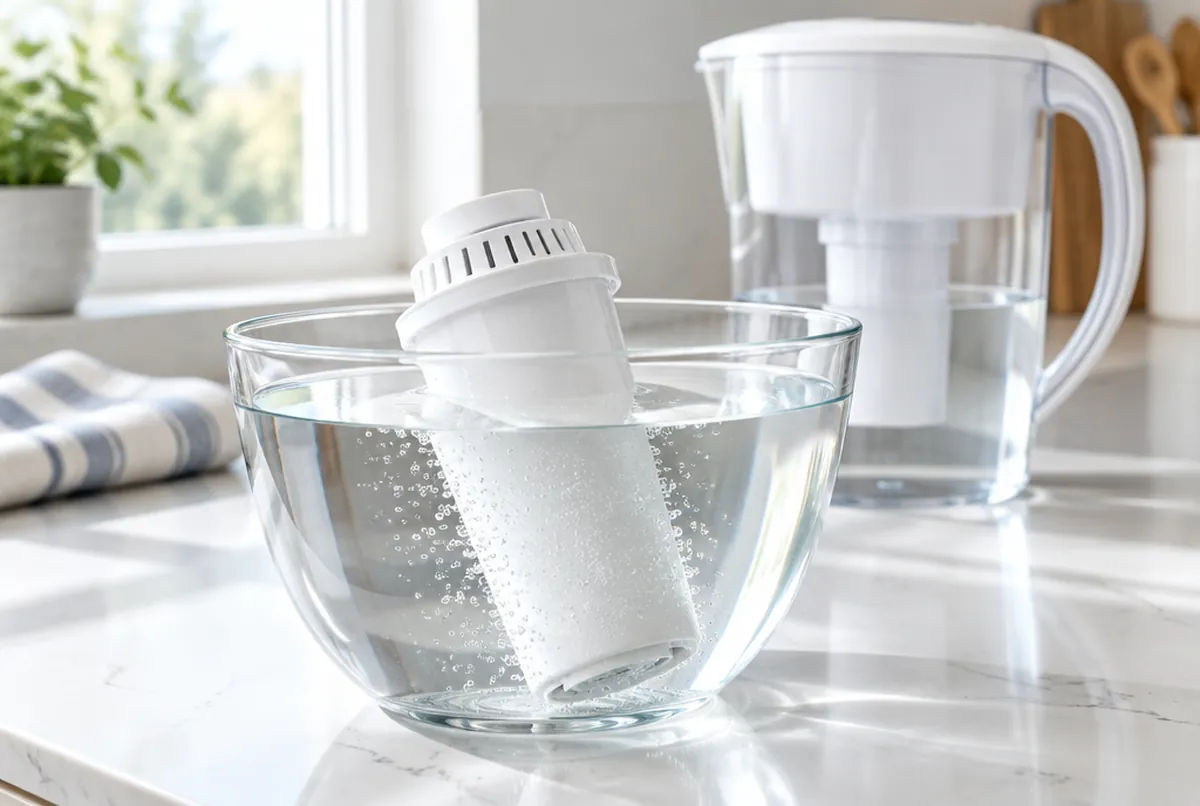
Before the first use
- Rinse the pitcher with warm water, without harsh detergents.
- Soak the filter in clean water for 3–5 minutes, pour that water out, then set the filter in place.
- Fill the pitcher with clean drinking water and wait about 2 minutes while it filters.
- Pour out this first batch — it flushes the new filter’s minerals. From the next fill on, the water is ready to drink.
Every day
- Fill the pitcher with clean drinking water — regular tap or bottled water.
- Wait about 2 minutes while the water filters and takes on H₂.
- Drink it fresh. Pour a glass right before you drink it, and refill as needed.
- Note the date you installed the filter, so you know when the 6–8 weeks are up.
When to replace the filter
The minerals in the filter gradually wear out. The guidelines are simple:
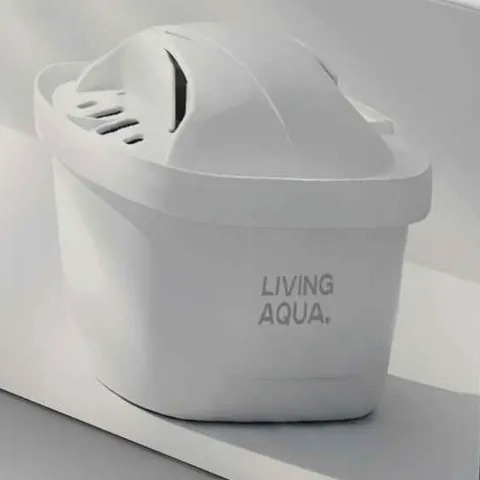
- by time — every 6–8 weeks of regular use;
- by volume — after 300–350 L (79–92 gal) of water.
Whichever comes first is your cue to replace it. The exact service life depends on the quality of your tap water, and a used filter isn’t meant to be reused or taken apart.
Signs it’s time for a new filter
- the water is slower to take on its characteristic “soft” taste;
- your ORP meter (if you use one) shows weaker negative readings;
- more than two months have passed since you installed the filter.
An expired filter simply stops improving the water: it filters less thoroughly, releases less hydrogen, and the pitcher gradually turns into an ordinary carafe. There’s a hygiene reason to stay on schedule, too: the CDC notes that germs can grow in water filters that aren’t properly maintained and replaced, and advises replacing pitcher filters according to the manufacturer’s instructions.
How to replace the filter in 3 steps
- Remove the old filter and rinse the pitcher with warm water, without harsh detergents.
- Soak the new replacement filter in clean water for 3–5 minutes, pour that water out, then set the filter in place.
- Fill the pitcher and pour out the first batch of water after the change — it “flushes” the new filter, so the first batches may look slightly cloudy. After that, use the pitcher as usual.
The whole thing takes about 10 minutes, and most of that is simply waiting.
Common mistakes to avoid
- Stretching the filter past its life. After 6–8 weeks or 300–350 L (79–92 gal), it filters less thoroughly and releases less hydrogen.
- Skipping the soak and the first flush. Soak every new filter for 3–5 minutes, then pour out the first batch after installing it.
- Pouring glasses far ahead of time. In an open glass, the water keeps its properties for only about 1 hour.
- Scrubbing with harsh detergents. Rinse the pitcher with warm water instead.
- Opening or refilling a used filter. Filters aren’t meant to be reused or taken apart.
- Starting with water that isn’t safe to drink. Use treated tap water or bottled water: the CDC notes that most pitcher filters aren’t designed to remove germs. Not sure what’s in your tap water? If you’re on a community water system, your supplier must send you an annual water quality report by July 1 — the EPA calls it a Consumer Confidence Report.
Frequently asked questions
How long does a Living Aqua filter last?
How long does the water keep its properties once poured?
How much hydrogen is in the water?
Does the pitcher need electricity or batteries?
Will the pitcher make unsafe water safe to drink?
How many filters do I need for a year?
Key takeaways
- No electricity: a magnesium–ceramic blend reacts with water to release H₂, raise the pH and push the ORP negative in about 2 minutes.
- Typical readings are pH 9.0 · H₂ 0.6 ppm · ORP −300 mV, depending on your source water.
- The pitcher holds 3.8 L (128 oz) — enough for one or two people a day. Drink the water fresh.
- Replace the filter every 6–8 weeks or after 300–350 L (79–92 gal), whichever comes first.
- Start with safe drinking water, soak and flush each new filter, and skip harsh detergents.
The pitcher is the easiest way to drink hydrogen water every day without changing your habits: it simply sits in your kitchen in place of a regular filter pitcher — filtered water for tea or soup, and a fresh glass of hydrogen water first thing in the morning. If you’re just getting to know hydrogen water, start with the Living Aqua Hydrogen-Rich Alkaline Water Pitcher — it comes with a filter, so your first 6–8 weeks are covered. And to keep it working steadily, add spare filters so a replacement never catches you off guard.
This article is for general information only and isn’t medical advice. If you have a health condition, ask your doctor how much and what kind of water is right for you.
Sources
- Prof. Oleh Pokotylo. 5 Fundamental Postulations of Drinking Water. Ternopil, 2021 (chapter 5, “Water energy or redox potential”).
- Clark J. Reactions of Group 2 elements with water. Chemistry LibreTexts. chem.libretexts.org
- National Center for Biotechnology Information. Magnesium hydroxide (CID 73981): “Imparts slight alkaline reaction to water.” PubChem. pubchem.ncbi.nlm.nih.gov
- National Center for Biotechnology Information. Hydrogen (CID 783), solubility in water. PubChem. pubchem.ncbi.nlm.nih.gov
- LeBaron TW, Sharpe R, Ohno K. Electrolyzed-reduced water: Review I. Molecular hydrogen is the exclusive agent responsible for the therapeutic effects. International Journal of Molecular Sciences. 2022;23(23):14750. PubMed
- LeBaron TW, Sharpe R, Ohno K. Electrolyzed-reduced water: Review II. Safety concerns and effectiveness as a source of hydrogen water. International Journal of Molecular Sciences. 2022;23(23):14508. PubMed
- Centers for Disease Control and Prevention. About choosing home water filters. 2024. cdc.gov
- Centers for Disease Control and Prevention. Preventing waterborne germs at home. cdc.gov
- U.S. Environmental Protection Agency. CCR information for consumers. epa.gov
A Ukrainian manufacturer of hydrogen water devices.
Found your routine? We’ve got the device
Pitchers, discs and insulated bottles of our own making — no electricity needed, backed by lab test reports.
Read next