📋 In this article
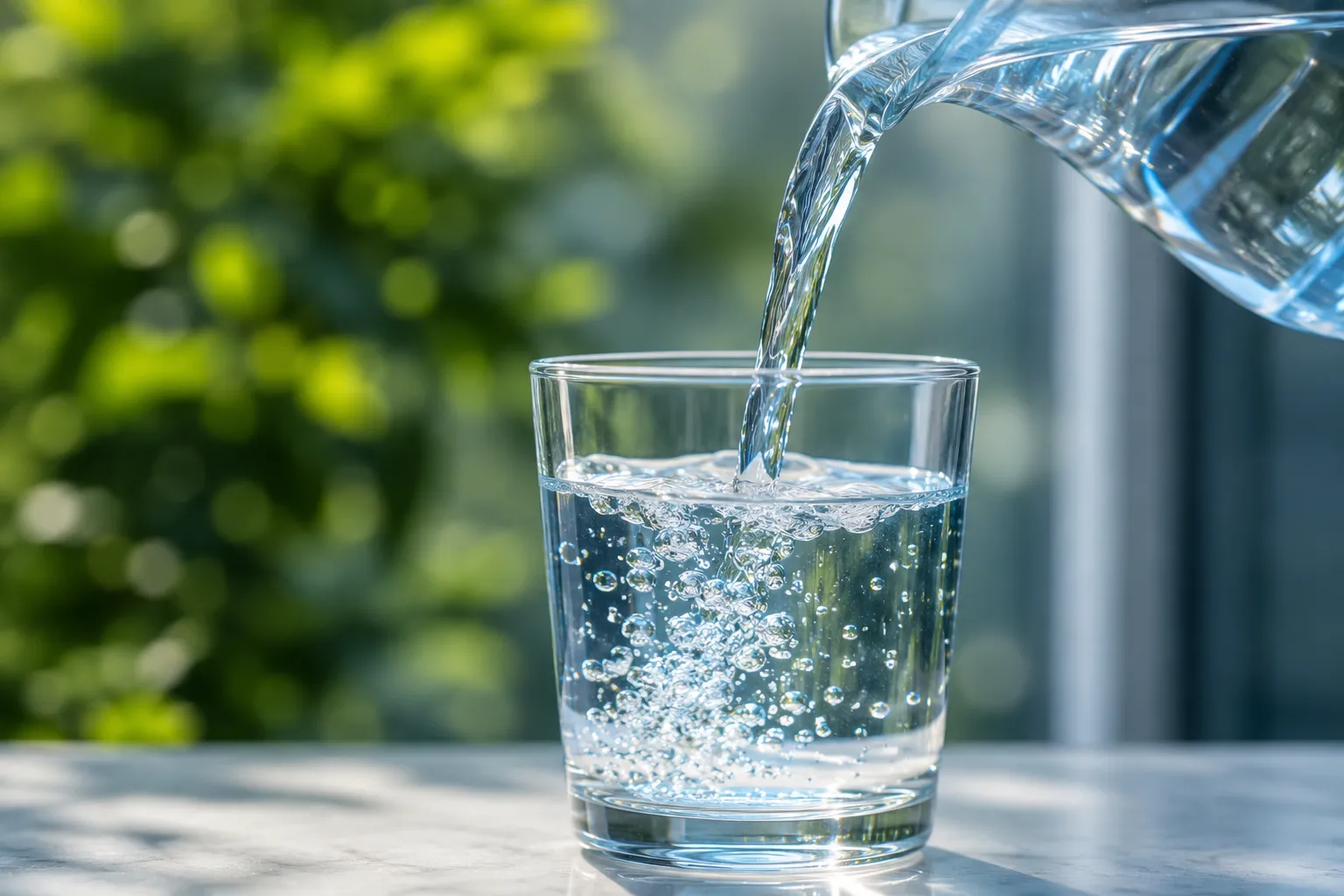
Hydrogen water is ordinary drinking water with free molecular hydrogen (H₂) dissolved in it — much the way sparkling water holds dissolved carbon dioxide. Free, that is — not the hydrogen tightly bound to oxygen in the H₂O molecule. These are fundamentally different states, and it’s free hydrogen whose effects researchers around the world are studying.
The short version: H₂ is studied as a selective antioxidant, the research is promising but young, and the gas escapes easily — so how you make and drink it matters.
Why the hydrogen in H₂O “doesn’t count”
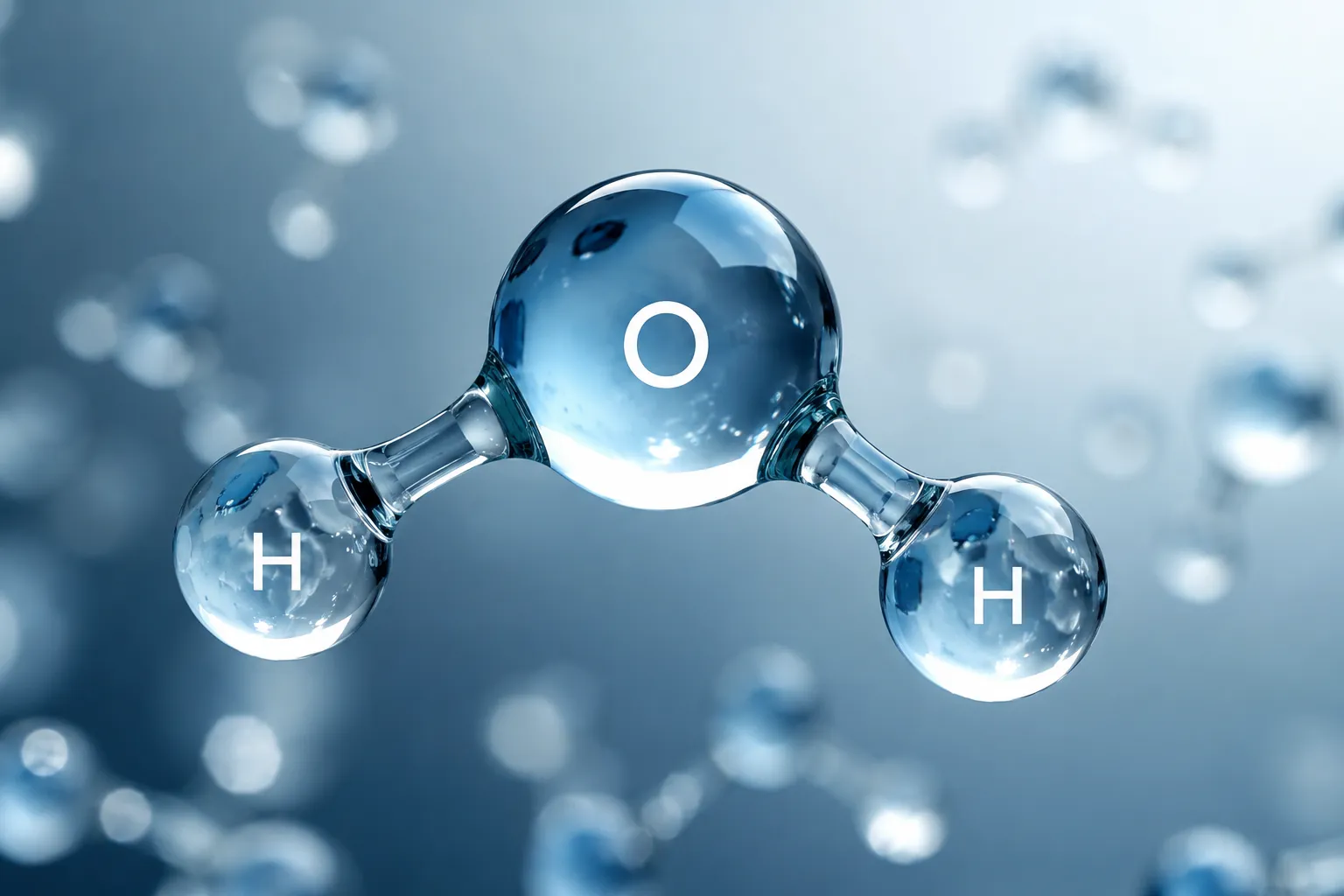
In ordinary water, the hydrogen atoms are already taken — together with oxygen, they make up the water molecule. The body can’t use them as an antioxidant. Dissolved molecular hydrogen, H₂, is different: it passes freely through cell membranes, reaching places that larger molecules have trouble getting to.
Hydrogen water adds something else: tiny H₂ gas molecules — two hydrogen atoms bonded only to each other — dissolved between the H₂O molecules. However pure plain water is, it doesn’t become hydrogen water on its own.
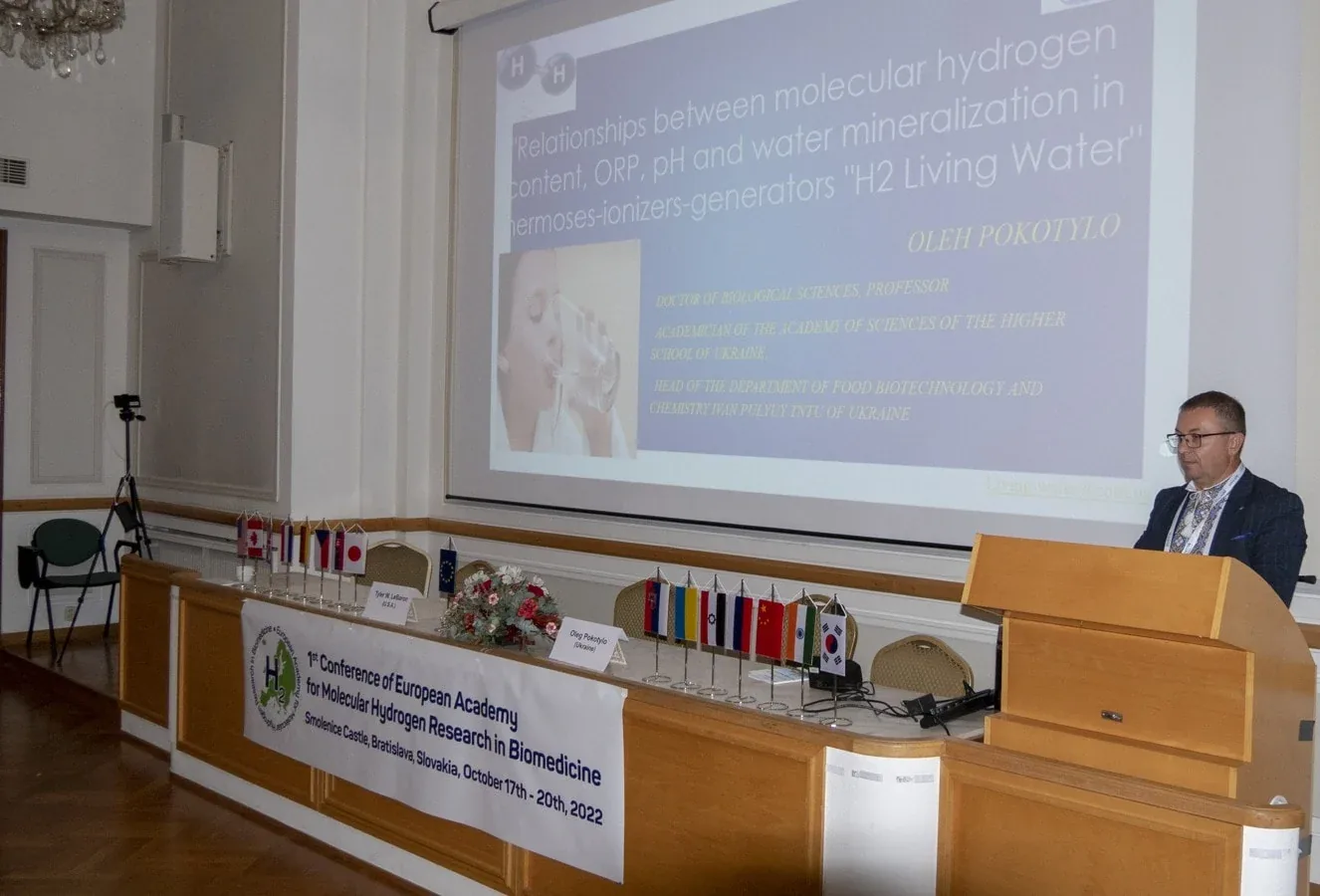
H₂ is also remarkably small. Prof. Oleh Pokotylo — Professor, Academician, Doctor of Biological Sciences — calls hydrogen “the smallest and most common molecule in the universe” in his book 5 Fundamental Postulations of Drinking Water.
How molecular hydrogen works
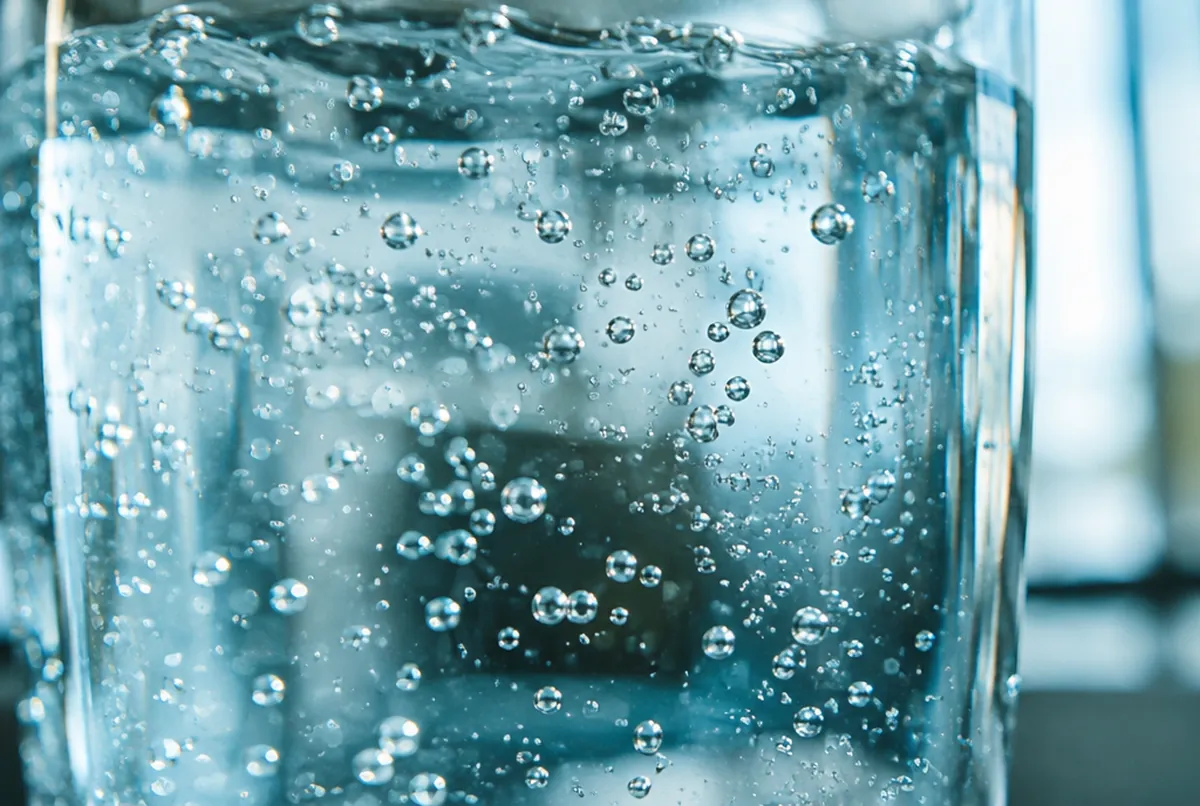
The core idea is simple: molecular hydrogen is studied as a selective antioxidant. Research suggests it neutralizes the most aggressive free radicals while leaving alone the ones the body needs to function normally. In short:
- it gets into cells and their structures;
- it is studied for its role in lowering oxidative stress;
- it gives water a negative oxidation-reduction potential (ORP).
What “selective” means
Free radicals aren’t all bad. As the book explains, the body produces them all the time, and some act as regulators of normal metabolism. Trouble starts when the most reactive ones, such as the hydroxyl radical, pile up and damage fats, proteins and DNA — the imbalance known as oxidative stress.
In the 2007 study that launched the field, a team led by Prof. Shigeo Ohta in Japan found that in cultured cells, H₂ selectively reduced the hydroxyl radical — the most cytotoxic of the reactive oxygen species — but did not react with other reactive oxygen species that have normal physiological roles. The team then tested inhaled hydrogen gas in rats. That’s lab and animal work, not proof of benefits in people, but it’s where the “selective antioxidant” idea comes from.
Small enough to reach cells
Because the molecule is so small and carries no charge, it spreads quickly: the 2007 paper credits H₂’s ability to “rapidly diffuse across membranes” for reaching reactive oxygen species inside cells. The book adds that, under certain conditions, H₂ can reach the mitochondria — the cell’s power plants — and even the nucleus.
Supporting the body’s own defenses
Direct scavenging isn’t the whole story. A 2019 research team described H₂ as acting “directly or indirectly by inducing antioxidative enzymes,” and a 2015 review of 321 studies found that scavenging “cannot be held solely accountable” for the reported effects. The book names superoxide dismutase, catalase and glutathione among the body’s own antioxidants that H₂ is studied for supporting.
A negative ORP you can measure
Dissolved hydrogen also gives water a negative oxidation-reduction potential (ORP) — a measurable sign of its reducing (antioxidant) potential that you can check with an ORP meter. Tap and bottled water usually read positive; the book notes that the more hydrogen water contains, the more negative its ORP. More in Oxidation-reduction potential (ORP): why it should be negative.
What the science says — and what it doesn’t
The science is young, but it is growing fast. A 2015 review counted 321 original articles from 2007 to mid-2015 alone, mostly from Japan, China and the United States. Much of the early work came out of Japan — one reason hydrogen water caught on there first.
What the studies look like
The same review is candid: about three-quarters of those articles reported effects in mice and rats, although the number of human trials was growing every year. Hydrogen was given as drinking water, as inhaled gas below 4% or in saline.
Studies in healthy people are fewer and smaller, but they’re the most relevant to everyday drinking:
- Healthy adults. In a 4-week randomized, double-blind trial in Korea, 38 healthy adults drank about 51 oz (1.5 L) a day of either hydrogen water or plain water. Overall antioxidant markers didn’t differ between the groups. Still, in participants 30 and older, biological antioxidant potential rose more with hydrogen water, and across the hydrogen group, gene networks tied to inflammatory responses were less active.
- Athletes. In a small crossover pilot with 10 male soccer players, hydrogen water kept blood lactate from rising during heavy exercise, though blood markers of oxidative injury didn’t change. A larger randomized, double-blind Japanese trial with 99 untrained and 60 trained volunteers linked hydrogen water taken shortly before cycling to less perceived fatigue and, in the trained group, better endurance. More in Hydrogen water and sports.
- The bigger picture. A 2019 review proposed that H₂ might act as a “redox adaptogen” for people who exercise — while stressing that more research is warranted.
The honest caveats
Most studies are small and short, results are mixed, and many were done in animals. Even the encouraging human trials measured markers and lab results, not long-term outcomes. That’s why we describe hydrogen water in terms of what research suggests and what’s being studied — never as a treatment.
Hydrogen water isn’t a “magic pill” — it’s a way to support your body every day with better water.
How much hydrogen is in hydrogen water
Hydrogen dissolves only sparingly: at about 70 °F (21 °C), water can hold only about 1.6 mg of H₂ per liter — 1.6 parts per million (ppm). Real-world hydrogen water holds some fraction of that.
You’ll see concentrations written two ways: 1 ppm equals 1,000 parts per billion (ppb). For reference:
- Prof. Oleh Pokotylo’s book lists 0.4–0.8 ppm of molecular hydrogen among its markers of quality everyday water, along with a negative ORP of about −100 to −300 mV.
- Our hydrogen water discs typically reach about 800 ppb (0.8 ppm) five minutes after going into still water, with peaks of up to 1,000 ppb.
- Water from our hydrogen-rich alkaline pitcher averages 0.3–0.8 ppm after about 2 minutes and can reach 1.0 ppm and above in favorable conditions.
Actual numbers depend on your water’s temperature and mineral content, and they drop as the gas escapes.
How to make hydrogen water at home
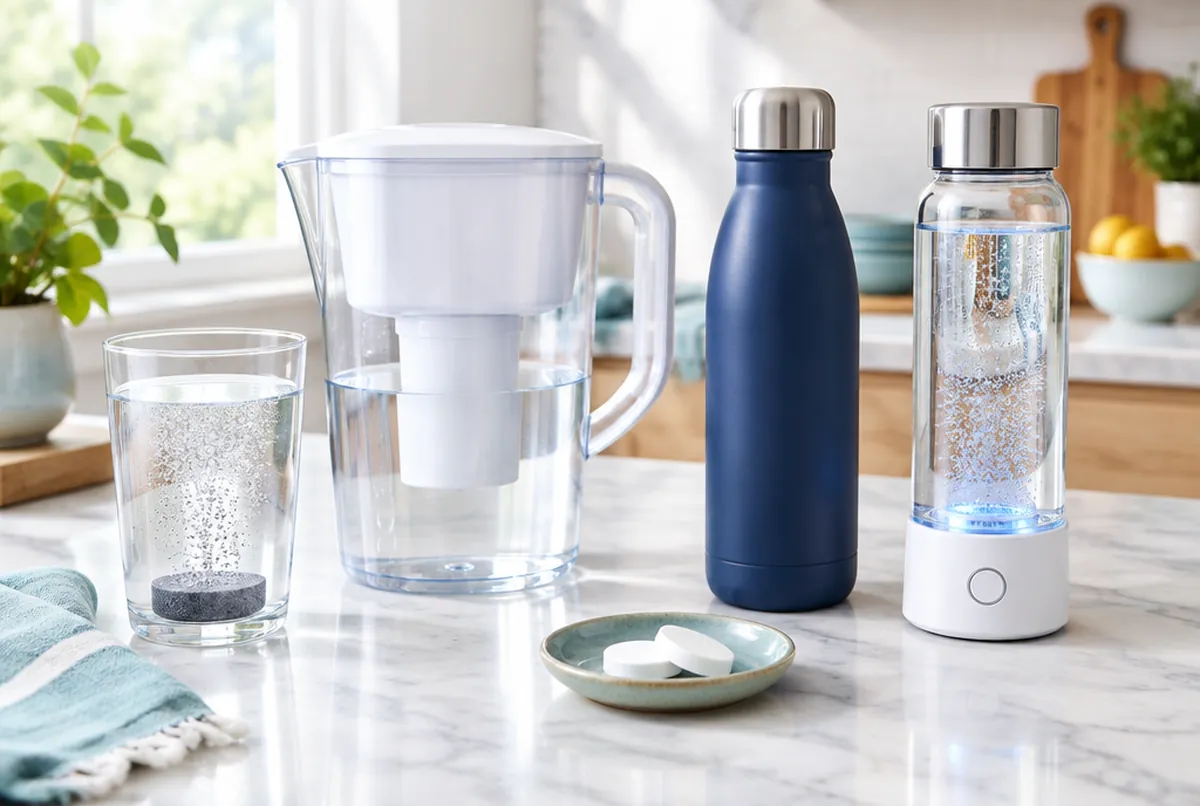
There are four common routes:
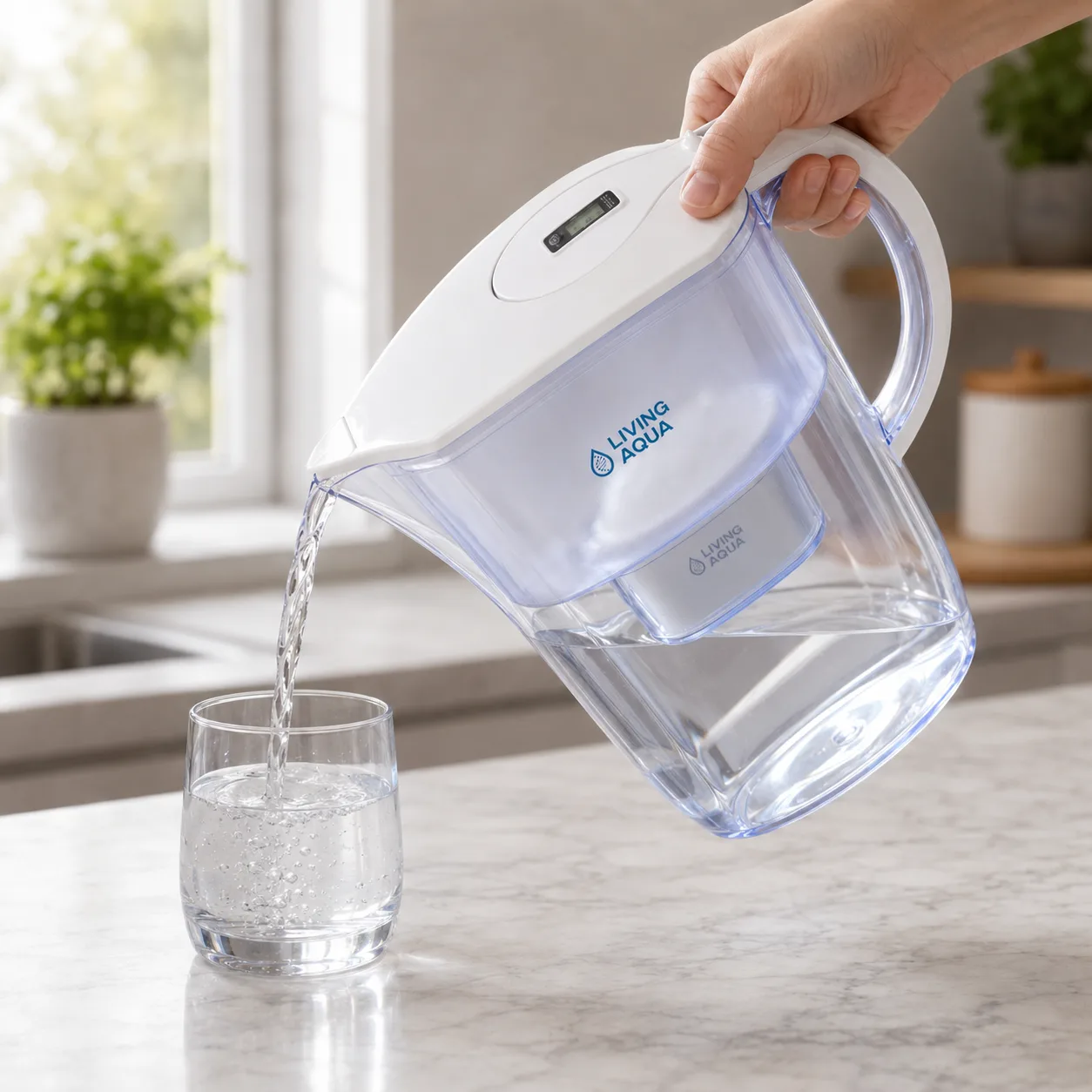
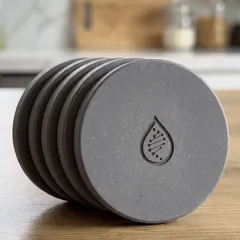
- Magnesium-based devices — discs, sticks and mineral filters. Magnesium reacts with water and releases H₂, with no electricity. Our discs and pitcher both work this way.
- Electrolysis generators — bottles and countertop machines that split water with an electric current. They need charging or an outlet.
- Tablets — single-use: one tablet makes one glass.
- Ready-to-drink hydrogen water in sealed pouches or cans.
Hydrogen water discs
Drop a Living Aqua Hydrogen Water Disc into a glass, bottle or small pitcher of clean, still drinking water — cold or room temperature. Fine bubbles appear on the disc within 2–3 minutes; wait 5 minutes and drink. Each disc lasts 2–3 months, or 53–58 gal (200–220 L) of water. The disc isn’t a filter, so use water that’s already safe to drink.
Hydrogen-rich alkaline pitcher
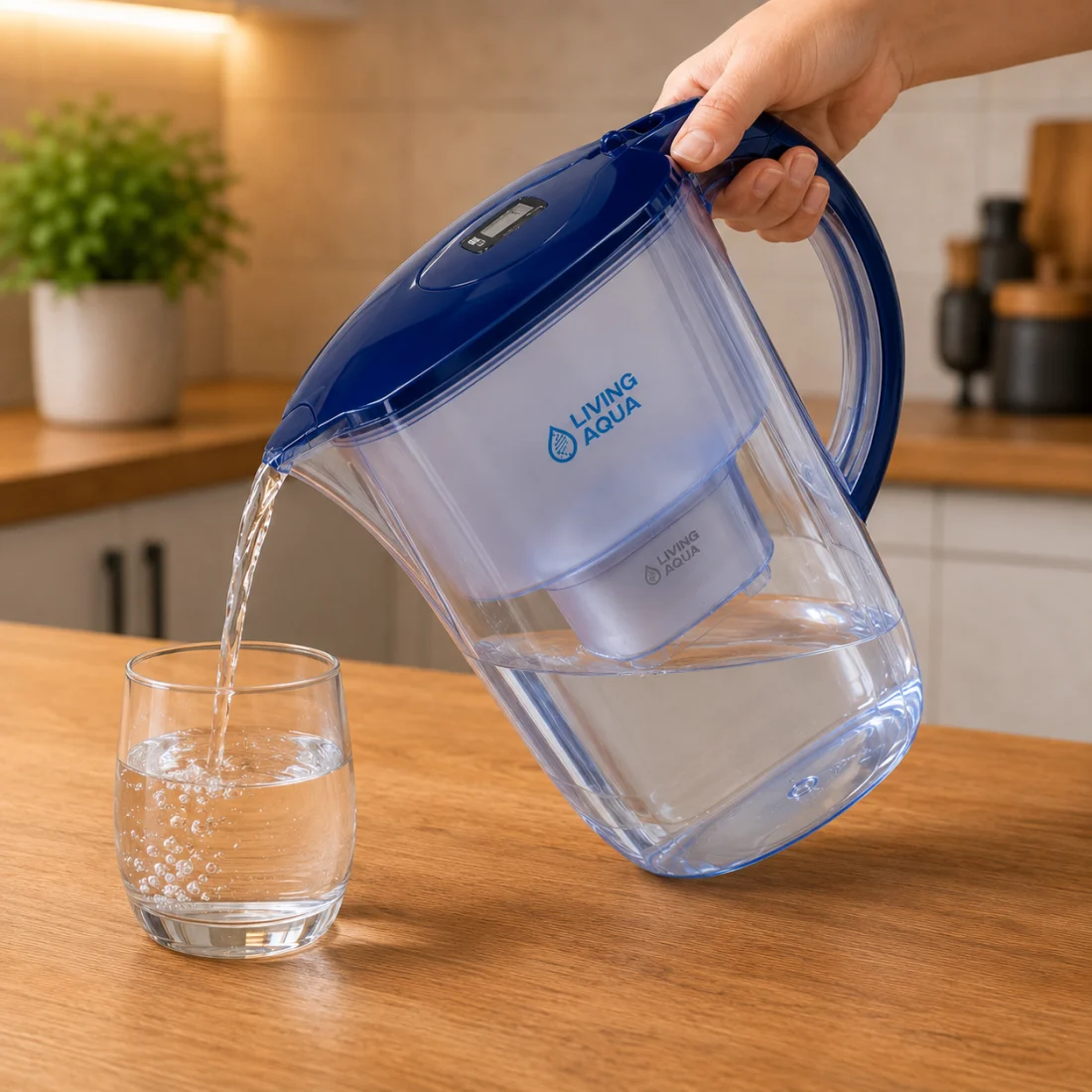
If you drink tap water, the Living Aqua Hydrogen-Rich Alkaline Water Pitcher filters it through four stages in about 2 minutes and infuses it with molecular hydrogen at the same time. It holds 3.8 L (128 oz), and one filter lasts 6–8 weeks, or 300–350 L (79–92 gal). We explain the chemistry in How the hydrogen alkaline pitcher works.
How to drink it so the hydrogen doesn’t escape
Hydrogen is the lightest gas there is, and it slowly leaves any open container. A few habits keep more of it in your glass:
- Drink it fresh. In an open glass, hydrogen water keeps its properties for about 1 hour.
- Keep it closed. Poured into a closed container, water from our pitcher keeps its properties for up to 5–6 hours.
- Let the disc keep working. A disc in a closed bottle keeps generating hydrogen, so hydrogen stays in the water for up to 12 hours. The wide mouth of the Living Aqua Insulated Bottle fits the disc.
- Give the disc still water. Use it only in still drinking water up to 122 °F (50 °C) — tea, coffee, juice and carbonated drinks make it ineffective.
For timing and daily amounts, see How to drink hydrogen water.
Common myths about hydrogen water
“All water already contains hydrogen.” True — but only locked inside H₂O molecules. Hydrogen water has extra, free H₂ dissolved in it — a different thing.
“Alkaline water and hydrogen water are the same.” pH and dissolved hydrogen are separate measurements. A 2022 review co-authored by Tyler LeBaron of the Molecular Hydrogen Institute concluded that in alkaline electrolyzed water, H₂ — not the pH — is responsible for both the negative ORP and the effects seen in studies. More in Alkaline water and hydrogen water: what’s the difference.
“Any filter pitcher makes hydrogen water.” According to the CDC, pitcher filters often use activated carbon, mainly to improve taste and smell. Carbon doesn’t add H₂ — hydrogen needs a source, such as a magnesium reaction or electrolysis.
“Hydrogen water is a cure-all.” It isn’t a medicine, and the research is still young. Think of it as better everyday water.
Frequently asked questions
Is hydrogen water the same as alkaline water?
How long does hydrogen stay in the water?
How much hydrogen can water hold?
Is hydrogen water safe to drink?
How can I tell if my water contains hydrogen?
Key takeaways
- Hydrogen water is drinking water with free H₂ dissolved in it; the hydrogen in H₂O doesn’t count.
- H₂ is studied as a selective antioxidant: in lab work, it targeted the most reactive radicals and left useful ones alone.
- The research is growing but young — much of it in animals, plus small studies in healthy adults and athletes.
- Water holds at most about 1.6 ppm of H₂, and the gas escapes from open containers, so drink it fresh or keep it closed.
- At home, magnesium-based discs and filters make hydrogen water without electricity.
Ready to try it? If your water is already filtered, start with hydrogen water discs; if you drink tap water, look at the hydrogen-rich alkaline pitcher. Not sure which fits? Browse our products or reach out — our team will help you choose.
This article is for general information only and isn’t medical advice. If you have a health condition, ask your doctor how much and what kind of water is right for you.
Sources
- Ohsawa I, Ishikawa M, Takahashi K, et al. (senior author: Ohta S). Hydrogen acts as a therapeutic antioxidant by selectively reducing cytotoxic oxygen radicals. Nature Medicine. 2007;13(6):688–694. PubMed
- Ichihara M, Sobue S, Ito M, et al. Beneficial biological effects and the underlying mechanisms of molecular hydrogen — comprehensive review of 321 original articles. Medical Gas Research. 2015;5:12. PubMed
- Mikami T, Tano K, Lee H, et al. Drinking hydrogen water enhances endurance and relieves psychometric fatigue: a randomized, double-blind, placebo-controlled study. Canadian Journal of Physiology and Pharmacology. 2019;97(9):857–862. PubMed
- Sim M, Kim CS, Shon WJ, et al. Hydrogen-rich water reduces inflammatory responses and prevents apoptosis of peripheral blood cells in healthy adults: a randomized, double-blind, controlled trial. Scientific Reports. 2020;10:12130. PubMed
- Aoki K, Nakao A, Adachi T, et al. Pilot study: effects of drinking hydrogen-rich water on muscle fatigue caused by acute exercise in elite athletes. Medical Gas Research. 2012;2:12. PubMed
- LeBaron TW, Laher I, Kura B, Slezak J. Hydrogen gas: from clinical medicine to an emerging ergogenic molecule for sports athletes. Canadian Journal of Physiology and Pharmacology. 2019;97(9):797–807. PubMed
- LeBaron TW, Sharpe R, Ohno K. Electrolyzed-reduced water: Review I. Molecular hydrogen is the exclusive agent responsible for the therapeutic effects. International Journal of Molecular Sciences. 2022;23(23):14750. PubMed
- LeBaron TW, Sharpe R, Ohno K. Electrolyzed-reduced water: Review II. Safety concerns and effectiveness as a source of hydrogen water. International Journal of Molecular Sciences. 2022;23(23):14508. PubMed
- National Center for Biotechnology Information. Hydrogen (CID 783), solubility in water. PubChem. pubchem.ncbi.nlm.nih.gov
- U.S. Food and Drug Administration. GRAS Notice No. 520: Hydrogen gas. 2014. fda.gov
- Centers for Disease Control and Prevention. About choosing home water filters. 2024. cdc.gov
- Prof. Oleh Pokotylo. 5 Fundamental Postulations of Drinking Water. Ternopil, 2021.
A Ukrainian manufacturer of hydrogen water devices.
Found your routine? We’ve got the device
Pitchers, discs and insulated bottles of our own making — no electricity needed, backed by lab test reports.
Read next