📋 In this article
From October 17 to 20, 2022, Smolenice Castle in Slovakia hosted the first international conference of the European Academy for Molecular Hydrogen Research in Biomedicine.
Ninety participants from fifteen countries. Forty-two lectures in ten scientific sessions, fifteen poster presentations and an online session with eleven more lectures.
Ukraine was represented by Prof. Oleh Pokotylo — Professor, Academician, Doctor of Biological Sciences — with a talk about a device he had designed himself.
What the conference was
Smolenice Castle is the congress center of the Slovak Academy of Sciences, where the academy holds its scientific meetings. It stands in western Slovakia, not far from the capital, Bratislava.
Five institutions organized the meeting:
- the European Academy for Molecular Hydrogen Research in Biomedicine;
- the Institute for Heart Research of the Centre of Experimental Medicine, Slovak Academy of Sciences;
- the International Academy of Cardiovascular Sciences;
- the International Society for Adaptive Medicine;
- the Ministry of Education, Science, Research and Sport of the Slovak Republic.
It was the academy’s first international conference: an attempt to bring together, in one place, the people who study molecular hydrogen as a biological agent. The academy itself was founded in August 2021 to connect European scientists working on molecular hydrogen.
Fifteen countries
According to the organizers’ official report, the participants came from 15 countries, among them the United States, Canada, Japan, China, South Korea, India, the United Kingdom, France, Germany, Serbia, Slovakia and the Czech Republic — and Ukraine.
For Ukrainian science, that meant something simple: molecular hydrogen is studied in Ukraine at the same level as in the countries where the field was born.
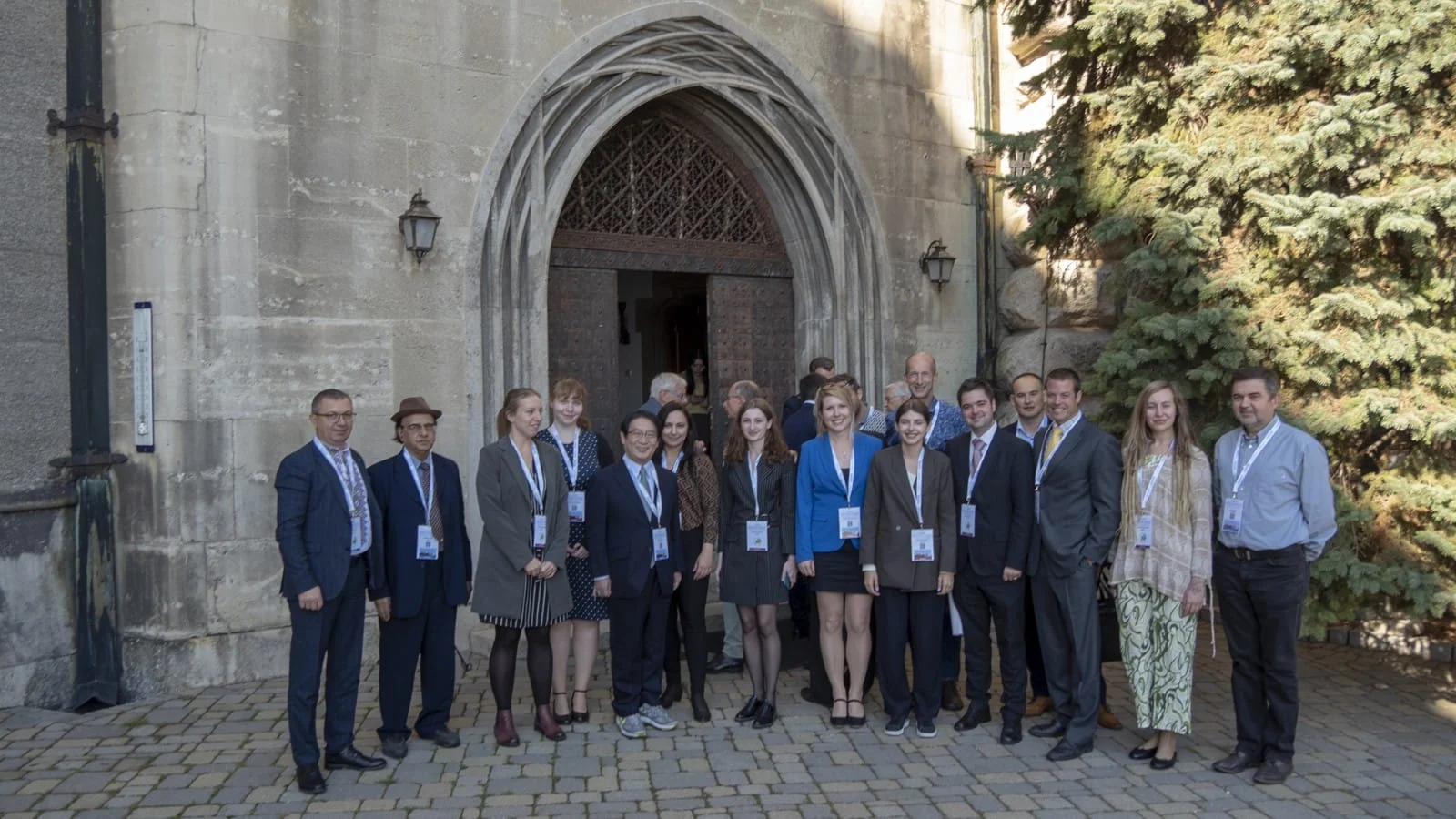
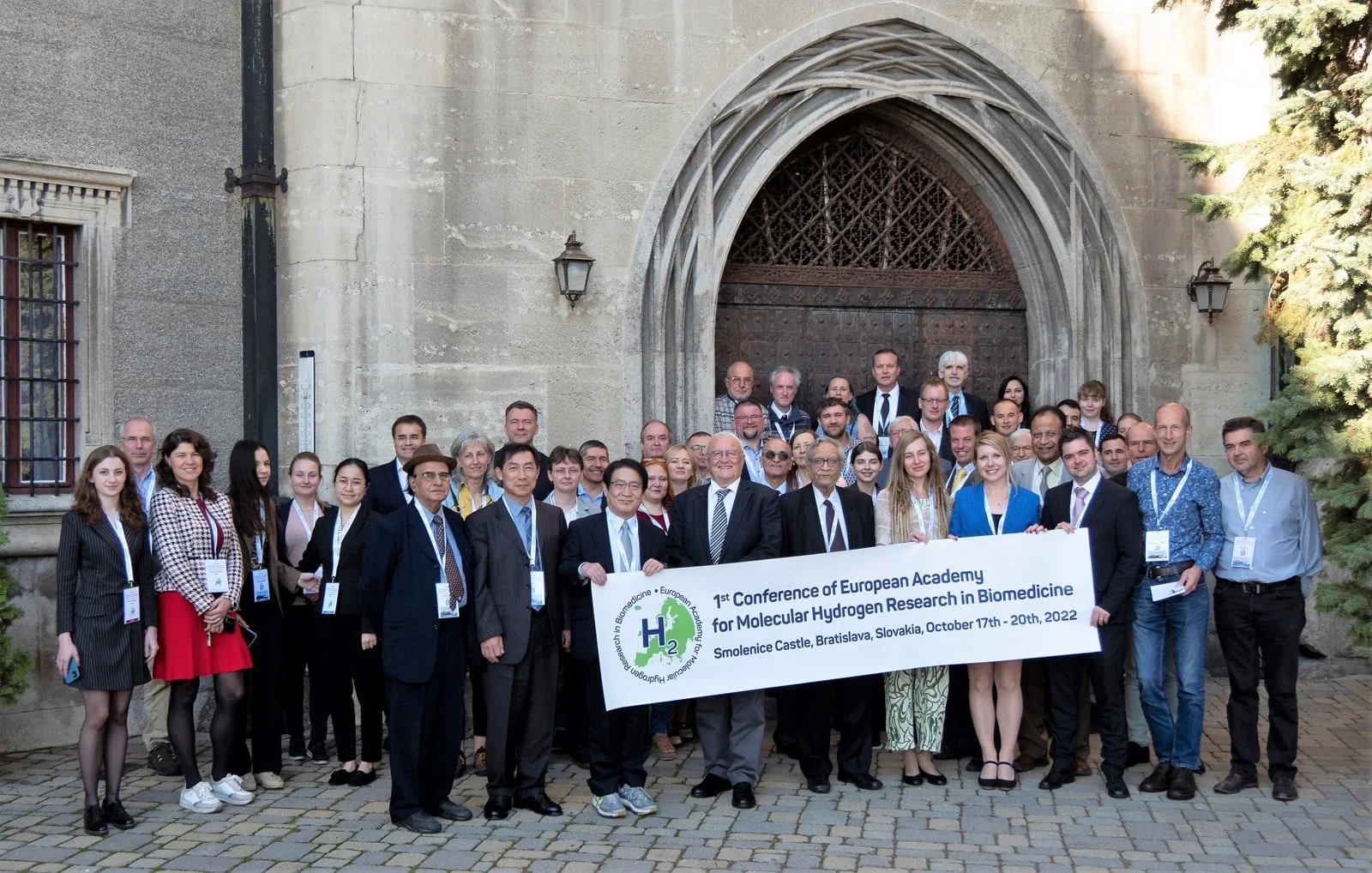
At the castle entrance. Prof. Pokotylo is on the far left, wearing a vyshyvanka, the traditional Ukrainian embroidered shirt.
Who was in the room
Among the participants were two people without whom the field wouldn’t exist in its current form.
Shigeo Ohta (Japan). In 2007, his team at Nippon Medical School reported in Nature Medicine that molecular hydrogen acts as a selective antioxidant: in cell experiments, it neutralized the most damaging reactive oxygen species, the hydroxyl radical, and left alone those with normal roles in the body. Before that, as Ohta later wrote, hydrogen was considered inert in the body. The paper launched hydrogen biomedicine, and at Smolenice the academy gave him its Pioneer of H₂ Research award. More in What is hydrogen water.
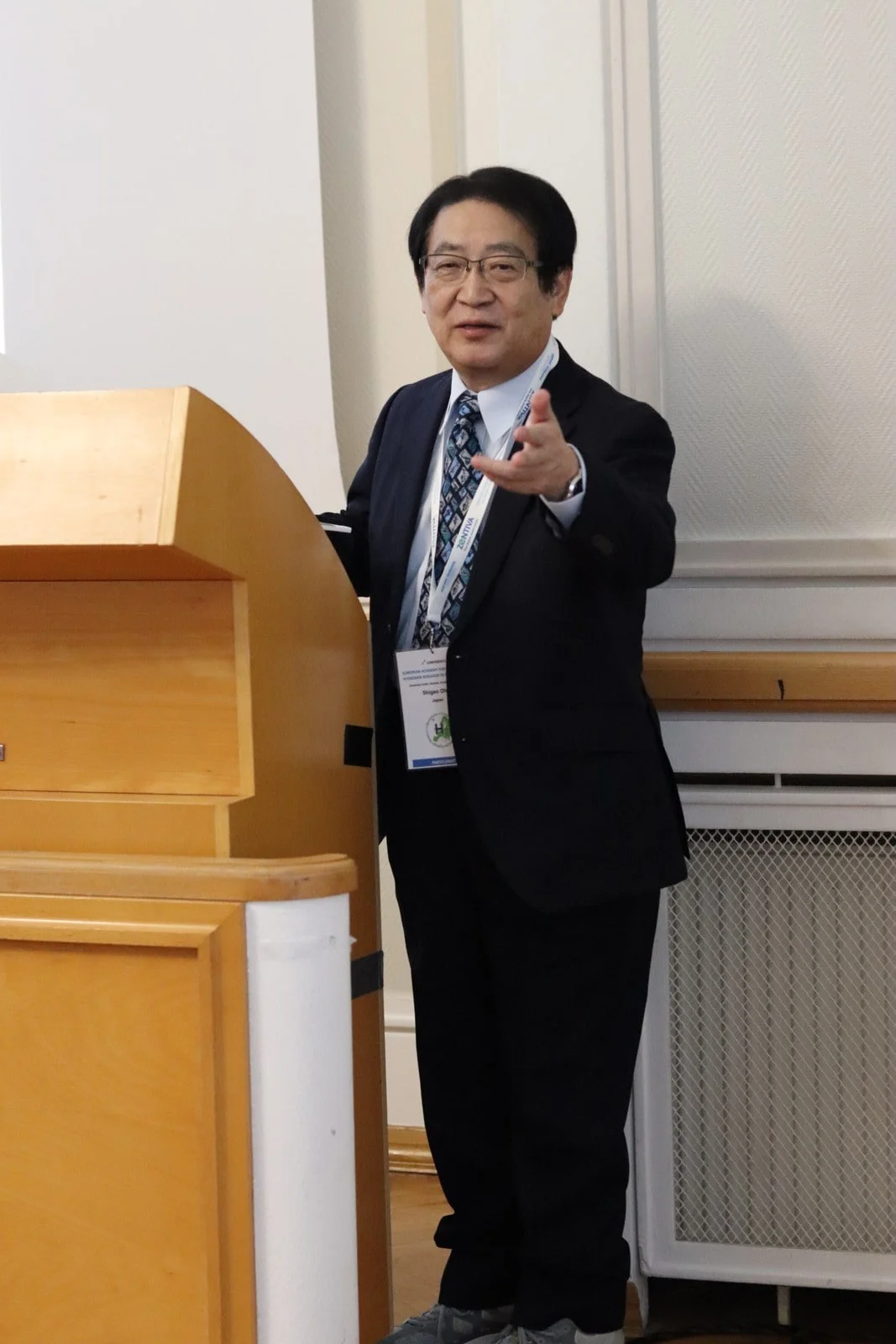
Shigeo Ohta at the conference podium.
Tyler LeBaron (USA), founder of the Molecular Hydrogen Institute, a science-based nonprofit that keeps an international catalog of hydrogen research. By its count, more than 3,000 scientific studies on molecular hydrogen have been published.
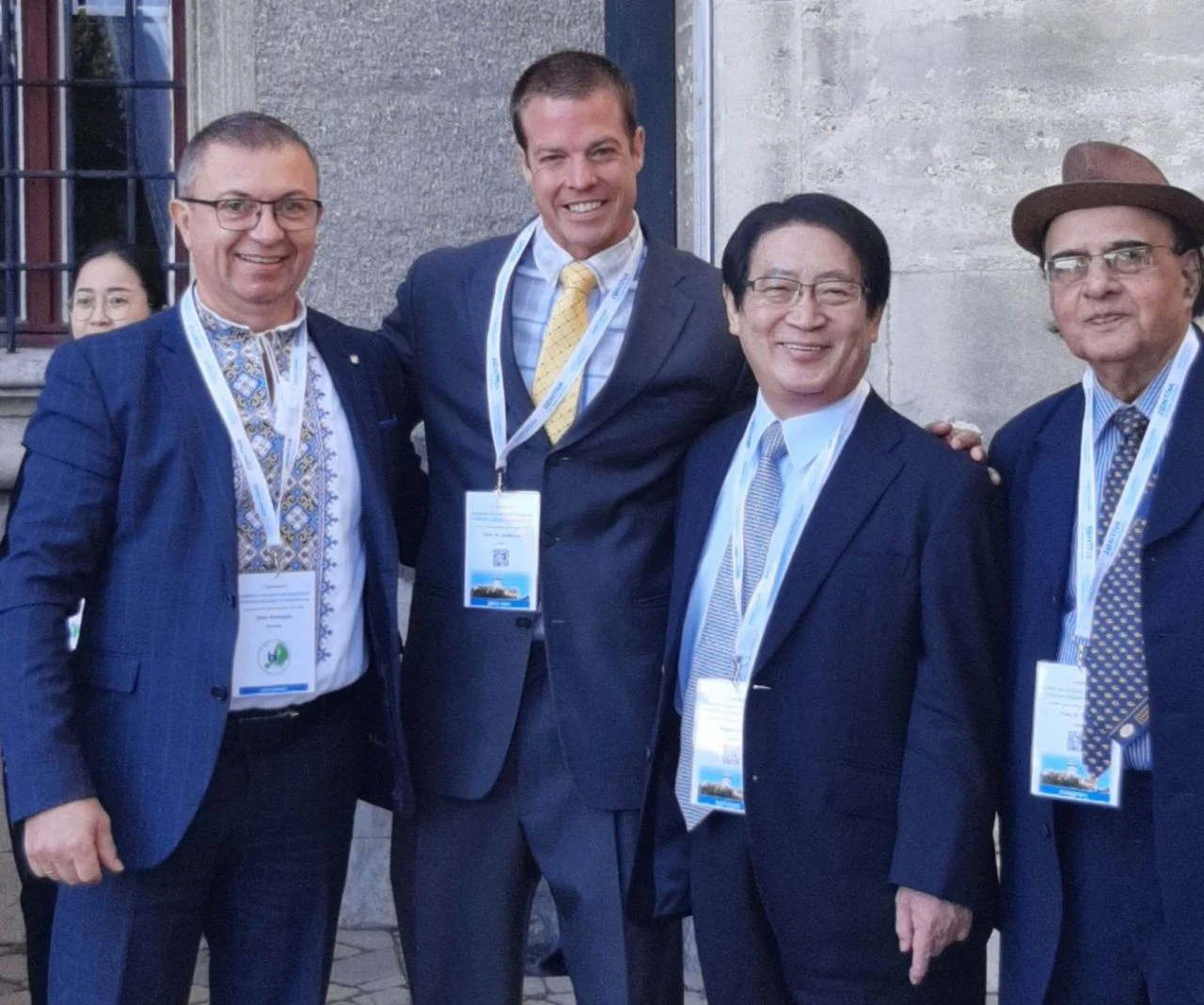
In this photo, Prof. Pokotylo, in his vyshyvanka, stands next to Tyler LeBaron, Shigeo Ohta and Indian cardiologist Ram B. Singh.
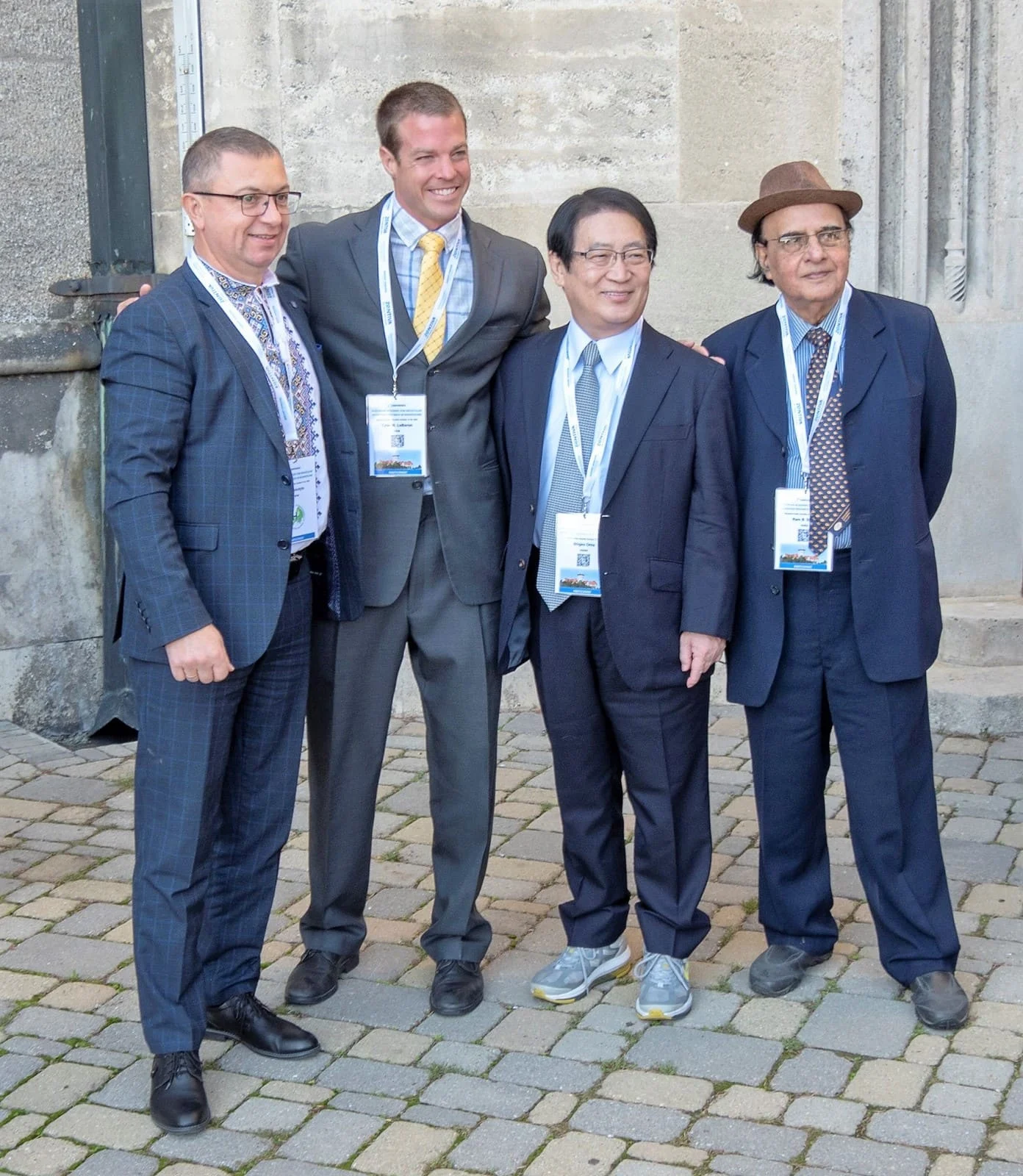
The same moment in a wider shot, at the castle entrance.
A video message from the conference hall
Prof. Pokotylo speaks to viewers straight from the conference hall (in Ukrainian), in front of a screen with the conference logo, the “Hydrogen for Biomedicine, October 17th–20th, 2022” banner and the flags of participating countries.
The talk
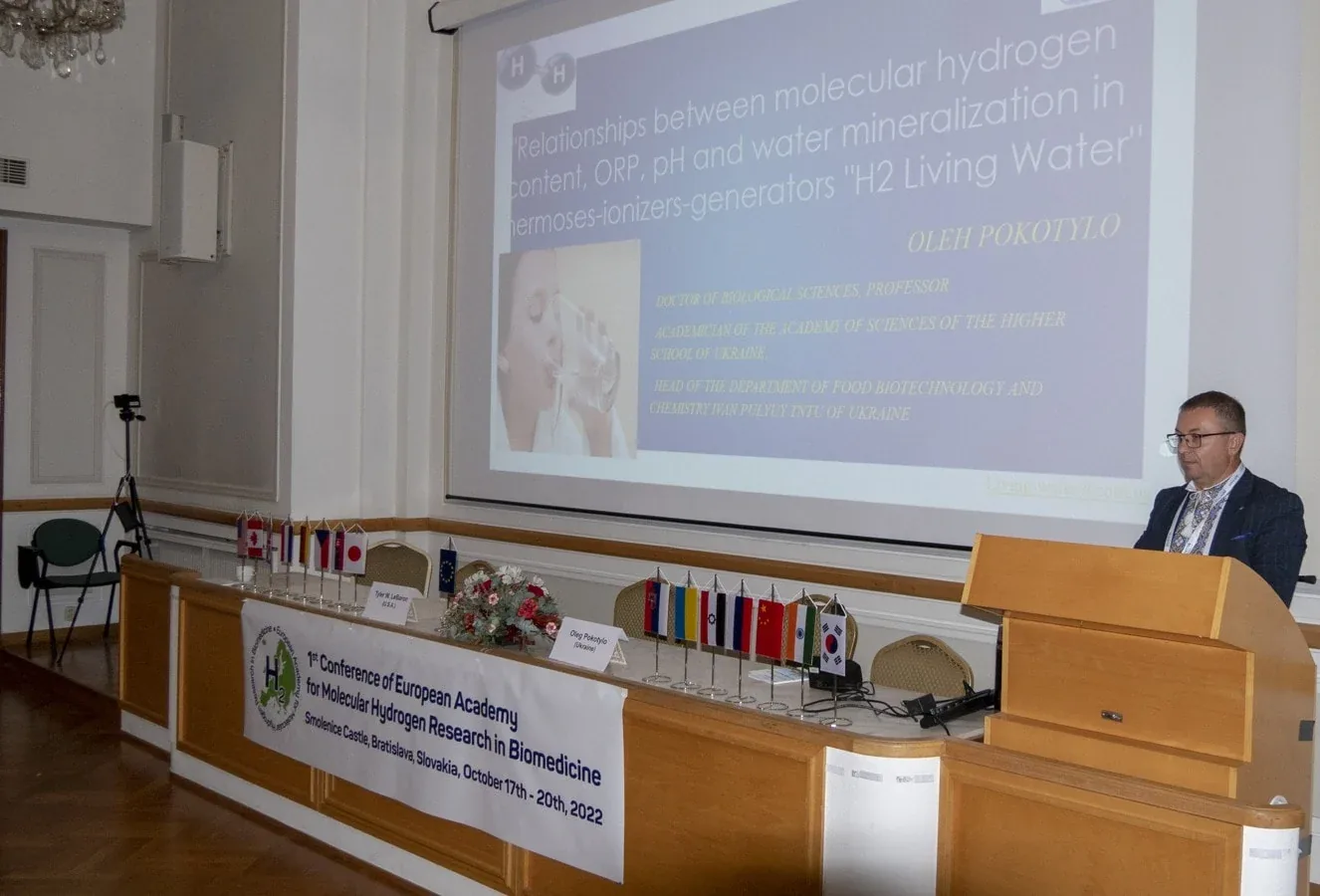
In this photo, Prof. Pokotylo stands at the podium with the title slide of his talk on the screen. On the presidium table are name cards for Prof. Pokotylo (Ukraine) and Tyler W. LeBaron (USA), with a Ukrainian flag beside them. That wasn’t by chance: the conference program lists the two as chairs of Session VI, “Technical aspects of the preparation and application of molecular hydrogen,” where the talk was given.
The official book of abstracts records it as a study of the relationship between molecular hydrogen content, ORP, pH and water mineralization in “thermoses-ionizers-generators,” hydrogen-generating thermoses of his own design.
In other words, at a venue of the Slovak Academy of Sciences, he spoke not about an abstract topic but about a specific device he had developed, and about how the measurable properties of water are linked inside it.
The abstract lists two affiliations: Ternopil Ivan Puluj National Technical University and I. Horbachevsky Ternopil National Medical University, both in Ternopil, western Ukraine.
What he measured
The thermos needs no electricity: instead of the electrolysis most generators rely on, it uses a magnesium anode and makes hydrogen-rich water the way nature does.
Six well-known brands of still bottled water were kept in it for up to 36 hours and checked with rapid tests along the way:
- Hydrogen rose from 0.33 ppm after 30 minutes to 0.84 ppm after 36 hours.
- ORP (oxidation-reduction potential) fell from about +230 mV at the start to −280 mV after 30 minutes and −520 mV after 36 hours.
- pH rose from 7.6 to 8.3 after 30 minutes and 9.3 after 36 hours, depending on the water.
- Total mineralization didn’t change significantly.
His conclusion: the device makes hydrogen-rich water on its own, quickly and continuously, with a slightly alkaline pH and a negative ORP.
Why the talk was built on measurements
People talk about hydrogen water in different ways. Some of that talk is marketing: promises, but no numbers.
Prof. Pokotylo’s talk was about something else: how measurable quantities relate to one another. How much hydrogen dissolves depending on the mineral content of the source water. How pH changes. How the oxidation-reduction potential behaves.
That isn’t a promise of results; it’s a description of how a system behaves. The difference is fundamental, and it decides whether a talk makes it into the program of an academic conference or remains advertising copy.
The same session showed why that matters. Tyler LeBaron presented an analysis titled “ORP should not be used to estimate or compare concentrations of aqueous H₂.” In a 2022 paper with Randy Sharpe, he calculated that a one-unit rise in pH shifts ORP about as much as a 100-fold increase in hydrogen. A negative ORP shows that some hydrogen is present, but not how much, so tracking hydrogen, ORP and pH side by side, as Prof. Pokotylo did, says more than any single reading.
What this means if you drink hydrogen water at home
- Hydrogen is what counts. A 2022 review co-authored by LeBaron concluded that in alkaline electrolyzed water, H₂, not the pH, is behind both the negative ORP and the effects seen in studies. More in alkaline vs. hydrogen water.
- Treat ORP as a quick sign. To know how much hydrogen your water holds, use a dissolved-hydrogen test such as titration drops, which the Molecular Hydrogen Institute calls practical but approximate. More in our ORP guide.
- Expect mild alkalinity. Magnesium reacting with water releases hydrogen and forms magnesium hydroxide, which gives water a slightly alkaline reaction.
- Keep it closed. In the closed thermos, hydrogen kept building for 36 hours; an open glass of hydrogen water keeps its properties for only about an hour.
As a reference point, Prof. Pokotylo’s book 5 Fundamental Postulations of Drinking Water lists 0.4–0.8 ppm of molecular hydrogen and an ORP of about −100 to −300 mV among its markers of quality everyday water.
How to get hydrogen water at home
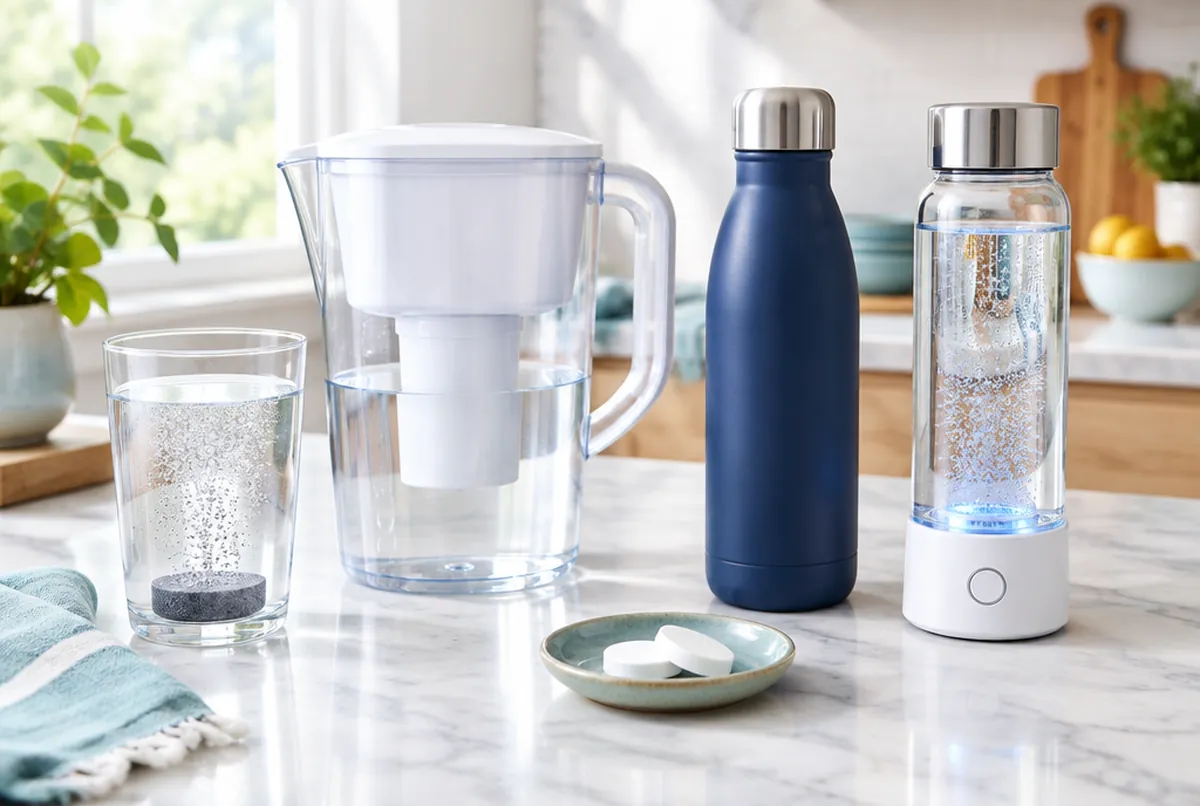
Living Aqua’s discs and pitcher filter use a magnesium–ceramic blend developed by Prof. Pokotylo and work on the principle he presented at Smolenice: magnesium reacting with water, with no electricity.
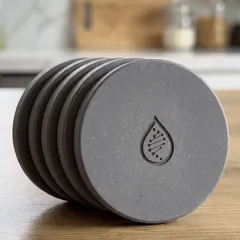
Discs. Drop a Living Aqua Hydrogen Water Disc into a glass or bottle of clean, still drinking water. After 5 minutes, the water typically holds about 800 ppb (0.8 ppm) of hydrogen, and in a closed bottle it stays hydrogen-rich for up to 12 hours. Each disc lasts 2–3 months, or 53–58 gal (200–220 L). It isn’t a filter, so start with water that’s already safe to drink.
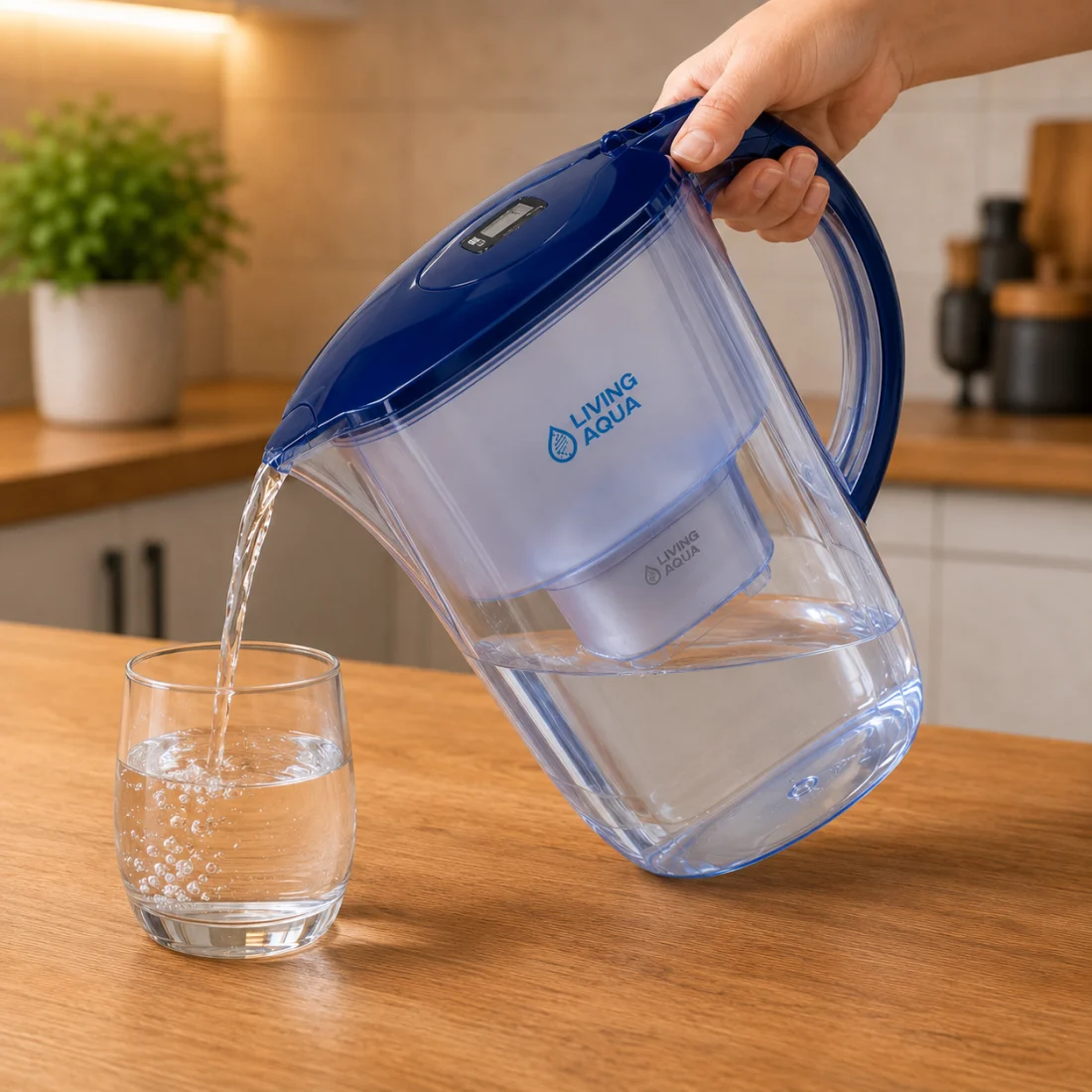
Pitcher. If you drink tap water, the Living Aqua Hydrogen-Rich Alkaline Water Pitcher filters it through four stages in about 2 minutes and infuses it with hydrogen, on average 0.3–0.8 ppm depending on your source water. It holds 3.8 L (128 oz), and one filter lasts 6–8 weeks, or 300–350 L (79–92 gal).
More tips in how to drink hydrogen water and how to choose a generator.
Before and after Smolenice
Three years before Smolenice, in 2019, Prof. Pokotylo completed two research internships abroad: at a nuclear chemistry laboratory of France’s National Centre for Scientific Research (CNRS) in Strasbourg, and at the Slovak University of Agriculture in Nitra.
In January 2020, he addressed the Synod of Bishops of the Ukrainian Greek Catholic Church, the largest of the Eastern Catholic churches, at a session on ecology in Ukraine. His talk was titled “Water: God’s gift and human responsibility.”
In 2023, with his son Oleh and Prof. Mykhailo Korda, he published a review, “Effects of biological action of molecular hydrogen,” in the Ukrainian journal Medical and Clinical Chemistry. With a DOI, it’s part of the international scientific record.
How the program introduced him
The conference’s book of abstracts introduced him in English, briefly, as such publications do: a Doctor of Biological Sciences and professor who “heads the Department of Food Biotechnology and Chemistry at Ivan Pulyuy Ternopil National Technical University in Ukraine.”
It went on to say that he studied the properties of water and developed ways to improve its quality, published more than 200 scientific and teaching papers, taught physiology, developed dietary supplements and served on the editorial board of a specialist journal.
Prof. Oleh Pokotylo (September 1, 1970 – November 11, 2024) was an academician of the Academy of Sciences of the Higher School of Ukraine and Living Aqua’s scientific partner.
Frequently asked questions
What was the Smolenice conference?
Who is Shigeo Ohta?
What did Prof. Pokotylo present?
Can an ORP meter tell me how much hydrogen is in my water?
Key takeaways
- In October 2022, Smolenice Castle hosted the first conference of the European Academy for Molecular Hydrogen Research in Biomedicine: 90 participants from 15 countries.
- Shigeo Ohta, whose 2007 paper launched hydrogen biomedicine, and Tyler LeBaron of the Molecular Hydrogen Institute were in the room.
- Prof. Pokotylo represented Ukraine with a talk built on measurements: hydrogen, ORP, pH and minerals tracked together for 36 hours.
- ORP and pH move with hydrogen, but only a hydrogen test shows how much is in your glass.
- At home: magnesium-based discs or a hydrogen pitcher, still water, a closed container and fresh servings.
Ready to try it? Start with hydrogen water discs or, for tap water, the hydrogen-rich alkaline pitcher.
This article is for general information only and isn’t medical advice. If you have a health condition, ask your doctor how much and what kind of water is right for you.
Sources
- European Academy for Molecular Hydrogen Research in Biomedicine. “1st International Conference”: conference report. euh2academy.org
- European Academy for Molecular Hydrogen Research in Biomedicine. Program and Book of Abstracts: 1st Conference of European Academy for Molecular Hydrogen Research in Biomedicine “Hydrogen for Biomedicine.” Smolenice Castle, Slovakia; October 17–20, 2022. Session VI, p. 17; biography and abstract of Prof. Pokotylo, pp. 60–61. victory-media.cld.bz
- European Academy for Molecular Hydrogen Research in Biomedicine. Conference photo gallery, the source of the conference photos in this article. euh2academy.org
- Ohsawa I, Ishikawa M, Takahashi K, et al. (senior author: Ohta S). Hydrogen acts as a therapeutic antioxidant by selectively reducing cytotoxic oxygen radicals. Nature Medicine. 2007;13(6):688–694. PubMed
- Ohta S. Molecular hydrogen as a preventive and therapeutic medical gas: initiation, development and potential of hydrogen medicine. Pharmacology & Therapeutics. 2014;144(1):1–11. PubMed
- LeBaron TW, Sharpe R. ORP should not be used to estimate or compare concentrations of aqueous H₂: an in silico analysis and narrative synopsis. Frontiers in Food Science and Technology. 2022;2:1007001. doi.org
- LeBaron TW, Sharpe R, Ohno K. Electrolyzed-reduced water: Review I. Molecular hydrogen is the exclusive agent responsible for the therapeutic effects. International Journal of Molecular Sciences. 2022;23(23):14750. PubMed
- Molecular Hydrogen Institute. Home page: about the institute and the research it tracks. molecularhydrogeninstitute.org
- Molecular Hydrogen Institute. “Understanding hydrogen water testing methods.” molecularhydrogeninstitute.org
- National Center for Biotechnology Information. Magnesium hydroxide (CID 73981): “Imparts slight alkaline reaction to water.” PubChem. pubchem.ncbi.nlm.nih.gov
- Pokotylo OO, Pokotylo OS, Korda MM. Effects of biological action of molecular hydrogen. Medical and Clinical Chemistry. 2023;(2):102–121. doi.org
- Pokotylo O. 5 Fundamental Postulations of Drinking Water. Ternopil; 2021.
A Ukrainian manufacturer of hydrogen water devices.
Found your routine? We’ve got the device
Pitchers, discs and insulated bottles of our own making — no electricity needed, backed by lab test reports.
Read next