📋 In this article
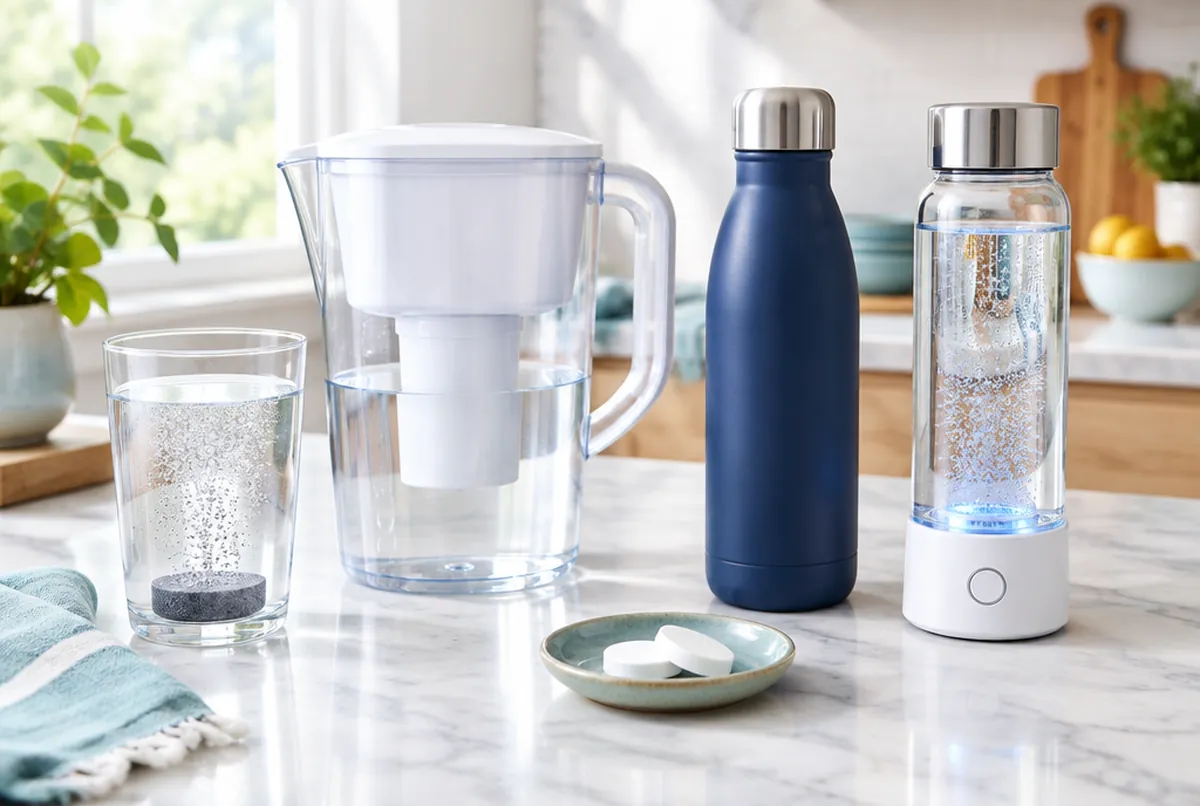
Choose by how you’ll use it, not by the biggest number on the box. For tap water at home, a hydrogen pitcher that also filters is the simplest fit; for water you already trust, at home or on the go, a reusable magnesium disc in a closed bottle; for hydrogen on demand, if you don’t mind charging, a well-built electric bottle; and for an occasional glass, tablets or ready-to-drink cans.
After that, compare four things: how much hydrogen you actually get (and under what conditions), what else ends up in the water, how much upkeep it takes, and what you’ll keep buying. We sell two of these options — discs and a pitcher — so where ours have a downside, we’ll say so.
Two ways to make hydrogen water
Home devices make hydrogen in one of two ways, and neither wins across the board: electrolysis makes hydrogen on demand but needs power and has parts that wear; magnesium needs no power, but it gets used up and has to be replaced. A third route skips the chemistry at home: hydrogen water infused at the factory and sealed in cans or pouches.
Electrolysis
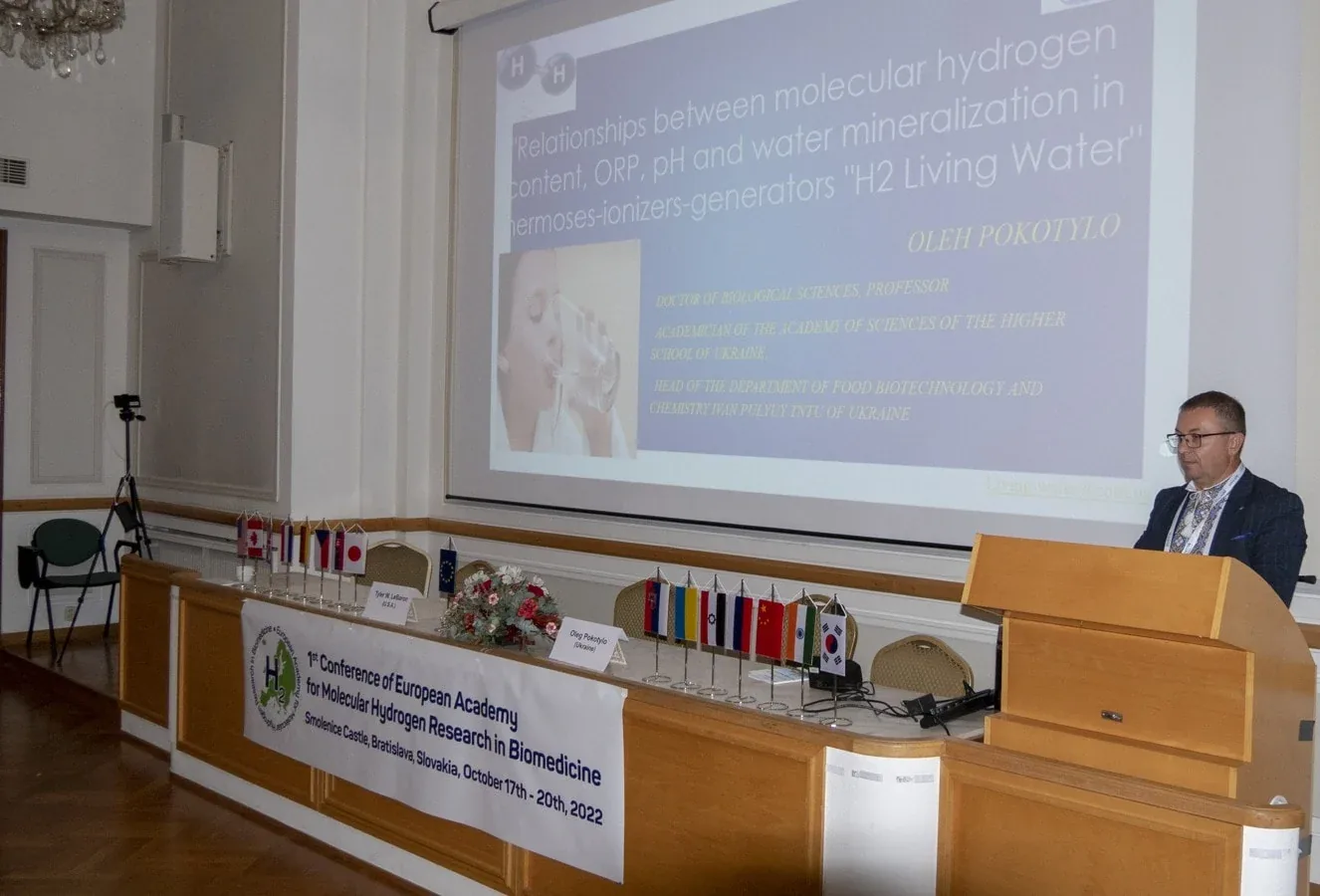
An electric current splits water at two electrodes. Hydrogen gas forms at one of them; at the other, oxygen forms, and the salts in tap water can add chlorine compounds. In 5 Fundamental Postulations of Drinking Water, Prof. Oleh Pokotylo — Professor, Academician, Doctor of Biological Sciences — notes that electrolysis produces other gases besides hydrogen, so makers of electric generators add membranes or extra filtration, which drives up the price.
Magnesium
Magnesium metal reacts with water on its own: Mg + 2H₂O → Mg(OH)₂ + H₂. No power is needed — the reaction starts as soon as the metal touches water. Tablets, sticks, discs and mineral filters all work this way. The reaction also nudges the pH up, the Molecular Hydrogen Institute notes.
Electric hydrogen bottles
A portable bottle with an electrolysis cell in its base: press a button, and a column of bubbles rises through the water within minutes. There’s nothing to refill, but the battery needs charging: a dead battery means plain water.
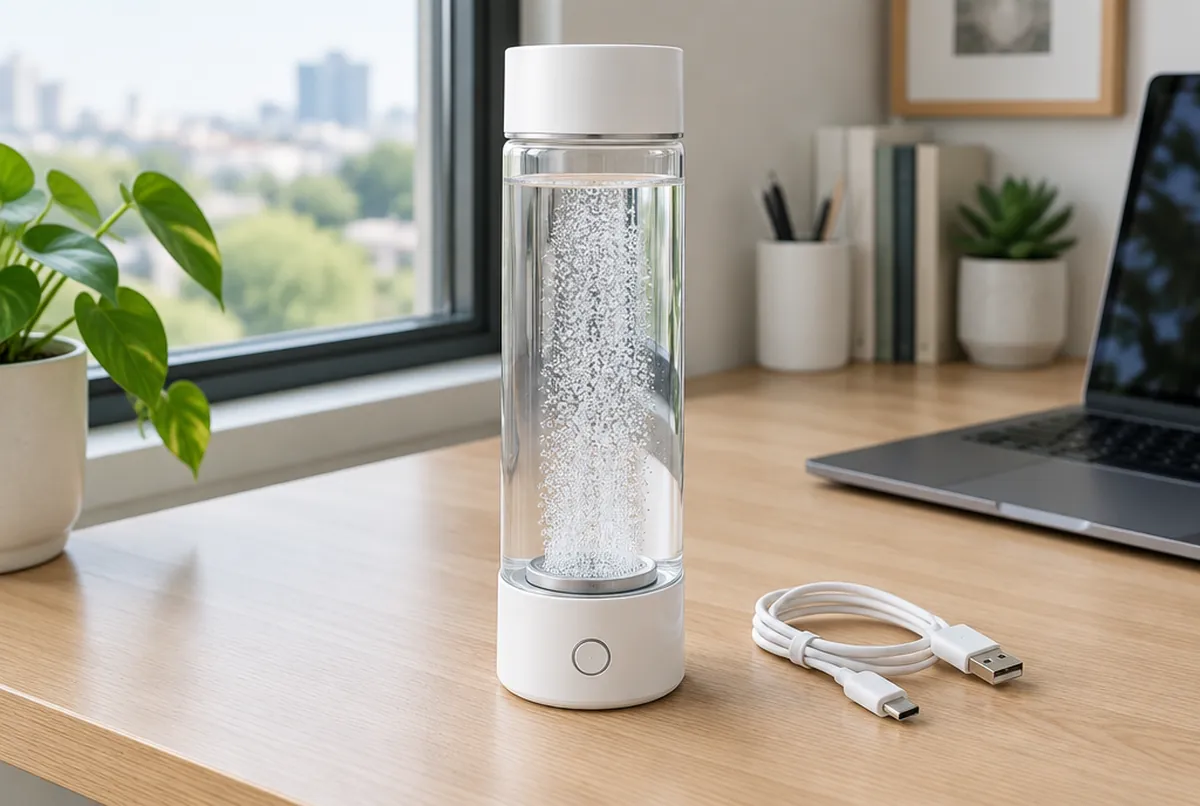
The honest downsides: the electrodes and membrane wear with use, most bottles don’t filter anything, and quality varies more than with any other option. The cheapest models usually save money on exactly the parts that matter — the membrane, the electrode coating and the battery.
SPE/PEM on the label — and why test data matters more
Many bottles advertise an SPE or PEM (proton exchange) membrane. It sits between the two electrodes to keep the gases formed at the second one — oxygen, and potentially chlorine compounds or ozone — out of your drinking water.
The label alone doesn’t settle it, though. In a 2021 lab study, researchers ran a bottle with finely finished platinum-plated electrodes on tap water: chlorine didn’t rise, and ozone stayed below detection. Three other bottles tested alongside it raised chlorine levels the longer they ran — still well within the World Health Organization guideline, but proof that design matters. The well-made bottle reached about 0.44–0.48 ppm of hydrogen after 10–30 minutes. Ask the maker for test results on the water itself: hydrogen, chlorine and ozone.
Hydrogen tablets
A tablet of magnesium and a food acid fizzes in a glass or bottle of water for a minute or two and leaves hydrogen behind. Tablets need no device, and a 2022 review lists high-concentration tablets among the ways to reach meaningful hydrogen levels.
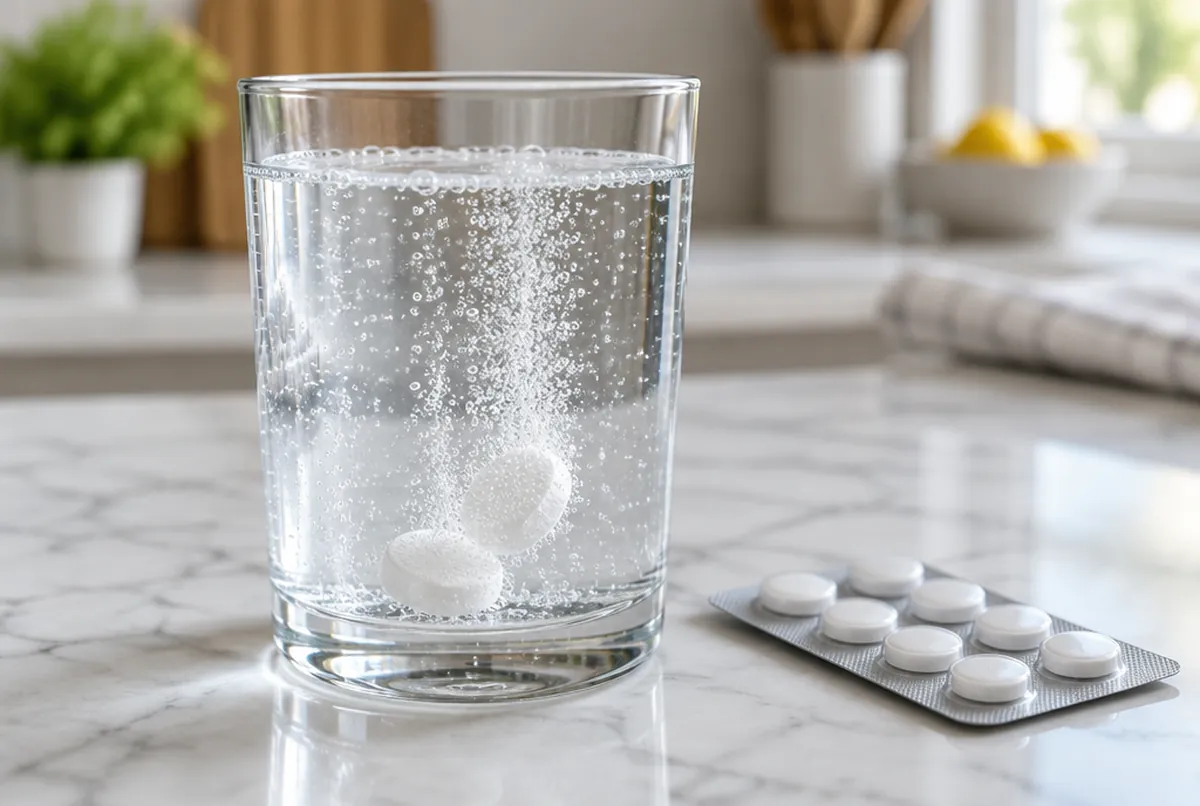
Two honest catches. First, they’re single-use: one tablet makes one glass, so the cost never stops. Second, the magnesium doesn’t disappear — it stays in your drink. In one published formulation, each tablet contained 75 mg of magnesium. For adults, the Institute of Medicine set the upper limit for magnesium from supplements at 350 mg a day, and the first sign of going over is usually diarrhea. A few tablets a day on top of a magnesium supplement can add up, so check the label for magnesium per tablet — and drink the water right away, while the hydrogen is still in it.
Magnesium discs and sticks
These are reusable pieces of magnesium, often blended with ceramic minerals, that you drop into a glass or bottle. They never need charging.
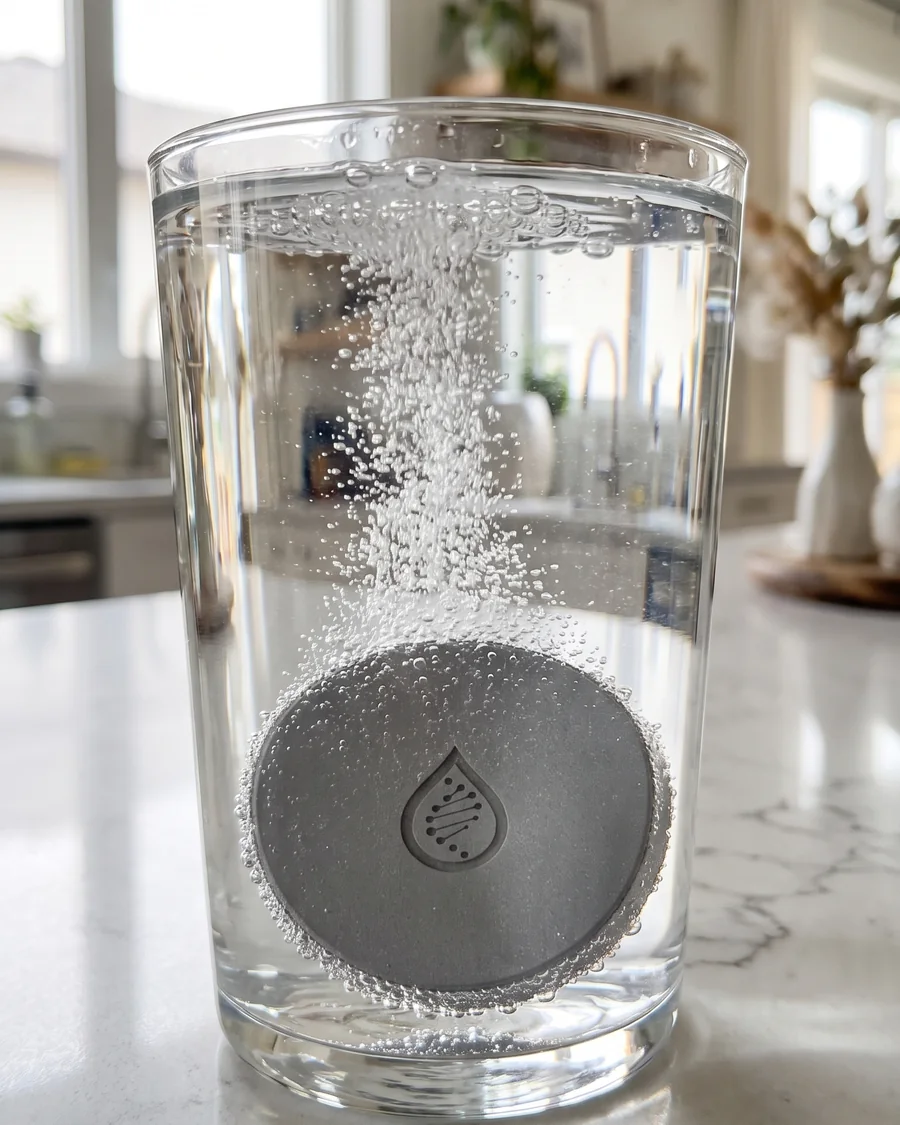
Our Living Aqua Hydrogen Water Discs use a magnesium–ceramic blend developed by Prof. Pokotylo. Drop one into clean, still drinking water, cold or room temperature: fine bubbles appear within 2–3 minutes, and 5 minutes later the water typically holds about 800 ppb (0.8 ppm) of hydrogen, with lab peaks of 1,000 ppb. Each disc lasts 2–3 months, or 53–58 gal (200–220 L), and a set of five, used one at a time, lasts about a year.
The downsides, honestly:
- A disc doesn’t filter. Use water that’s already safe to drink: filtered, bottled or reverse-osmosis.
- Still water only, up to 122 °F (50 °C) — not tea, coffee, juice or sparkling water.
- It needs a lid. In an open glass, hydrogen water keeps its properties for about an hour; in a closed bottle, the disc keeps the water hydrogen-rich for up to 12 hours.
- It needs a wide mouth. The disc is 1.8 in (45 mm) across, so it fits bottles with a 2.2–2.4 in (55–60 mm) opening, like our 22 and 32 oz insulated bottles, but not narrow-neck ones.
A hydrogen pitcher for tap water
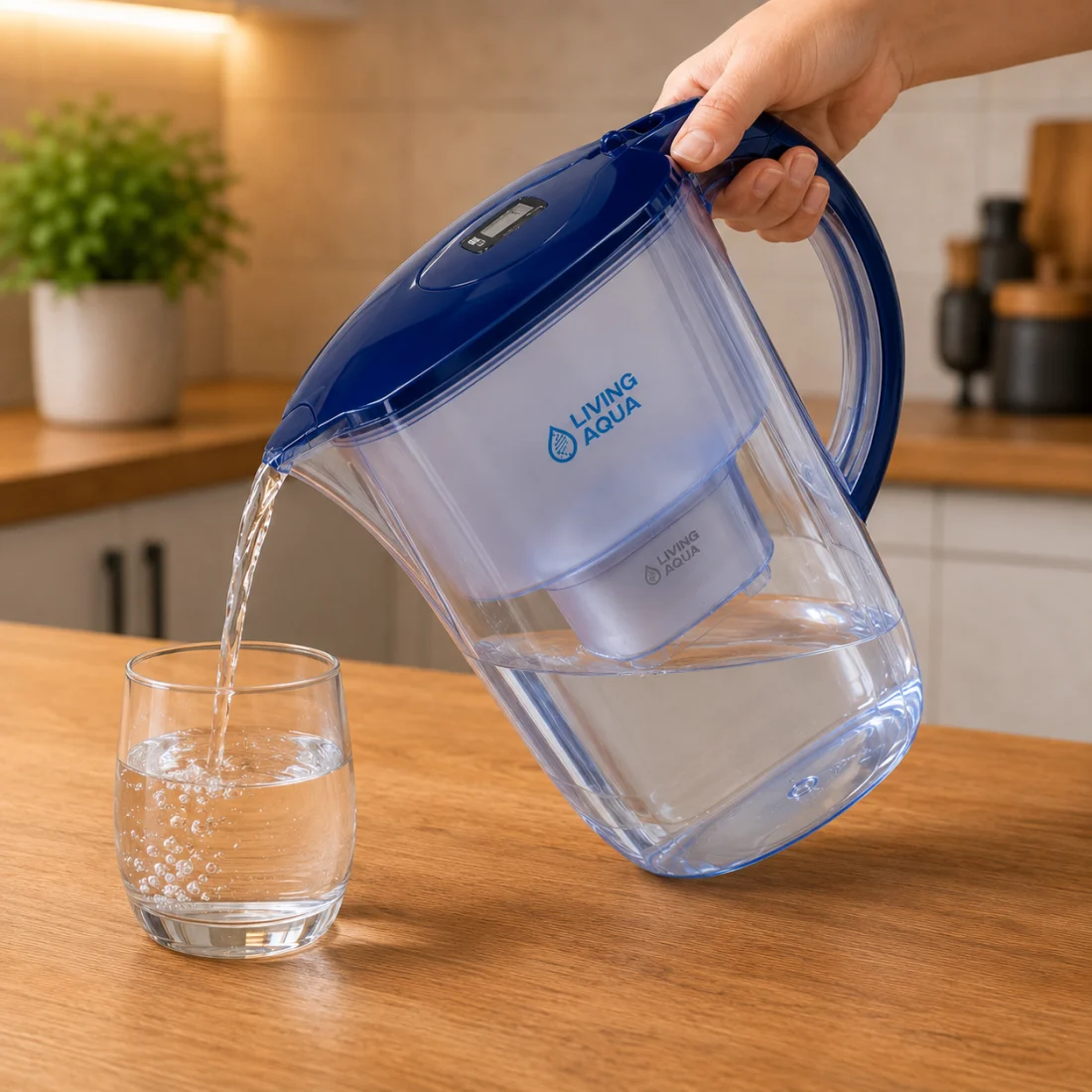
If you drink tap water, this is the one option here that filters it and adds hydrogen in the same step. The Living Aqua Hydrogen-Rich Alkaline Water Pitcher filters water through four stages, including a magnesium–ceramic mineral blend, in about 2 minutes, with no electricity. Typical readings are pH 9.0 · H₂ 0.6 ppm · ORP −300 mV, depending on your source water, and it holds 3.8 L (128 oz) — enough for one or two people a day.
The trade-offs:
- It stays in the kitchen. For the road, pour into a bottle with a tight lid: the water keeps its properties for up to 5–6 hours in a closed container and about an hour in an open glass.
- Filters are a running cost. Replace one every 6–8 weeks or after 300–350 L (79–92 gal), whichever comes first. Soak each new filter for 3–5 minutes and pour that water out, set it in place, then pour out the first batch.
- Start with safe water. Use treated tap water or bottled water; the CDC notes that most pitcher filters aren’t designed to remove germs.
More on the filter in How the hydrogen alkaline pitcher works.
Ready-to-drink cans and pouches
The zero-effort option. Hydrogen is so small that it passes even through plastic film, which is why packaging matters. In a lab study, a sealed bottle held its hydrogen for at least 7 days; once opened, the level dropped noticeably within an hour. So drink it as soon as you open it.
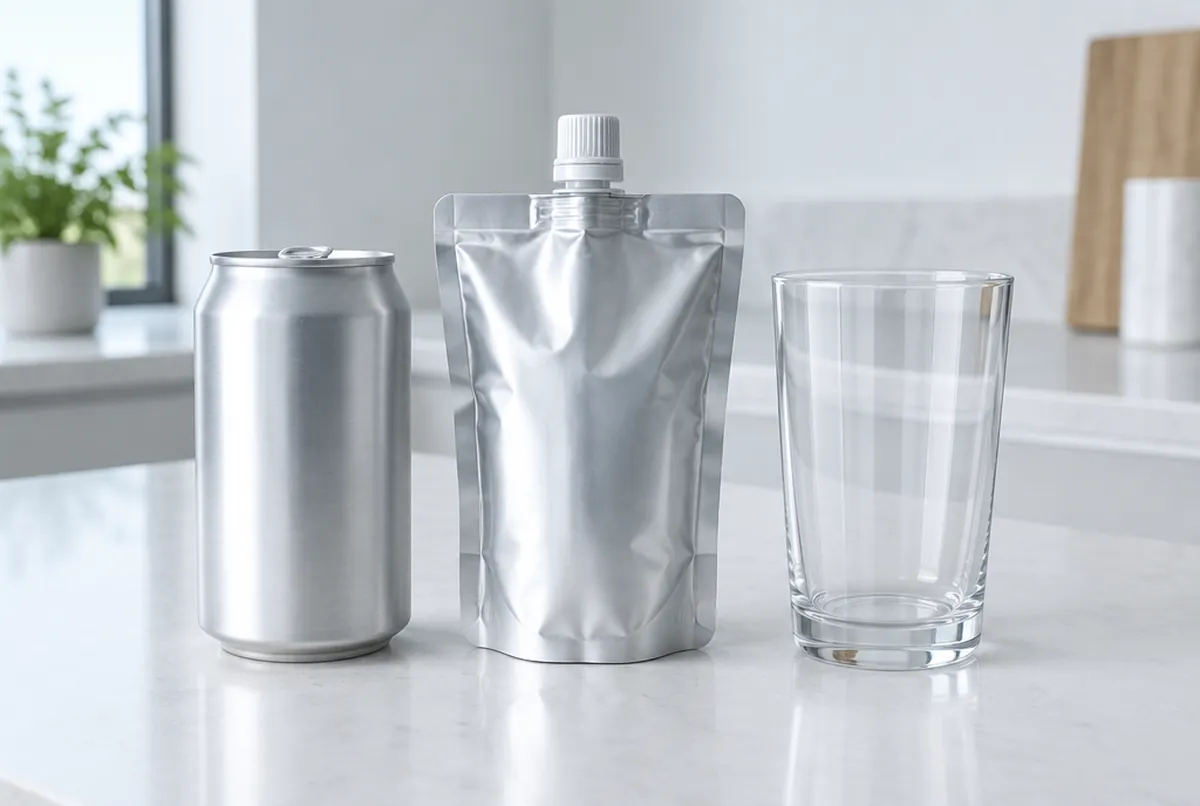
The catch is cost and waste: you pay for packaging with every serving. And the number that matters is how much hydrogen is left when you open it, so look for a stated concentration and when it was measured.
Side by side
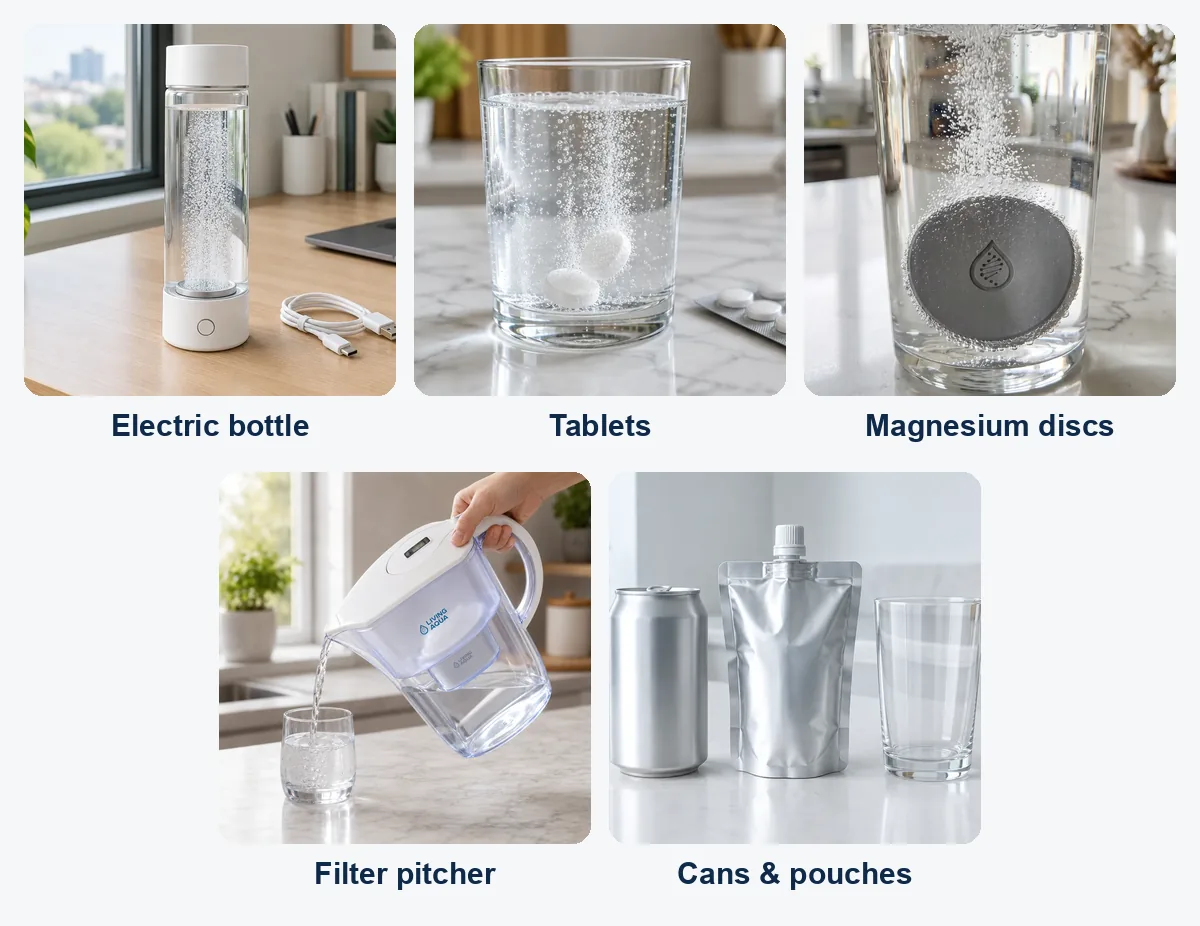
| Power | Filters water | Ready in | Portable | What you keep buying | |
|---|---|---|---|---|---|
| Electric bottle | Charging | No | Minutes per cycle | Yes | A new bottle or cell when it wears out |
| Tablets | None | No | A few minutes | Yes | A tablet for every glass |
| Magnesium discs | None | No | 5 minutes | With a closed bottle | A 5-disc set about once a year |
| Hydrogen pitcher | None | Yes, 4 stages | About 2 minutes | No | A filter every 6–8 weeks |
| Cans and pouches | None | — | Ready to drink | Yes | Every serving |
Disc and pitcher times are for Living Aqua products; for other brands, check the maker’s figures. Prices change, so compare what a year costs — the device plus everything in the last column — rather than the sticker.
What to check before you buy
- Hydrogen in ppm or ppb, with conditions. A number means little without the water, volume, temperature and time behind it. One ppm equals 1,000 ppb, so “800 ppm” on a box is almost certainly ppb. At room temperature and normal pressure, water holds about 1.6 ppm at most; higher figures are possible only in a sealed, pressurized container and fall once it’s opened.
- A real hydrogen test, not just ORP. A negative ORP shows hydrogen is present, but ORP meters don’t measure how much. The Molecular Hydrogen Institute calls reagent drops a practical but approximate estimate, and gas chromatography the most accurate method.
- What else goes into the water. Magnesium per tablet; the pH, since Mayo Clinic flags safety concerns especially above pH 9.8; and, for electric bottles, chlorine and ozone results.
- Materials that touch the water. Stainless steel, glass or food-safe plastic — and, for electric bottles, the membrane and electrode coating.
- Documents and refills. A test report with conditions beats the word “certified” with no file behind it. And if filters, discs or cells aren’t sold separately, the device has a short life.
- Whether you need a filter. A hydrogen device isn’t a water filter unless it says so. If your water has a specific problem, such as lead, the CDC suggests checking a filter’s label for an NSF certification that covers it.
Common mistakes
- Confusing alkaline with hydrogen water. A high pH alone adds no hydrogen — see Alkaline water and hydrogen water: what’s the difference.
- Letting the water sit. Hydrogen escapes, so drink it fresh; How to drink hydrogen water has the details.
- Expecting a cure. Hydrogen water is everyday drinking water, not medicine. For side effects and limits, see Is hydrogen water safe?
Which one fits your day
- You drink tap water at home: the pitcher — filtering and hydrogen in one step.
- Your water is already filtered or bottled, and you want zero upkeep: discs.
- You want hydrogen on demand and will keep it charged: a well-built electric bottle with test data for the water it makes.
- Occasional use or travel: tablets or cans — just keep an eye on the magnesium from tablets.
Many people combine two: the pitcher at home, and a disc in a closed bottle, filled from the pitcher, for the rest of the day.
Frequently asked questions
What is the best hydrogen water generator?
How many ppm of hydrogen should the water have?
Do I need electricity to make hydrogen water?
Does a hydrogen water generator filter water?
Are tablets or discs better for daily use?
Key takeaways
- Pick by use first: tap water at home, water on the go, hydrogen on demand or occasional use.
- Compare hydrogen in ppm or ppb with its test conditions; ORP only shows that hydrogen is there.
- Check what else goes into the water: magnesium, a very high pH, electrolysis byproducts.
- Count running costs: tablets and cans every serving, filters every 6–8 weeks, a disc set about once a year.
- Only a filtering pitcher cleans tap water; everything else needs water that’s already safe to drink.
The best hydrogen device is the one you’ll actually use every day. For water you already trust, start with our hydrogen water discs; for tap water, the hydrogen-rich alkaline pitcher with spare filters on hand. Or compare all Living Aqua products.
This article is for general information only and isn’t medical advice. If you have a health condition, ask your doctor how much and what kind of water is right for you.
Sources
- Pokotylo O. 5 Fundamental Postulations of Drinking Water. Ternopil; 2021.
- Molecular Hydrogen Institute. “How to get molecular hydrogen.” 2013, updated 2026. molecularhydrogeninstitute.org
- Molecular Hydrogen Institute. “Understanding hydrogen water testing methods.” 2026. molecularhydrogeninstitute.org
- LeBaron TW, Sharpe R, Ohno K. “Electrolyzed-reduced water: review II. Safety concerns and effectiveness as a source of hydrogen water.” International Journal of Molecular Sciences, 2022;23(23):14508. PubMed 36498838
- Hatae T, Miwa N. “Electrolytic hydrogen-generating bottle supplies drinking water with free/combined chlorine and ozone repressed within safety standard under hydrogen-rich conditions.” Medical Gas Research, 2021;11(2):61–65. PubMed 33818445
- Rosch M, Lucas K, Al-Gousous J, Pöschl U, Langguth P. “Formulation and characterization of an effervescent hydrogen-generating tablet.” Pharmaceuticals, 2021;14(12):1327. PubMed 34959728
- Institute of Medicine. Dietary Reference Intakes for Calcium, Phosphorus, Magnesium, Vitamin D, and Fluoride, chapter 6: “Magnesium.” Washington, DC: National Academies Press; 1997. nationalacademies.org
- Kurokawa R, Seo T, Sato B, Hirano S, Sato F. “Convenient methods for ingestion of molecular hydrogen: drinking, injection, and inhalation.” Medical Gas Research, 2015;5:13. PubMed 26504515
- National Center for Biotechnology Information. Hydrogen (CID 783), solubility in water. PubChem. pubchem.ncbi.nlm.nih.gov
- Mayo Clinic Staff. “Alkaline water: Better than plain water?” Mayo Clinic. mayoclinic.org
- Centers for Disease Control and Prevention. “About choosing home water filters.” 2024. cdc.gov
A Ukrainian manufacturer of hydrogen water devices.
Found your routine? We’ve got the device
Pitchers, discs and insulated bottles of our own making — no electricity needed, backed by lab test reports.
Read next