
📋 In this article
The best water to drink every day is, first of all, safe: tap water from a utility that meets EPA standards, water from a private well you’ve had tested, or bottled water. Beyond that, quality comes down to a few things you can check — the minerals your water carries and, if you choose hydrogen water, dissolved H₂ and a negative ORP. Where your water comes from matters less than knowing what’s in the glass.
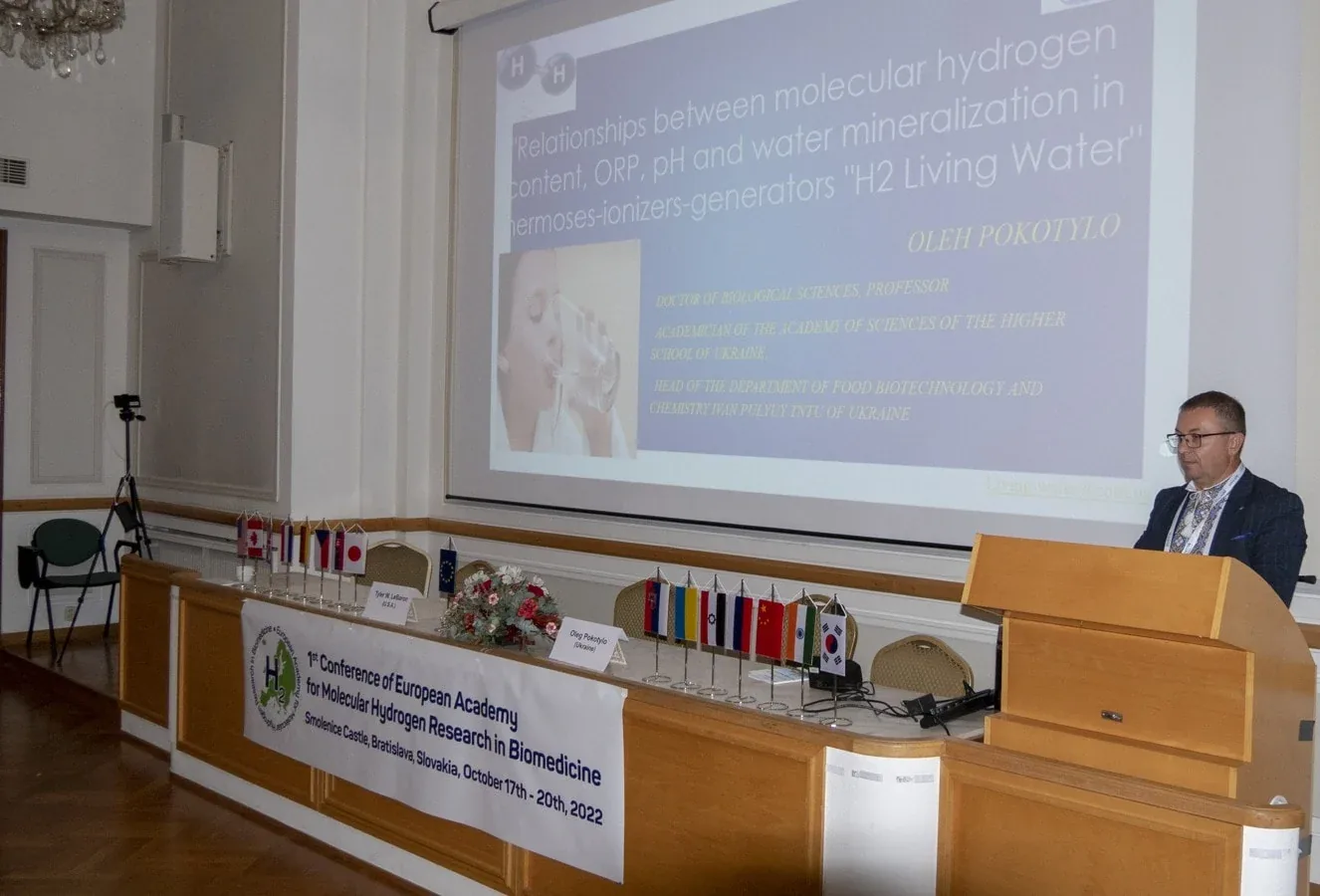
This is the fifth and final article in our series “Five rules of drinking water,” based on 5 Fundamental Postulations of Drinking Water by Prof. Oleh Pokotylo — Professor, Academician, Doctor of Biological Sciences. We’ve covered why, who, when and how much to drink. The last question is the one his final chapter answers: what kind? His answer fits in one word — quality.
Start with water that’s safe
Prof. Pokotylo notes that people often skip the simplest step of all: checking the quality and safety of the water they drink every day. In the US, how you check depends on where your water comes from.
If you drink city tap water
Under the Safe Drinking Water Act, EPA sets legal limits on more than 90 contaminants, and public water systems must meet them. Your utility also sends a Consumer Confidence Report — an annual water quality report — by July 1 each year. It names your water’s source, lists the regulated contaminants found in it and explains any violations. If you didn’t get one, call your water supplier or look it up with EPA’s online search tool.
If you drink from a private well
About 15% of Americans — more than 43 million people — rely on private wells, and federal drinking water rules don’t cover them; neither do most state laws. When the U.S. Geological Survey sampled about 2,100 private wells, roughly one in five had at least one contaminant above a human-health benchmark. The CDC advises testing well water at least once a year for total coliform bacteria, nitrates, total dissolved solids and pH, using a state-certified lab.
Prof. Pokotylo makes a related point: if water from a well or spring has passed a lab test, there’s no need to change it chemically with filtration and remineralization systems.
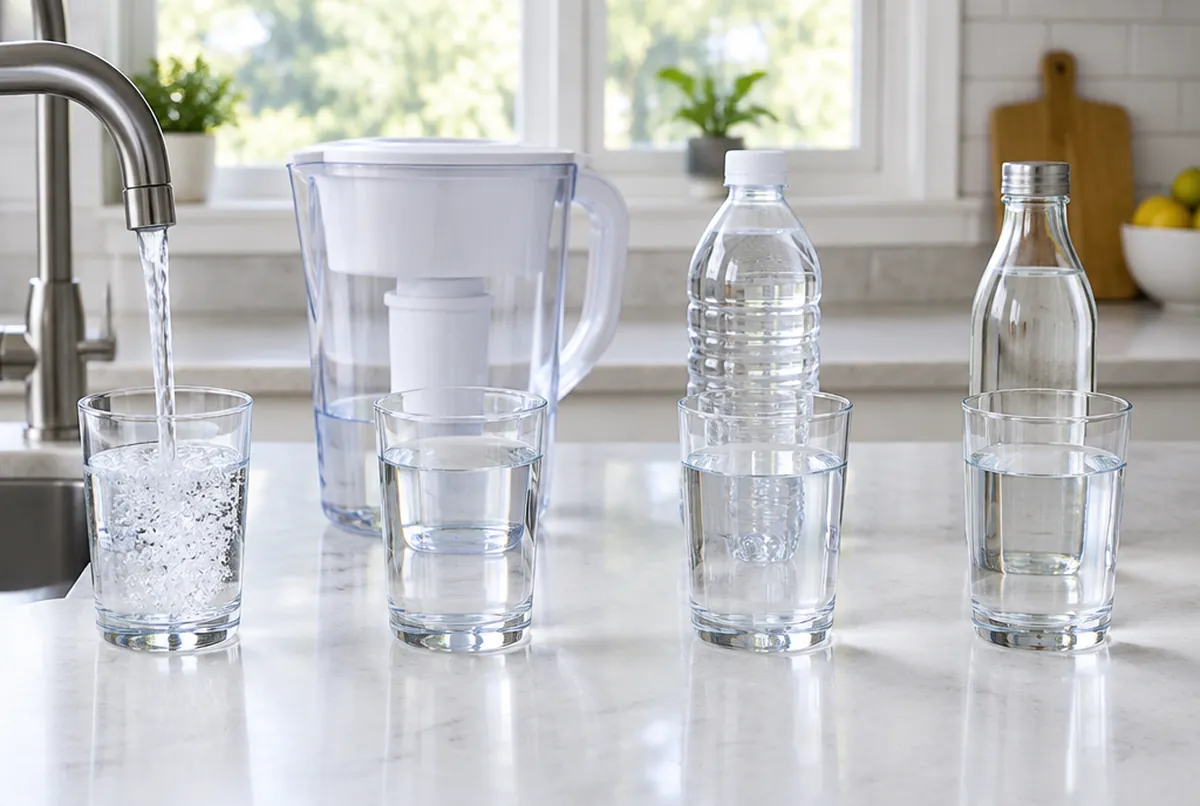
Tap, filtered, bottled or distilled: how they compare
| Water | What it is | Good to know |
|---|---|---|
| Tap | Treated by a public water system | Your annual report shows what’s in it |
| Filtered | Tap water run through a pitcher or faucet filter | Removes what it’s certified for |
| Bottled | Regulated by the FDA as a food | Some of it is treated tap water |
| Spring | Flows naturally from an underground source | Minerals depend on the source |
| Mineral | Underground source, 250+ ppm dissolved solids | Minerals can’t be added |
| Purified | Distilled or reverse-osmosis water | Nearly all minerals removed |
| Hydrogen | Safe water with dissolved H₂ | Best made at home, drunk fresh |
Bottled water isn’t automatically cleaner than tap. Each time EPA sets a limit for a contaminant in tap water, the FDA either adopts it for bottled water or finds it unnecessary, and some bottled water is treated municipal water to begin with.
Prof. Pokotylo is candid that no single water suits everyone at every moment, since the body’s needs shift with lifestyle, activity and stress. The aim is good water, not one perfect brand.
What a filter does — and doesn’t
A filter can improve the taste of water, its safety or both, the CDC explains — and if your tap water is already free of harmful germs and chemicals, you may not need one. Start with your water report, and choose a filter for the problem you actually have.
The label to look for is a certification. EPA’s WaterSense guide lists the main standards:
- NSF/ANSI 42 — taste, odor and chlorine (“aesthetic effects”);
- NSF/ANSI 53 — health-related contaminants;
- NSF/ANSI 401 — emerging compounds and incidental contaminants;
- NSF/ANSI 58 — reverse osmosis systems;
- NSF/ANSI 62 — distillation systems.
Check the performance data sheet for the specific contaminants a product is certified to reduce. Mind the trade-offs, too: ordinary filtration doesn’t remove nitrates, bacteria or dissolved minerals, while reverse osmosis removes beneficial minerals such as calcium along with contaminants. The CDC adds that most pitcher and fridge filters aren’t designed to remove germs, and that any filter needs changing on schedule.
Where the Living Aqua pitcher fits
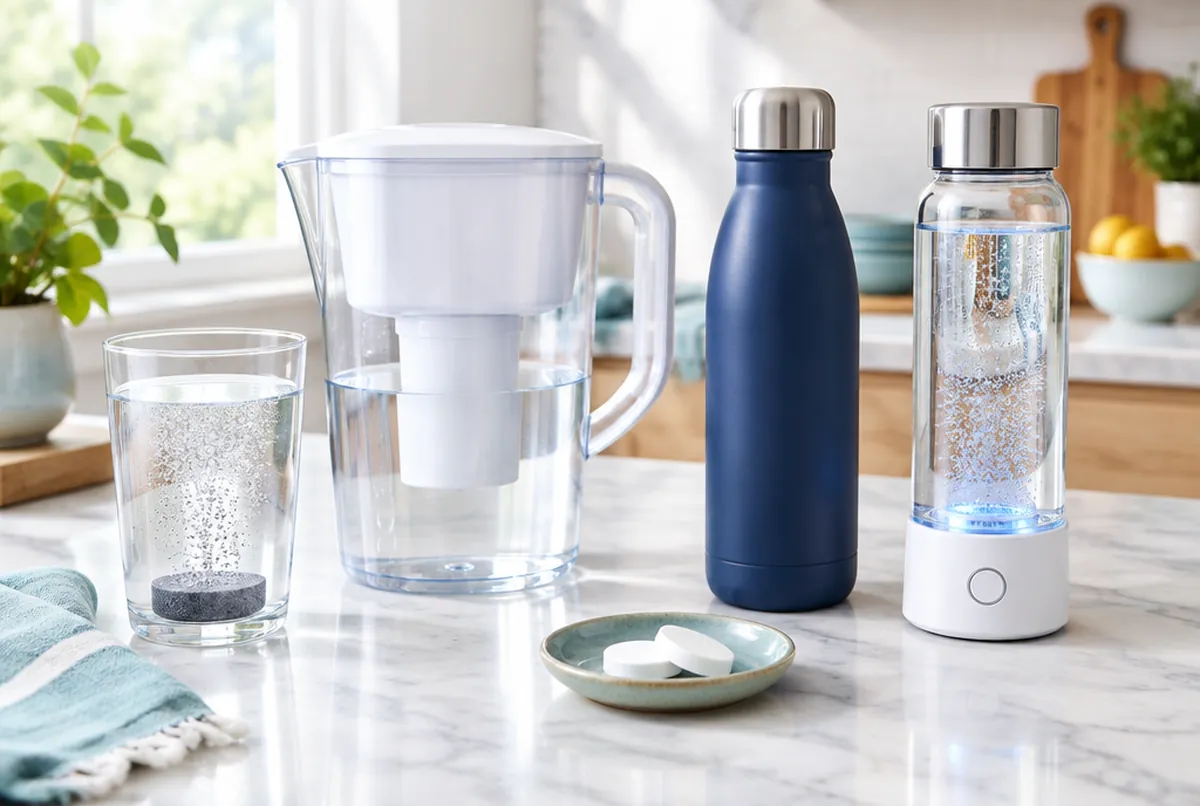
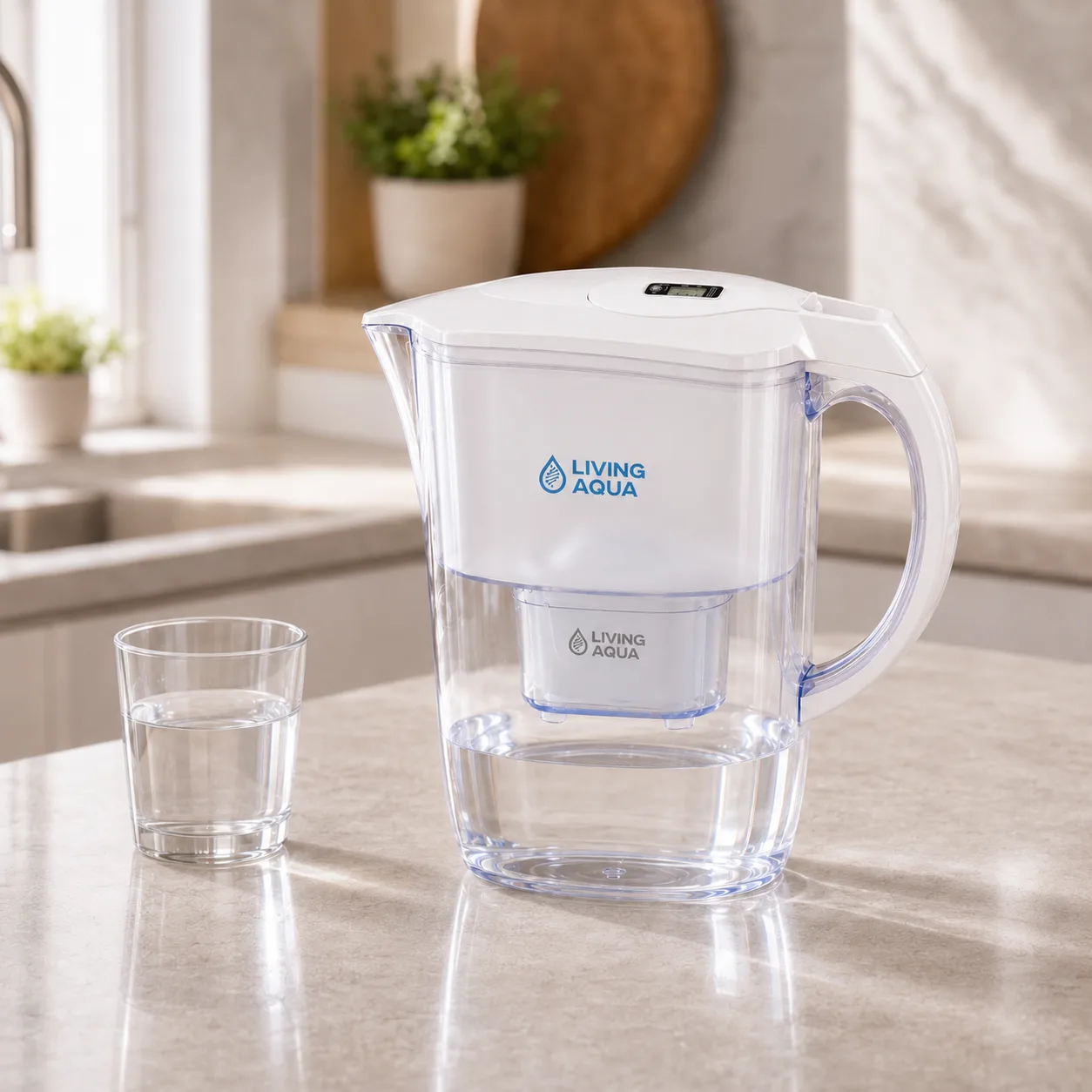
The Living Aqua Hydrogen-Rich Alkaline Water Pitcher is made for everyday tap water that’s already safe to drink. Its four-stage filter reduces chlorine, sediment and odor, puts minerals back and infuses the water with molecular hydrogen — something a plain carbon filter doesn’t do. If your water report flags a specific contaminant, deal with it using a system certified for that contaminant, and let the pitcher handle taste, minerals and hydrogen.
Minerals: the part worth keeping
Natural water is never just H₂O. Prof. Pokotylo writes that almost 80 of the 87 stable elements in Earth’s crust have been found in natural waters. The two that matter most in your glass are calcium and magnesium, which also make water “hard.” Hardness isn’t a health concern, the USGS notes, and it cites the World Health Organization’s view that drinking water can contribute calcium and magnesium to the diet — which matters most for people who fall short of them.
Food remains the main source of both. Prof. Pokotylo puts water’s share at 25–30% of the minerals we take in, and his conclusion is simple: drink mineralized water.
How much is “lightly mineralized”?
Prof. Pokotylo’s benchmark for everyday water is 100–500 mg/L of dissolved minerals. The upper end lines up with EPA’s non-enforceable guideline of 500 mg/L for total dissolved solids (TDS), set for taste and deposits rather than health. For comparison, the FDA reserves the name “mineral water” for water with at least 250 ppm of dissolved solids from its source.
To find your number, look for TDS in your water report or well test, or in a bottled brand’s water analysis if it publishes one. A handheld TDS meter gives a rough reading at home.
pH and ORP in plain words
pH tells you how acidic or alkaline water is, and it mostly affects taste. It says nothing about hydrogen: water can be alkaline without any H₂ at all. More in Alkaline water and hydrogen water: what’s the difference.
ORP, or oxidation-reduction potential, is measured in millivolts and shows whether water tends to take electrons (a positive reading) or give them up (a negative one). According to Prof. Pokotylo, ordinary drinking water reads about +100 to +400 mV, while the body’s internal fluids sit below zero, at about −70 to −200 mV. Dissolved hydrogen pulls the reading below zero: the more H₂ water holds, the more negative its ORP, he notes. More in Oxidation-reduction potential (ORP): why it should be negative.
Prof. Pokotylo’s benchmarks for everyday water
In his final chapter, Prof. Pokotylo sets out parameters that good everyday water should meet at the same time. Among them:
- lightly mineralized: 100–500 mg/L;
- negative ORP: −100 to −300 mV;
- dissolved molecular hydrogen: 0.4–0.8 ppm.
You’ll find the first in a water report. The other two are what hydrogen water adds: ordinary tap and bottled water usually read positive and hold virtually no free H₂. In nature, he writes, water like this forms underground, where it meets magnesium-bearing rock — the same kind of reaction a magnesium–ceramic filter or disc starts in your kitchen.
How to get this kind of water at home
- Make sure the source is safe. Read your annual water report, test your well once a year, or use bottled water.
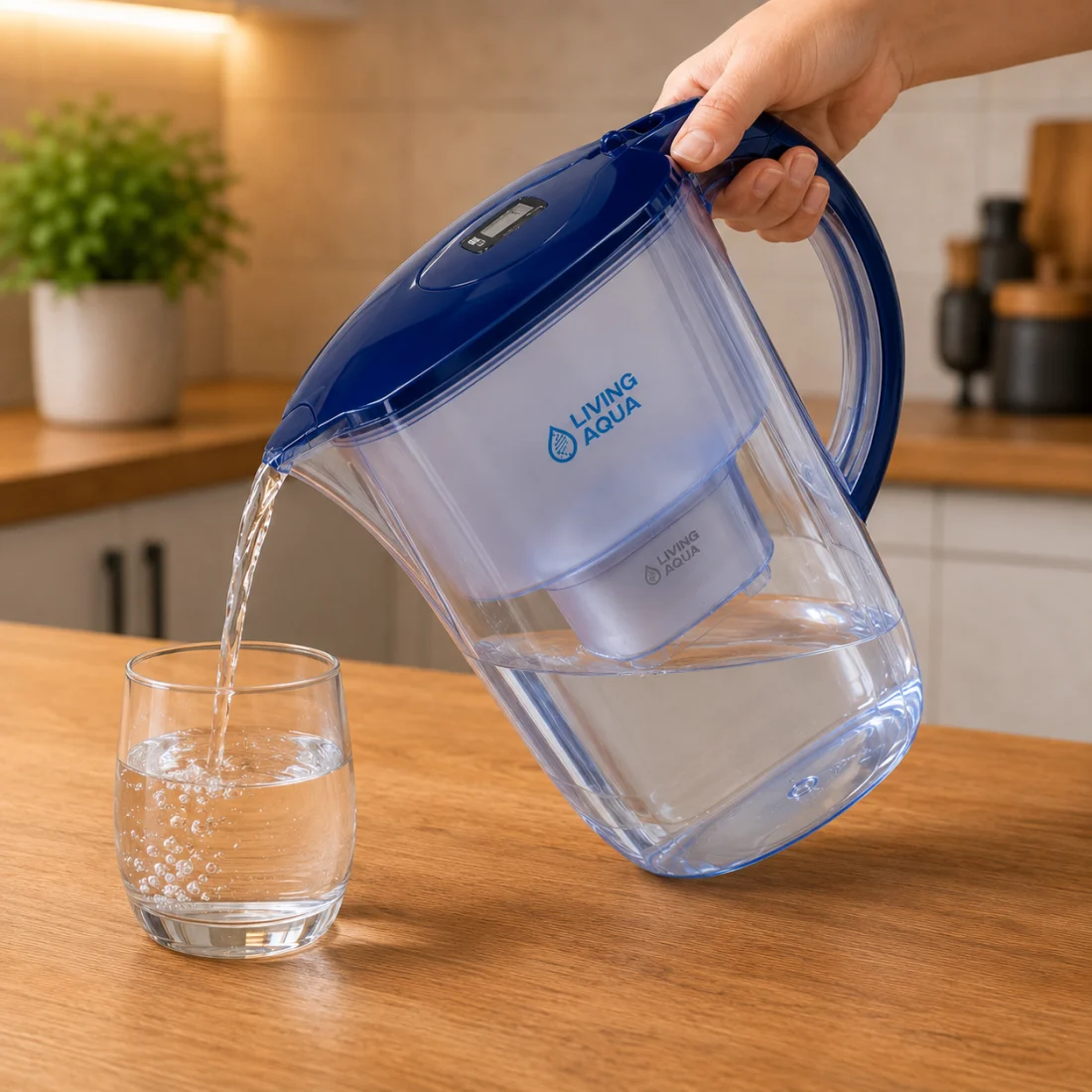
- If you drink tap water, filter it and add hydrogen in one step. The Living Aqua Hydrogen-Rich Alkaline Water Pitcher filters water in about 2 minutes, with typical readings of pH 9.0 · H₂ 0.6 ppm · ORP −300 mV. It holds 3.8 L (128 oz), and one filter lasts 6–8 weeks, or 300–350 L (79–92 gal). Soak each new filter in clean water for 3–5 minutes and pour that water out, then pour out the first batch after installing it. Keep spare filters on hand.
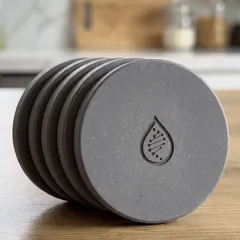
- If your water is already filtered or bottled, add hydrogen with a disc. A Living Aqua Hydrogen Water Disc turns a glass or bottle of still water into hydrogen water in 5 minutes, with hydrogen up to 1,000 ppb (1 ppm). Each disc lasts 2–3 months, or 53–58 gal (200–220 L). It isn’t a filter, so start with water that’s safe to drink.
- Drink it fresh. In an open glass, hydrogen water keeps its properties for about an hour; pitcher water in a closed container, for up to 5–6 hours. With a disc inside a closed bottle, the water stays hydrogen-rich for up to 12 hours.
Common myths
“The purer, the better.” Distilled and reverse-osmosis water are clean but carry almost no calcium or magnesium. Prof. Pokotylo favors lightly mineralized water.
“Any filter makes water healthier.” A filter does what it’s certified to do — no more. Match it to a real problem in your water, and change it on schedule.
“If it tastes fine, it’s safe.” The CDC points out that harmful germs and chemicals often don’t change how water looks, tastes or smells. A water report or a lab test is the reliable check.
The five rules in one minute
- Why? Water carries nutrients, clears waste and keeps your temperature steady; thirst is a late signal.
- Who? Everyone, especially active people, coffee lovers, children and older adults.
- When? Throughout the day: a glass on waking, between meals and around exercise, before thirst sets in.
- How much? About 30–40 mL per kg of body weight (0.45–0.6 fl oz per pound), more in heat and during exercise.
- What kind? Safe first; then lightly mineralized — and, if you choose hydrogen water, fresh, with dissolved H₂ and a negative ORP.
“The quality of your day will depend on the amount of water you drink daily, and the quality of water consumed daily will determine the number of days of your life!” — Prof. Oleh Pokotylo
Frequently asked questions
Is tap water safe to drink?
Is bottled water better than tap water?
Is it OK to drink distilled or reverse-osmosis water?
What does TDS mean on a water report?
Does hydrogen water replace a water filter?
Key takeaways
- Safe comes first: read your annual water report, and test a private well every year.
- Tap, filtered and bottled water can all be good choices; what matters is what’s in the glass.
- A filter does what it’s certified for, so match the NSF/ANSI standard to your problem.
- Minerals are worth keeping: Prof. Pokotylo’s benchmark is 100–500 mg/L.
- Hydrogen water adds dissolved H₂ and a negative ORP; make it at home and drink it fresh.
That’s the end of our “Five rules of drinking water.” To start the series again, read Why drink water. And when you want water that’s filtered, mineralized and hydrogen-rich at home, browse Living Aqua products.
This article is for general information only and isn’t medical advice. If you have a health condition, ask your doctor how much and what kind of water is right for you.
Sources
- Pokotylo O. 5 Fundamental Postulations of Drinking Water. Ternopil; 2021.
- U.S. Environmental Protection Agency, WaterSense. WaterSense Guide to Selecting Water Treatment Systems. November 2024. epa.gov
- U.S. Environmental Protection Agency. “National Primary Drinking Water Regulations.” epa.gov
- U.S. Environmental Protection Agency. “CCR Information for Consumers.” epa.gov
- U.S. Environmental Protection Agency. “Private Drinking Water Wells.” epa.gov
- Centers for Disease Control and Prevention. “Guidelines for Testing Well Water.” 2024. cdc.gov
- Centers for Disease Control and Prevention. “About Choosing Home Water Filters.” cdc.gov
- U.S. Food and Drug Administration. “Bottled Water Everywhere: Keeping It Safe.” Consumer Update. fda.gov
- U.S. Environmental Protection Agency. “Secondary Drinking Water Standards: Guidance for Nuisance Chemicals.” epa.gov
- U.S. Geological Survey, Water Science School. “Hardness of Water.” usgs.gov
- World Health Organization. Calcium and Magnesium in Drinking-water: Public Health Significance. Geneva: WHO; 2009. who.int
A Ukrainian manufacturer of hydrogen water devices.
Found your routine? We’ve got the device
Pitchers, discs and insulated bottles of our own making — no electricity needed, backed by lab test reports.
Read next