📋 In this article
For anyone who trains, hydration comes first: losing about 2% of your body weight in sweat can already hold back performance, and no special water makes up for not drinking enough. Hydrogen water is something athletes add on top. In small studies, it went along with less perceived fatigue and lower blood lactate in some people, but pooled data show no clear effect on VO₂max, endurance or strength — so treat it as a possible extra, not a shortcut.
Below: how much to drink around exercise, based on Prof. Oleh Pokotylo’s book 5 Fundamental Postulations of Drinking Water and US sports medicine guidance; what individual studies and three recent meta-analyses found; and how to keep hydrogen water fresh in your gym bag.
Why hydration comes first
Muscles are about 79% water, according to the U.S. Geological Survey, and hard exercise drains that supply fast. The American College of Sports Medicine (ACSM) estimates sweat rates for runners at roughly 14–61 fl oz (0.4–1.8 L) an hour, depending on body size, pace and weather. Prof. Pokotylo notes that an athlete can lose 1–4 L (about 1 quart to 1 gallon) in a single hard session, especially in competition.
The margin is small. ACSM’s goal for drinking during exercise is to keep the water deficit under 2% of body weight, and the National Athletic Trainers’ Association (NATA) notes that dehydration of about 2% can already compromise performance, the body’s ability to shed heat, mood and recovery. For a 154 lb (70 kg) person, 2% is only about 3 lb (1.4 kg) of sweat.
Many people start behind: according to NATA, more than half of athletes, from youth sports to the pros, arrive at workouts already under-hydrated. And people who drink to thirst during activity typically replace only about two-thirds of their sweat losses.
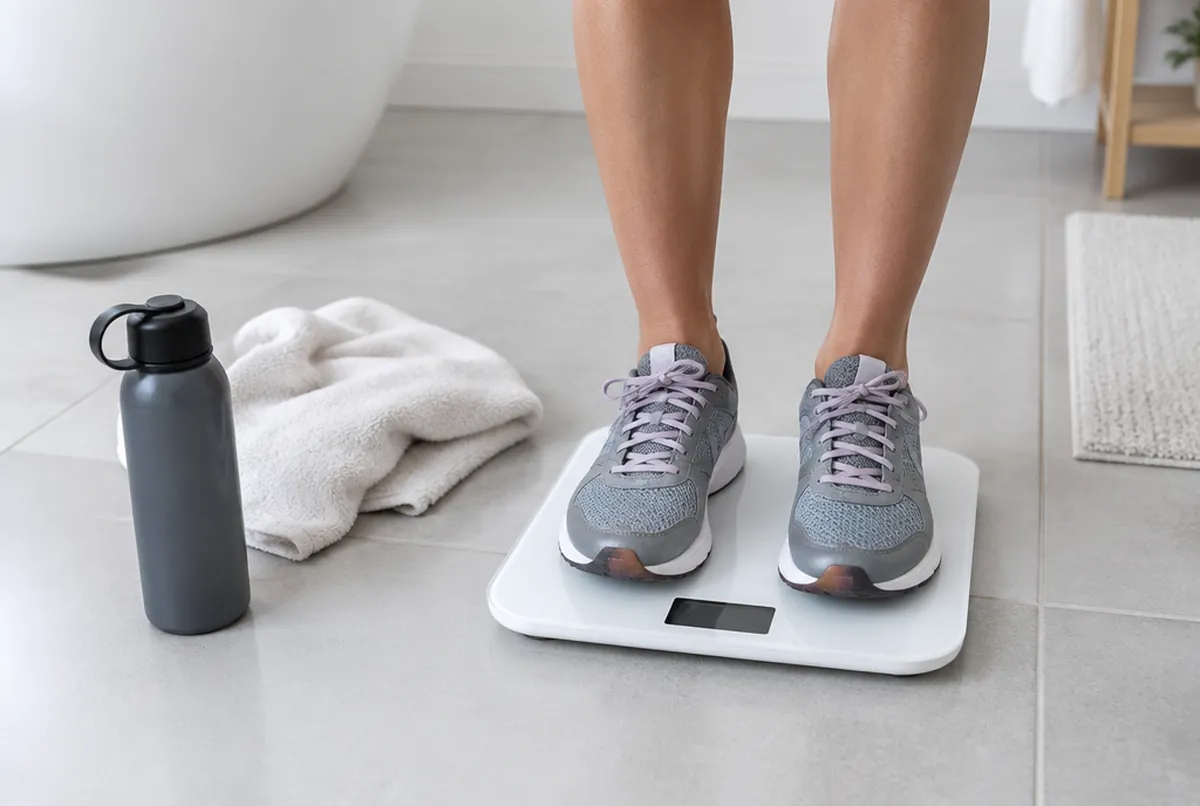
Weigh yourself to learn your number
Both Prof. Pokotylo and ACSM recommend the simplest check: step on the scale before and after training. Each pound lost is roughly a pint (16 fl oz) of fluid — about 1 L per kg. Check after a few kinds of sessions — easy, hard, hot — and you’ll know how much to drink for each.
How much to drink before, during and after exercise
Here’s Prof. Pokotylo’s simple formula next to the ACSM position stand:
| When | Prof. Pokotylo’s formula | ACSM guidance |
|---|---|---|
| Before | 13.5 fl oz (400 mL), 30 min before | 5–7 mL per kg, 4+ hours before |
| During | 1.7 fl oz (50 mL) every 15 min | Keep losses under 2% of body weight |
| After | 13.5 fl oz (400 mL), 30 min after | 1.5 L per kg lost (23 fl oz per lb) |
For a 154 lb (70 kg) person, ACSM’s pre-exercise amount comes to about 12–17 fl oz (350–490 mL); if your urine is still dark, it suggests another 3–5 mL per kg about 2 hours before you start.
The book’s bigger idea is to replace most of your losses as you go. If you usually lose 2.2 lb (1 kg) in a session, aim to drink about 80% of that — roughly 27 fl oz (800 mL) — in small portions while you train. Afterward, weigh yourself again and drink one and a half times the deficit that’s left: (1,000 − 800) × 150% = 300 mL, or about 10 fl oz. ACSM lands on the same ratio, since drinking a lot at once makes you pass more urine; NATA recommends up to 150% when you have under 4 hours to recover.
Longer runs and hot days
For runners at short and middle distances, Prof. Pokotylo suggests 6–8 mL per kg about 2 hours before the start — 12–16 fl oz (360–480 mL) for a 132 lb (60 kg) runner. Marathoners, he notes, can lose 2–8% of their body weight, mostly as water. For events of about an hour or longer, ACSM notes that drinks with carbohydrates and electrolytes can do more than water alone, and salty snacks or drinks afterward help the body hold on to fluid. For serious training or unusual conditions, the book recommends an individual plan from a sports nutritionist.
Don’t overdo it
NATA warns that drinking more than you sweat — water or sports drinks — can dilute the sodium in your blood, a dangerous condition called exercise-associated hyponatremia, most often in sessions of an hour or more. The check is the same scale: you shouldn’t weigh more after exercise than before.
Why athletes look at hydrogen water
Hard exercise increases the production of reactive oxygen species — free radicals — in working muscles. That isn’t all bad: these molecules are part of the signal that tells your body to adapt. In excess, though, they’re linked to fatigue and muscle damage. Prof. Pokotylo notes that unusual or very intense efforts, such as interval training or competition, drive oxidative stress and lactic acid higher.
In cell experiments published in 2007, H₂ selectively neutralized the hydroxyl radical, the most aggressive of these molecules, while leaving others with useful roles alone. A 2019 review by Tyler LeBaron and colleagues noted that conventional antioxidants and anti-inflammatories often blunt the gains from training. The authors proposed that hydrogen might instead act as a “redox adaptogen,” reducing the harm of exhausting exercise while preserving its benefits — and stressed that more research is warranted. It’s a hypothesis, not a proven effect.
What individual studies found
Human studies are small, and their results vary.
Lactate and muscle fatigue
In a 2012 Japanese pilot study, 10 young male soccer players drank 1,500 mL (about 51 fl oz) of either hydrogen-rich or placebo water over the evening before and the morning of testing; the hydrogen water was made by placing magnesium sticks in the bottles. After 30 minutes of hard cycling, blood lactate rose with placebo but not with hydrogen water, and leg strength didn’t drop in the early phase of a fatigue test. Blood markers of oxidative stress and muscle damage didn’t change.
Perceived fatigue and heart rate
The largest of these trials, published in Japan in 2019, ran two experiments. In 99 untrained adults, those who drank hydrogen water 30 minutes before a cycling test reported less fatigue after mild exercise than those who drank placebo water. In 60 trained adults who drank it 10 minutes before exercise, the hydrogen group showed higher maximal oxygen uptake and lower ratings of perceived exertion.
In a smaller US crossover study the same year, 19 healthy adults took hydrogen-producing tablets in water the day before and the day of a treadmill test. Their average heart rate and breathing rate during the test were lower, but maximal values didn’t change.
Repeated sprints
In 2022, a Czech team tested 16 professional soccer players on 15 sprints of 30 m (about 33 yd) with 20-second breaks. After hydrogen-rich water, the last sprints were faster than after placebo — by 2.7–3.4% over the first 15 m of the 14th and 15th sprints, and by 1.9% over 30 m in the final one. Blood lactate and perceived exertion didn’t differ.
A study that found no effect
The same group gave 24 trained young runners 1,260 mL (about 43 fl oz) of hydrogen-rich water in four doses over the 2 hours before a run to exhaustion at maximal aerobic speed. Time to exhaustion, blood lactate and heart rate were no different from placebo.
That’s typical of a young field: small groups, short protocols, different doses and ways of delivering hydrogen, and results that don’t always agree.
What the meta-analyses say
Three meta-analyses, published in 2023 and 2024 by overlapping research teams, combined trials in healthy adults that mostly used hydrogen-rich water and, in some cases, inhaled hydrogen gas or hydrogen baths.
| Measure | Pooled result |
|---|---|
| Perceived exertion | Small reduction |
| Blood lactate | Small reduction |
| VO₂max, aerobic endurance | No clear effect |
| Strength, 30-second sprints | No clear effect |
| Lower-body power (jumps) | Small gain, in one analysis |
| Oxidative stress markers | No clear change |
The first (19 studies, 402 participants) concluded there was moderate evidence that hydrogen eases fatigue but doesn’t improve aerobic capacity. The second (27 publications, 597 participants) found no clear effect on endurance or strength and a small benefit for lower-body explosive power. The third, the smallest (7 experiments, 76 participants), found no direct drop in exercise-induced oxidative stress, only a modest rise in a blood marker of antioxidant capacity, mainly with intermittent exercise. All three teams call for more rigorous studies. In plain terms: hard efforts felt slightly easier, but hydrogen hasn’t been shown to make people fitter, stronger or faster.
How to fit hydrogen water into your training
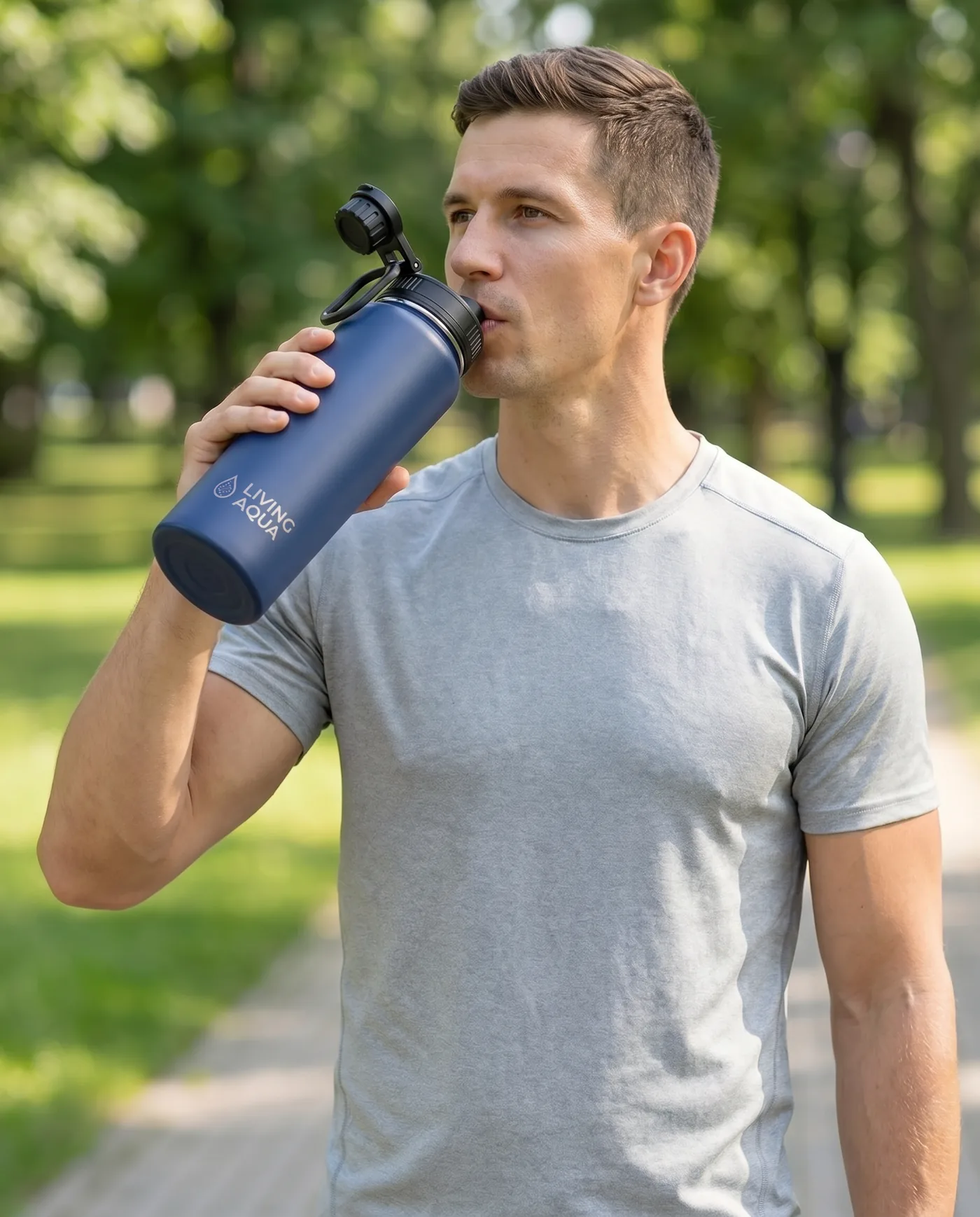
- Make it part of your fluid plan, not an extra. Use hydrogen water for the drinks you’d have anyway — before, during and after training.
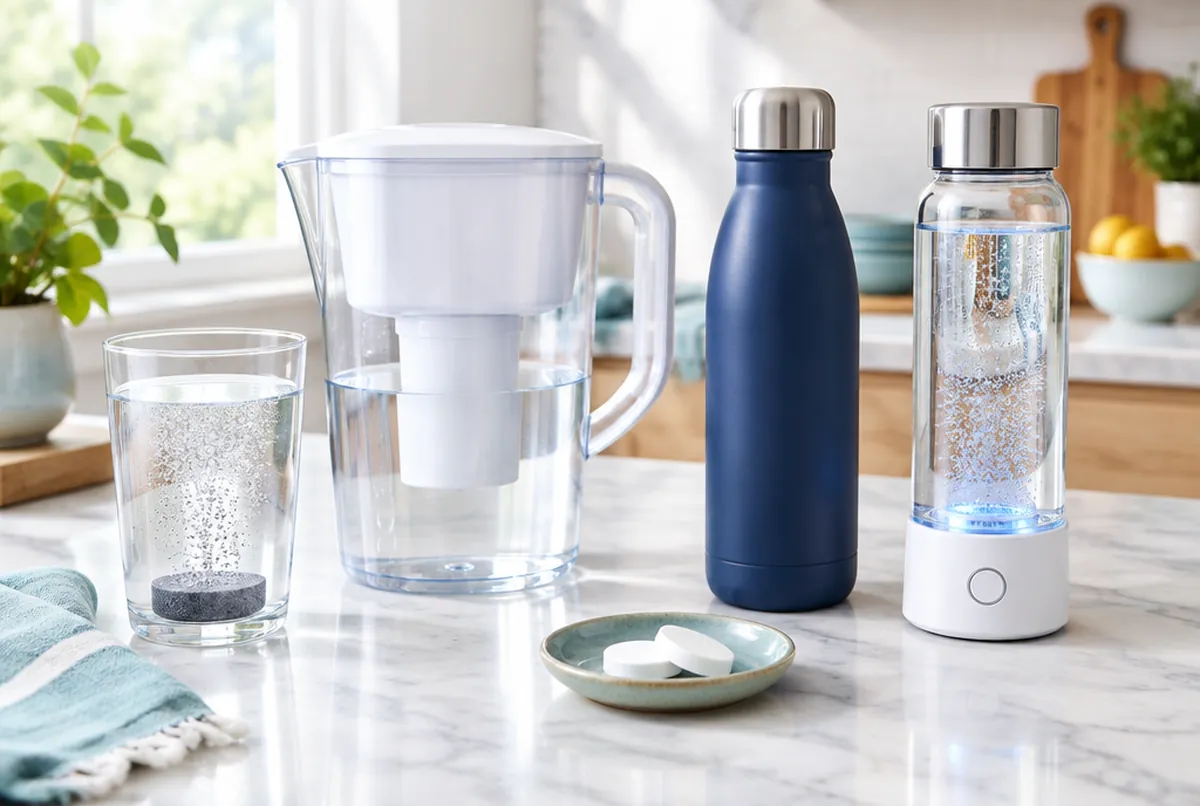
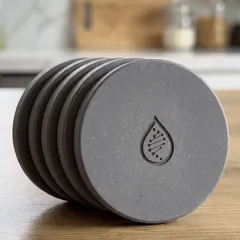
- Drink it fresh. In an open glass, hydrogen water keeps its properties for only about an hour. A disc in a closed bottle keeps generating hydrogen, so the water stays hydrogen-rich for up to 12 hours: drop a Living Aqua Hydrogen Water Disc into your bottle before you leave, and it’s ready in 5 minutes.
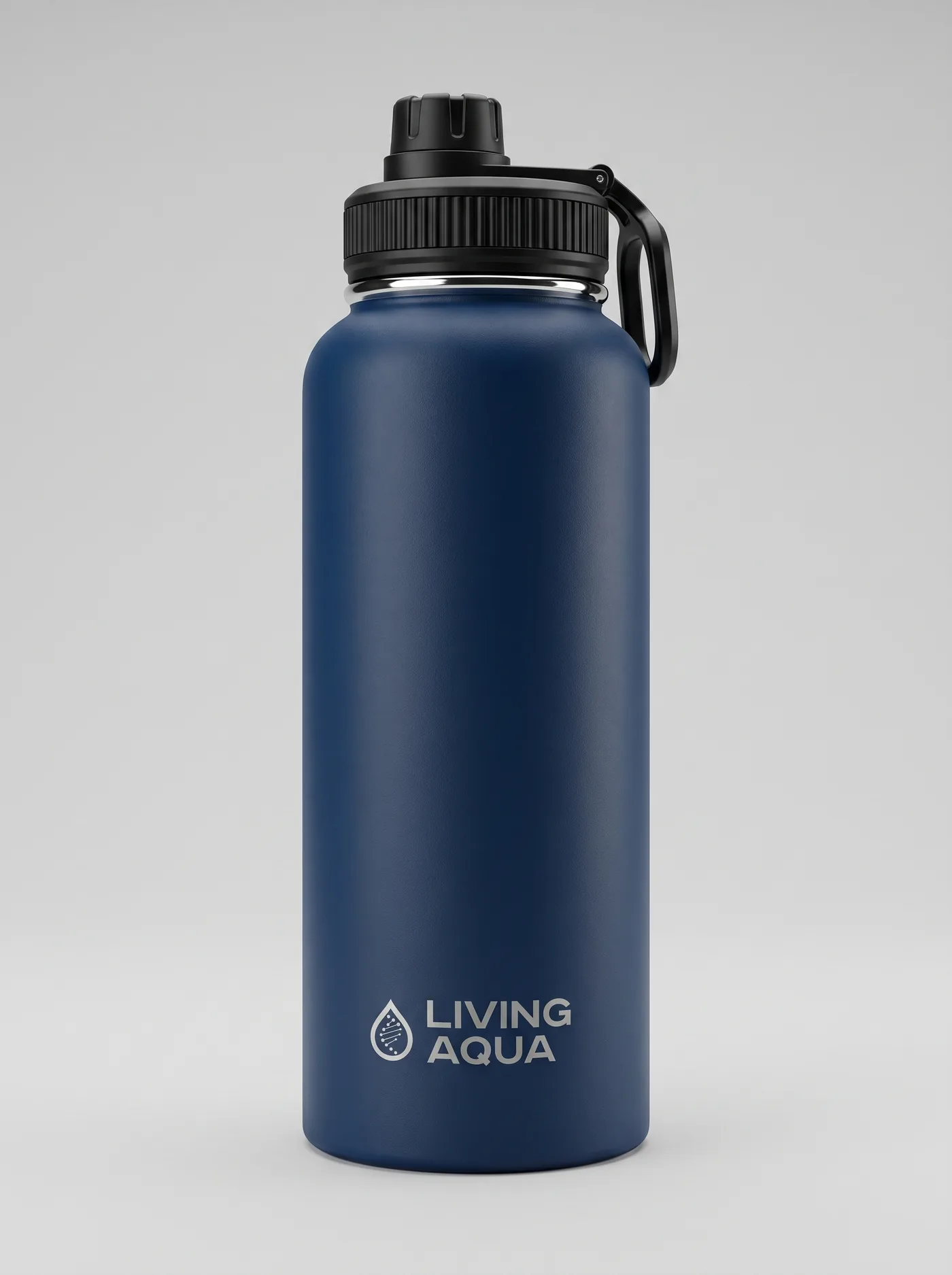
- Pick a bottle that fits the disc. The Living Aqua Insulated Bottle is leak-proof stainless steel with a wide 2.2 in (55 mm) mouth that the 1.8 in (45 mm) disc drops right into, and it keeps drinks cold. The 22 oz (650 mL) size suits a gym bag; the 32 oz (950 mL) covers a whole day.
- Keep the disc in plain water. It’s made for still drinking water up to 122 °F (50 °C); tea, coffee, juice and carbonated drinks make it ineffective. Carry sports drinks in a separate bottle.
- Start with safe water. The disc isn’t a filter. If you drink tap water, fill your bottle from the hydrogen-rich alkaline pitcher, which filters it in about 2 minutes.
What hydrogen water won’t replace
- Enough fluid. No amount of H₂ makes up for a water deficit.
- Electrolytes and carbohydrates for long or hot sessions.
- Sleep, food and rest days — the basics of recovery.
- Medical care. Pain, an injury or a health condition calls for a doctor, not a new water bottle.
Frequently asked questions
Should I drink hydrogen water before or after a workout?
Can hydrogen water replace a sports drink?
Does hydrogen water lower lactic acid?
Will hydrogen water make me faster or stronger?
How much hydrogen water should I drink around training?
Key takeaways
- Hydration first: start hydrated, keep sweat losses under 2% of body weight and weigh yourself before and after training.
- A simple routine: about 13.5 fl oz (400 mL) 30 minutes before, small sips every 15 minutes, then about one and a half times whatever deficit is left.
- Studies of hydrogen water in sport are small; pooled data show slightly lower perceived exertion and lactate, but no clear gains in VO₂max, endurance or strength.
- Drink it fresh: a disc in a closed bottle keeps water hydrogen-rich for up to 12 hours.
- It won’t replace sleep, food, electrolytes or sensible training.
Want to try it on your next run or gym session? A Living Aqua disc set and insulated bottle make fresh hydrogen water wherever you train, or browse all products. For everyday habits beyond the gym, see How to drink hydrogen water.
This article is for general information only and isn’t medical advice. If you have a health condition, ask your doctor how much and what kind of water is right for you.
Sources
- Pokotylo O. 5 Fundamental Postulations of Drinking Water. Ternopil; 2021.
- American College of Sports Medicine; Sawka MN, Burke LM, Eichner ER, Maughan RJ, Montain SJ, Stachenfeld NS. American College of Sports Medicine position stand. Exercise and fluid replacement. Medicine & Science in Sports & Exercise. 2007;39(2):377–390. PubMed 17277604
- McDermott BP, Anderson SA, Armstrong LE, et al. National Athletic Trainers’ Association position statement: fluid replacement for the physically active. Journal of Athletic Training. 2017;52(9):877–895. PubMed 28985128
- U.S. Geological Survey, Water Science School. “The Water in You: Water and the Human Body.” usgs.gov
- Ohsawa I, Ishikawa M, Takahashi K, et al. Hydrogen acts as a therapeutic antioxidant by selectively reducing cytotoxic oxygen radicals. Nature Medicine. 2007;13(6):688–694. PubMed 17486089
- LeBaron TW, Laher I, Kura B, Slezak J. Hydrogen gas: from clinical medicine to an emerging ergogenic molecule for sports athletes. Canadian Journal of Physiology and Pharmacology. 2019;97(9):797–807. PubMed 30970215
- Aoki K, Nakao A, Adachi T, Matsui Y, Miyakawa S. Pilot study: effects of drinking hydrogen-rich water on muscle fatigue caused by acute exercise in elite athletes. Medical Gas Research. 2012;2:12. PubMed 22520831
- Mikami T, Tano K, Lee H, et al. Drinking hydrogen water enhances endurance and relieves psychometric fatigue: a randomized, double-blind, placebo-controlled study. Canadian Journal of Physiology and Pharmacology. 2019;97(9):857–862. PubMed 31251888
- LeBaron TW, Larson AJ, Ohta S, et al. Acute supplementation with molecular hydrogen benefits submaximal exercise indices: randomized, double-blinded, placebo-controlled crossover pilot study. Journal of Lifestyle Medicine. 2019;9(1):36–43. PubMed 30918832
- Botek M, Khanna D, Krejčí J, et al. Molecular hydrogen mitigates performance decrement during repeated sprints in professional soccer players. Nutrients. 2022;14(3):508. PubMed 35276867
- Valenta M, Botek M, Krejčí J, et al. Acute pre-exercise hydrogen rich water intake does not improve running performance at maximal aerobic speed in trained track and field runners: a randomized, double-blind, placebo-controlled crossover study. PLoS One. 2022;17(12):e0279307. PubMed 36538554
- Zhou K, Liu M, Wang Y, et al. Effects of molecular hydrogen supplementation on fatigue and aerobic capacity in healthy adults: a systematic review and meta-analysis. Frontiers in Nutrition. 2023;10:1094767. PubMed 36819697
- Zhou K, Shang Z, Yuan C, et al. Can molecular hydrogen supplementation enhance physical performance in healthy adults? A systematic review and meta-analysis. Frontiers in Nutrition. 2024;11:1387657. PubMed 38903627
- Li Y, Bing R, Liu M, et al. Can molecular hydrogen supplementation reduce exercise-induced oxidative stress in healthy adults? A systematic review and meta-analysis. Frontiers in Nutrition. 2024;11:1328705. PubMed 38590828
A Ukrainian manufacturer of hydrogen water devices.
Found your routine? We’ve got the device
Pitchers, discs and insulated bottles of our own making — no electricity needed, backed by lab test reports.
Read next