📋 In this article
Your body needs water because almost everything it does happens in water: moving nutrients, clearing waste, keeping your temperature steady and running the chemistry inside every cell. You lose water all day long — through breathing, sweat and urine — and even a small shortfall can leave you tired, foggy and irritable. Drinking regularly, before thirst builds up, is the simplest way to keep that balance.
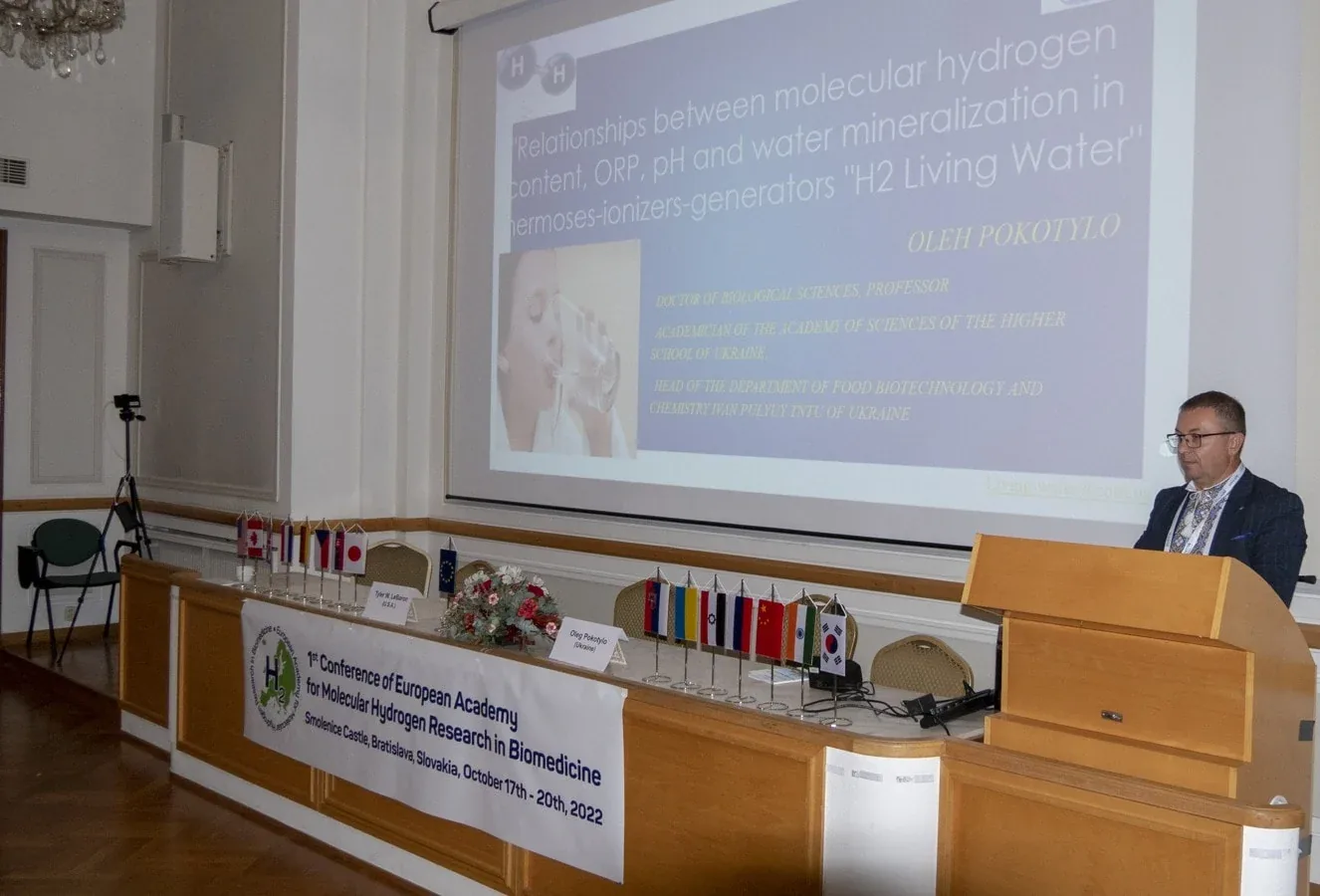
With this article we begin our series “Five rules of drinking water,” based on the book 5 Fundamental Postulations of Drinking Water by Prof. Oleh Pokotylo — Professor, Academician, Doctor of Biological Sciences (Ternopil, 2021). Five articles, five answers: why, who, when, how much and what kind of water to drink. Here, the book’s key ideas meet data from US health authorities and published research.
We are literally made of water
We tend to treat water as an afterthought: “I’ll drink when I feel like it.” Yet water is the first and most important “building material” of the human body. According to the U.S. Geological Survey (USGS), water makes up up to 60% of an adult’s body. The share depends on age and body composition: babies are born at about 78% water, adult men are about 60% and adult women about 55%, because fat tissue holds less water than lean tissue. For a 154 lb (70 kg) man, that’s about 11 gallons (42 L) of water. As Prof. Pokotylo stresses, the share falls with age.
Nor is it spread evenly. The book gives these figures for different tissues:
- the cerebral cortex — 83%;
- kidneys — 82%;
- blood — 79%;
- skin — 72%;
- fat tissue — only 29%;
- the skeleton — 22%.
The body’s three water “pools”
Prof. Pokotylo describes the water in your body as three connected pools:
- intracellular (inside the cells) — about 60%;
- extracellular (the fluid between the cells) — about 33%;
- intravascular (in the blood) — about 7%.
The blood pool changes fastest: you spend it first when you sweat and refill it when you drink. When you don’t drink enough, the body sets off a “compensation chain”: the blood draws water from the space between the cells, and that space draws it from the cells themselves. The cells literally “shrink,” giving up their own water to keep the blood flowing.
This exchange follows a daily rhythm. At night, water moves out of the cells into the blood to support circulation while we sleep; during the day it should move back. According to the book, we lose roughly 17 fl oz (500 mL) of water overnight — which is exactly why that morning glass of water matters so much.
What water does in your body
The CDC sums up the basics: water helps your body keep a normal temperature, lubricate and cushion joints, protect the spinal cord and other sensitive tissues, and get rid of waste through urination, perspiration and bowel movements. The USGS adds that it carries nutrients through the bloodstream and forms saliva.
Prof. Pokotylo’s list goes deeper into biochemistry: water is the medium for every biochemical reaction; with salts, it maintains osmotic pressure, the balance that keeps fluid where it belongs; it transports countless compounds and helps hold the acid–base balance steady. A single cell, he notes, carries out about 10,000 biochemical reactions per second — every one of them in water.
Water is energy, not just a “solvent”
We were taught that water is simply a medium and a means of transport. Prof. Pokotylo goes further: in his view, water takes a direct part in the body’s energy metabolism. At cell membranes, water is thought to help produce so-called hydroelectric energy, supporting the synthesis of ATP — the cell’s universal “battery.”
That’s why he calls a glass of good water one of the best pick-me-ups there is, above all for the brain, one of the most water-rich organs in the body. Mayo Clinic makes a similar practical point: even mild dehydration can make you feel as if you have less energy and make it harder to think clearly. And a glass of water comes with zero calories and no caffeine.
Water is a source of minerals
Depending on where it comes from, water brings calcium, magnesium, potassium, sodium, iodine, selenium and other elements. Food remains the main source of calcium and magnesium, the World Health Organization (WHO) notes, but drinking water can be a significant source of minerals too, depending on its mineral content and how much you drink. Minerals in water are in ionic form, which tends to be easily absorbed.
Prof. Pokotylo is wary of relying only on over-purified or distilled water (“bare” H₂O from deep purification systems): in his view, such water may “wash” minerals out of the body. That’s why the quality of water matters, not just the quantity — we’ll cover it in detail in the last article of the series, What kind of water should you drink?
Thirst is already a late signal
According to the book, you start to feel thirsty once your body has already lost 1–2% of its water — roughly 17–34 fl oz (500–1,000 mL). Thirst isn’t a reminder for later; it’s a signal that a shortfall has already happened. Prof. Pokotylo’s advice is blunt: “You need to drink water when you are not thirsty and not when you are thirsty.”

The National Academies are more relaxed: most healthy people, they say, meet their daily needs by letting thirst be their guide. Both views hold up in practice. Thirst copes with an ordinary day at a desk, but heat, exercise and fever — the CDC lists all three — raise your needs faster than thirst catches up.
The thirst and hunger centers in the brain sit right next to each other, the book explains, which is why we often mistake a lack of water for the urge to eat. A simple trick: when a sudden craving for a snack hits, drink a glass of water first. If the craving fades, it was water your body was asking for.
When you’re dehydrated, the book adds, the blood thickens, circulation and oxygen delivery to the tissues suffer, and the kidneys and liver have to work harder.
Age deserves a special mention. Children feel thirst sharply and ask for a drink right away. Adults notice the signal but “put it off until later.” Older people feel thirst less and less — and quietly get used to living on too little water. Research backs this up: a weaker thirst response in older age has been reported consistently for decades (Begg, 2017). So the older we get, the more deliberate our drinking habits should be.
How your body signals it needs water
The symptoms of dehydration build gradually — and they start much earlier than most of us think. The book reproduces a classic scale of water loss:
- 1–5% — thirst, feeling unwell and sluggish, loss of appetite, flushed skin, irritability, drowsiness, a slightly raised body temperature;
- 6–10% — dizziness, shortness of breath, “pins and needles” in the arms and legs, a dry mouth with no saliva, slurred speech, difficulty walking;
- over 10% — the condition becomes life-threatening.
Lab studies show that even the mild end of this scale matters. In 25 young women, losing about 1.4% of body weight in fluid worsened mood, lowered concentration, made tasks feel harder and brought on headaches, although most measures of cognitive performance didn’t change (Armstrong et al., 2012). In 26 young men, a loss of about 1.6% led to more errors on a vigilance test, slower working memory and more fatigue (Ganio et al., 2011).
In Prof. Pokotylo’s view, most people don’t drink enough. Many of us spend much of the day slightly “in the red” without suspecting that an afternoon slump or a headache at the end of the day may be the body asking for a glass of water.
Water and healthy aging
Studies of long-lived people, Prof. Pokotylo writes, point to one shared habit: they regularly drank enough good-quality water. A water habit built in childhood lays a foundation that lasts for decades. And for middle-aged and older people, a daily amount of good water is a simple, affordable way to support the body as it ages.
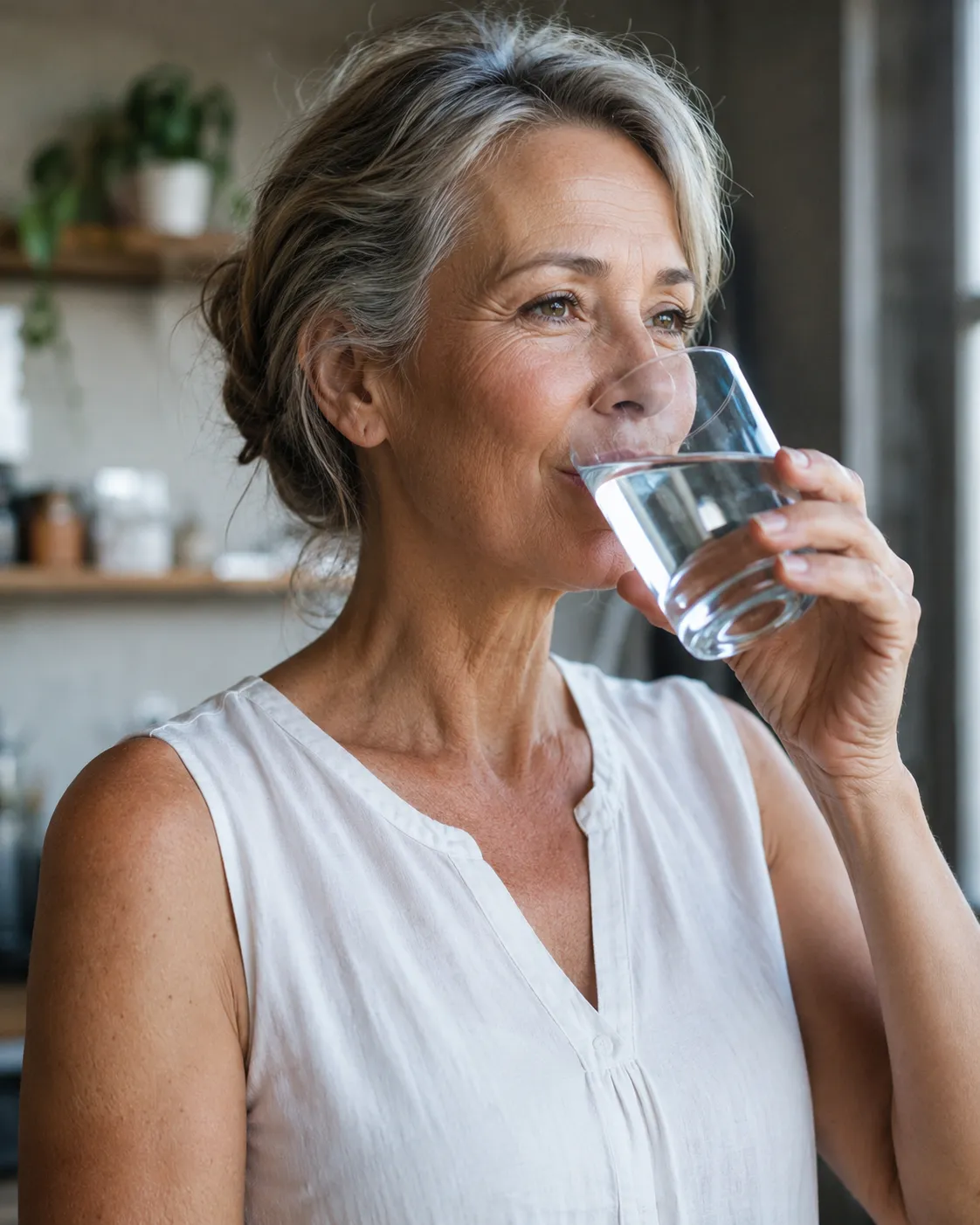
Newer research points the same way. NIH researchers followed 15,752 adults, aged 45–66 at the start, for 25 years, using blood sodium as a proxy for hydration habits. Those whose sodium sat in the high-normal range (above 142 mmol/L) had up to 50% higher odds of being biologically older than their actual age. The study shows a link, not proof, and the authors call for intervention studies to confirm it (Dmitrieva et al., 2023).
“The quality of your day will depend on the amount of water you drink daily, and the quality of water consumed daily will determine the number of days of your life!” — Prof. Oleh Pokotylo
How to make water a daily habit
- Start the morning with water. Prof. Pokotylo suggests two or three small glasses before breakfast to replace what you lost overnight; his full daily schedule is in How to drink hydrogen water.
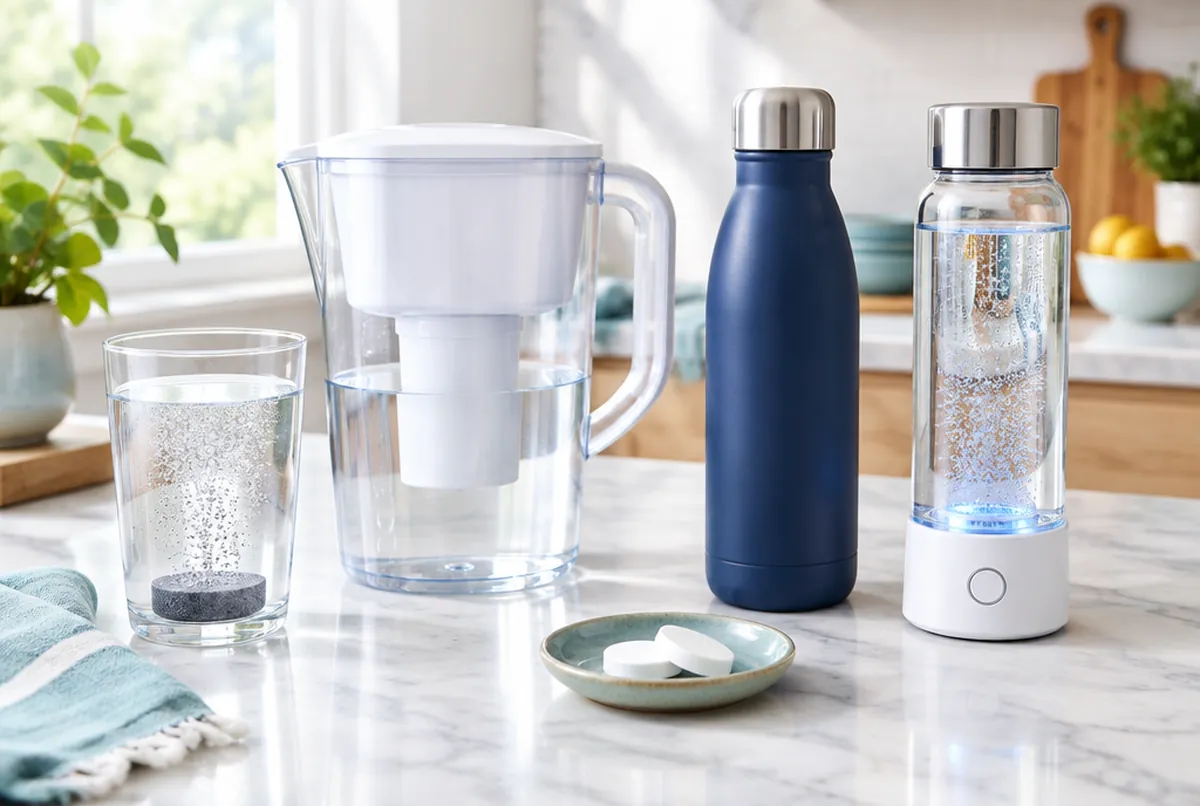
- Keep water within reach. The CDC’s first tip is to carry a reusable bottle. An insulated one, like the 22 or 32 oz Living Aqua Insulated Bottle, also keeps it cold.
- Sip between meals. Small portions spread through the day beat a large amount all at once.
- Drink more when your body loses more — in hot weather, during exercise or when you have a fever.
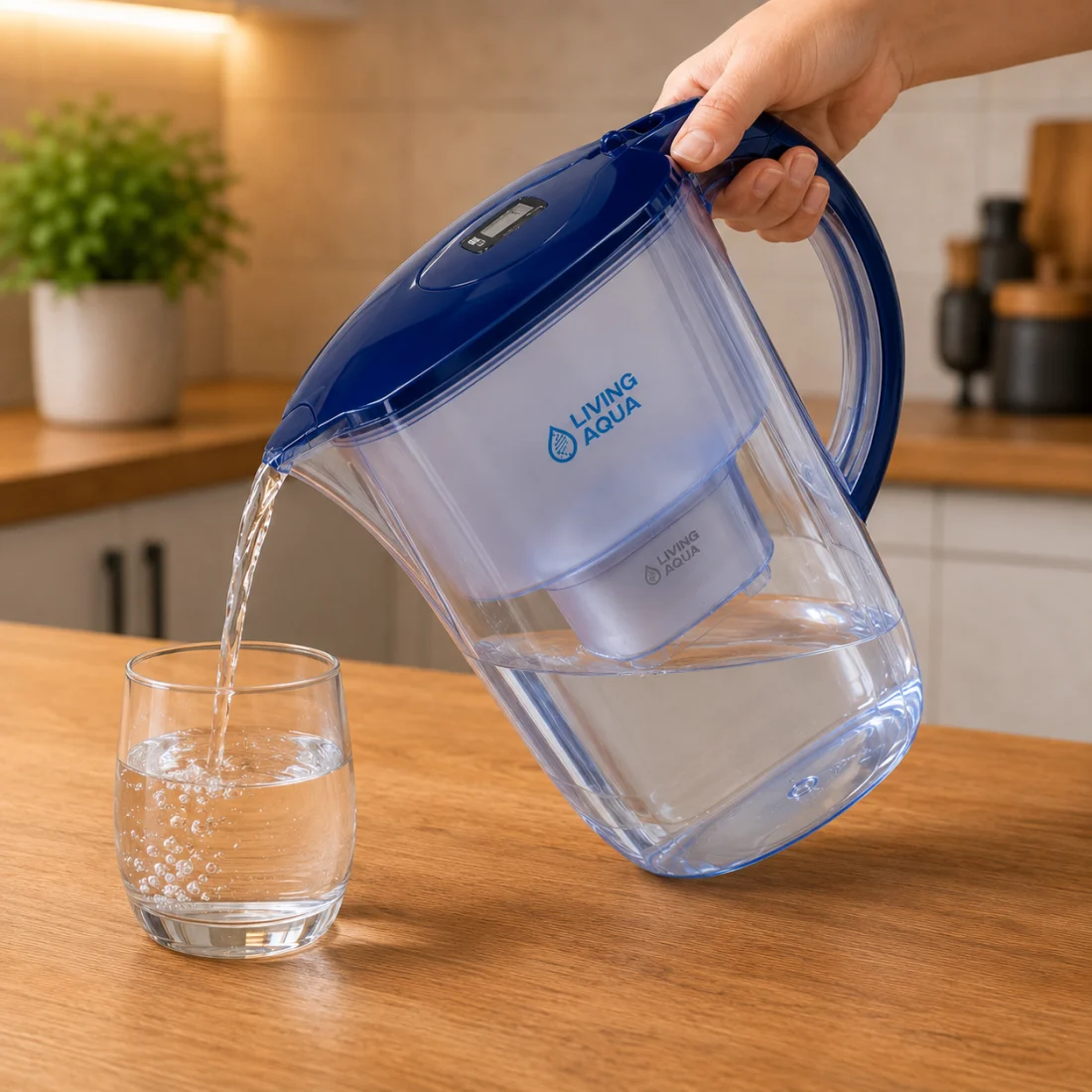
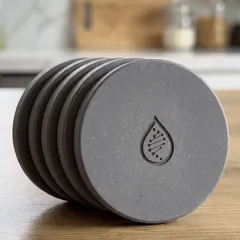
- Make water you enjoy drinking. If you drink tap water, the Living Aqua Hydrogen-Rich Alkaline Water Pitcher filters it in about 2 minutes and infuses it with molecular hydrogen; its filter uses a magnesium–ceramic mineral blend developed by Prof. Pokotylo. If your water is already safe to drink, Living Aqua Hydrogen Water Discs turn a glass or bottle of it into hydrogen water in 5 minutes. New to the idea? Read What is hydrogen water.
Frequently asked questions
Is thirst a good guide to how much to drink?
Do coffee, tea and other drinks count toward my water?
How can I tell if I’m drinking enough?
Can you drink too much water?
Key takeaways
Why drink water every day:
- it keeps your fluid balance, pH and the body’s other internal constants steady;
- in Prof. Pokotylo’s view, it helps supply your cells with “clean” energy;
- it is a source of minerals and electrolytes;
- it helps your heart, brain and digestion do their work;
- it helps your body get rid of waste (it “rinses” the kidneys);
- it helps you maintain a healthy weight and healthy-looking skin;
- it regulates body temperature.
Water isn’t a medicine or a “magic pill” — it’s the everyday foundation without which no system in your body can run at full capacity. Start tomorrow with a glass of good water, and when you want it filtered and hydrogen-rich, browse our products.
This is the first article in the “Five rules of drinking water” series, based on the book by Prof. Oleh Pokotylo. Next up: Who needs to drink more water?
This article is for general information only and isn’t medical advice. If you have a health condition, ask your doctor how much and what kind of water is right for you.
Sources
- Pokotylo O. 5 Fundamental Postulations of Drinking Water. Ternopil: FOP Palianytsia V.A.; 2021. ISBN 978-617-7875-12-2.
- U.S. Geological Survey, Water Science School. “The Water in You: Water and the Human Body.” usgs.gov
- Centers for Disease Control and Prevention. “About Water and Healthier Drinks.” 2026. cdc.gov
- Mayo Clinic Staff. “Water: How much should you drink every day?” Mayo Clinic; 2026. mayoclinic.org
- National Academies (Institute of Medicine). “Report Sets Dietary Intake Levels for Water, Salt, and Potassium To Maintain Health and Reduce Chronic Disease Risk.” News release; 2004. nationalacademies.org
- World Health Organization. Calcium and Magnesium in Drinking-water: Public Health Significance. Geneva: WHO; 2009. who.int
- Begg DP. Disturbances of thirst and fluid balance associated with aging. Physiology & Behavior. 2017;178:28–34. PubMed 28267585
- Armstrong LE, Ganio MS, Casa DJ, et al. Mild dehydration affects mood in healthy young women. Journal of Nutrition. 2012;142(2):382–388. PubMed 22190027
- Ganio MS, Armstrong LE, Casa DJ, et al. Mild dehydration impairs cognitive performance and mood of men. British Journal of Nutrition. 2011;106(10):1535–1543. PubMed 21736786
- Dmitrieva NI, Gagarin A, Liu D, Wu CO, Boehm M. Middle-age high normal serum sodium as a risk factor for accelerated biological aging, chronic diseases, and premature mortality. eBioMedicine. 2023;87:104404. PubMed 36599719
A Ukrainian manufacturer of hydrogen water devices.
Found your routine? We’ve got the device
Pitchers, discs and insulated bottles of our own making — no electricity needed, backed by lab test reports.
Read next