📋 In this article
For most healthy adults, US experts put total water at about 125 fl oz (3.7 L) a day for men and 91 fl oz (2.7 L) for women — counting everything you drink plus the water in food. About 80% of that comes from drinks: roughly 13 cups a day for men and 9 for women. How much of it should be plain water? At least half, says Prof. Oleh Pokotylo.
This is the fourth rule in our series “Five rules of drinking water,” based on Prof. Pokotylo’s book 5 Fundamental Postulations of Drinking Water. Below: the official numbers, the rules of thumb, what changes your needs and simple habits that get you there.
The official numbers: total water, not just glasses
The most-quoted US figures come from the National Academies (then the Institute of Medicine). They are adequate intakes, based on what healthy, well-hydrated Americans actually consume:
- Men: about 125 fl oz (3.7 L) of total water a day, including about 101 fl oz (3.0 L), or 13 cups, from drinks.
- Women: about 91 fl oz (2.7 L) a day, including about 74 fl oz (2.2 L), or 9 cups, from drinks.
“Total water” is the key phrase. It covers water, coffee, tea, milk and juice, plus the water in food, which supplies about 20% of the day’s total (Mayo Clinic). The panel gave no rule in glasses: most healthy people, it said, meet their needs by drinking with meals and letting thirst guide them.
Total fluids vs. plain water
Official figures count every drink the same. Prof. Pokotylo’s book separates the two and gives this rough daily split for adults aged 19–75:
| All fluids | Of which plain water | |
|---|---|---|
| Men | 101–122 fl oz (3.0–3.6 L) | 51–61 fl oz (1.5–1.8 L) |
| Women | 85–101 fl oz (2.5–3.0 L) | 41–51 fl oz (1.2–1.5 L) |
His rule: plain water should make up at least half of everything you drink, and no less than 51 fl oz (1.5 L) a day for an adult. Juice, tea and coffee have their place, he writes, but good water is “the best drink for our cells.”
Rules of thumb: eight glasses, half your weight or per pound?
Where “8 × 8” comes from
“Drink eight 8-oz glasses a day” — 64 fl oz, about 1.9 L — is easy to remember. But when physiologist Heinz Valtin of Dartmouth Medical School looked for the science behind it, he found no studies supporting it as a minimum for healthy, mostly sedentary adults in a temperate climate (Valtin, 2002). He didn’t call it harmful, and he stressed that hard work and exercise in the heat call for more. Prof. Pokotylo uses a similar figure as a practical floor: 6–8 glasses, or 51–68 fl oz (1.5–2 L), of good water a day.
By body weight
Prof. Pokotylo calculates drinking water from weight and activity: about 0.45 fl oz per pound with low activity, 0.5 with moderate and 0.6 with high (30, 35 and 40 mL per kg). The popular American rule “drink half your body weight in ounces” — 0.5 fl oz per pound — lands right in that range. His book turns it into a table of daily water:
| Body weight | Low activity | Moderate | High |
|---|---|---|---|
| 110 lb (50 kg) | 52 oz (1.55 L) | 68 oz (2.0 L) | 78 oz (2.3 L) |
| 132 lb (60 kg) | 63 oz (1.85 L) | 78 oz (2.3 L) | 90 oz (2.65 L) |
| 154 lb (70 kg) | 74 oz (2.2 L) | 85 oz (2.5 L) | 101 oz (3.0 L) |
| 176 lb (80 kg) | 85 oz (2.5 L) | 100 oz (2.95 L) | 112 oz (3.3 L) |
| 198 lb (90 kg) | 95 oz (2.8 L) | 112 oz (3.3 L) | 122 oz (3.6 L) |
| 220 lb (100 kg) | 105 oz (3.1 L) | 122 oz (3.6 L) | 132 oz (3.9 L) |
If you carry extra weight
Per-pound formulas overshoot when much of that weight is fat, because fat tissue holds less water than lean tissue (USGS). The book’s fix: calculate from a healthy weight for your height, then add about 10 fl oz (300 mL) for every extra 22 lb (10 kg).
What raises your number
The CDC lists four situations when your body needs more water: hot climates, more physical activity, fever, and diarrhea or vomiting. In numbers:
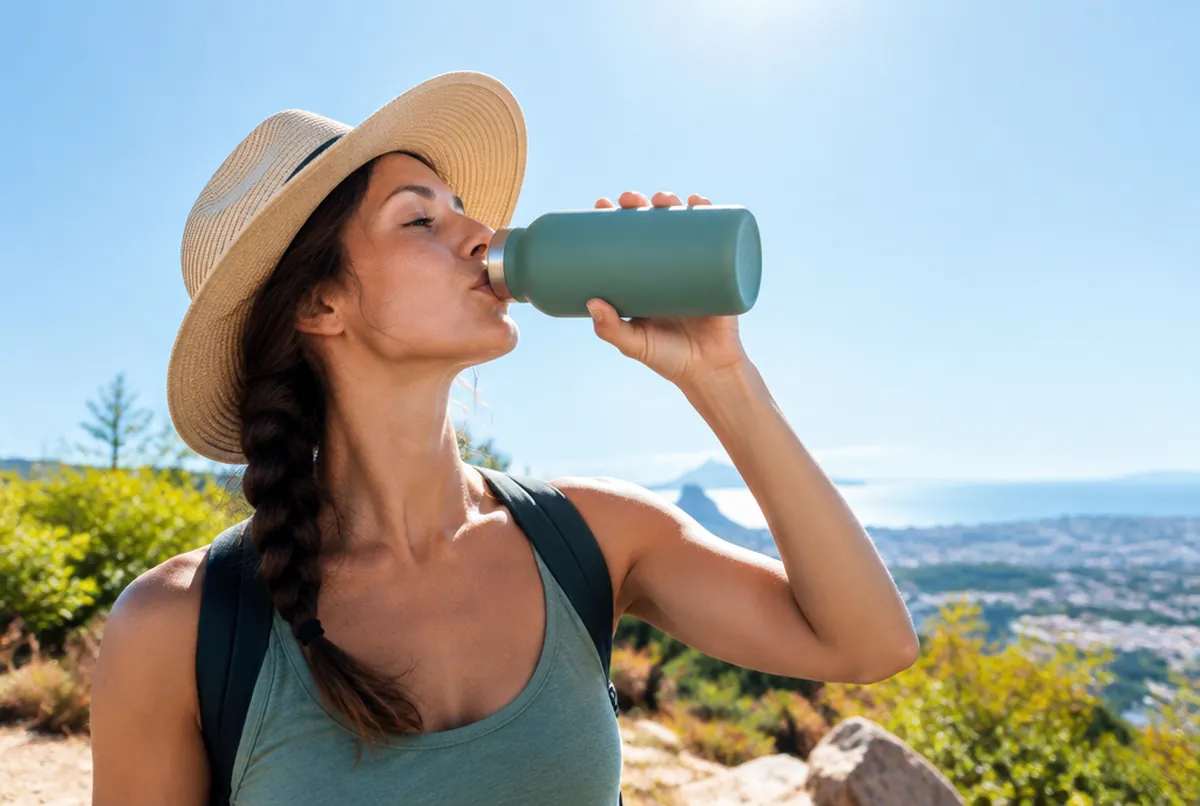
- Heat and heavy sweating. Prof. Pokotylo adds 17–34 fl oz (500–1,000 mL) a day. For work in the heat, NIOSH advises about 1 cup (8 fl oz) every 15–20 minutes rather than a lot at once. Very active people who are always in hot weather often need 200 fl oz (6 L) or more of total water, the National Academies note.
- Fever. The book adds about 3–10 fl oz (100–300 mL) for every 1.8 °F (1 °C) of fever.
- Vomiting or diarrhea. You lose minerals as well as water; water, broth or oral rehydration solutions can help replace fluids (Mayo Clinic).
- High altitude. It can increase dehydration, too (Mayo Clinic).
- Pregnancy and breastfeeding. Total water rises to about 101 fl oz (3.0 L) a day in pregnancy and 128 fl oz (3.8 L) while breastfeeding (National Academies). More in Who needs to drink more water.
Do coffee, tea and alcohol count?
For years, the advice was to drink an extra glass of water for every cup of coffee. The evidence has moved on:
- Only large doses of caffeine — at least 250–300 mg, about 2–3 cups of coffee at once — briefly raise urine output, mainly in people who haven’t had caffeine for days or weeks; regular drinkers develop a strong tolerance (Maughan & Griffin, 2003).
- In a trial with 50 habitual coffee drinkers, four 7-oz (200 mL) cups a day for three days hydrated just as well as the same amount of water: daily urine volume differed by less than 1 fl oz (19 mL) (Killer et al., 2014).
The National Academies agree: caffeinated drinks count toward your daily water. Coffee has limits of its own, though: the FDA cites 400 mg of caffeine a day — about two to three 12-oz cups of coffee — as an amount not generally linked to negative effects in healthy adults. And by Prof. Pokotylo’s rule, coffee shouldn’t crowd out plain water.
Alcohol is another story. In older men, moderate amounts of wine and spirits raised urine output for a few hours (Polhuis et al., 2017), and NIOSH warns that alcohol can cause dehydration. Don’t count it as water.
For athletes: weigh in before and after
To learn how much you lose in a workout, weigh yourself before and after, without sweaty clothes: each pound lost is roughly a pint (16 fl oz) of fluid — about 1 L per kg. The American College of Sports Medicine recommends this way of finding your sweat rate and suggests keeping losses during exercise under 2% of body weight.
Prof. Pokotylo’s routine for training:
- Before: no more than 13.5 fl oz (400 mL) in the 30 minutes before you start.
- During: replace about 80% of what you lose in small sips — around 1.7 fl oz (50 mL) every 15 minutes.
- After: drink about one and a half times the deficit that’s left.
Example: you lose 2.2 lb (1 kg) and drink 27 fl oz (800 mL) during the session. The deficit left is about 7 fl oz (200 mL), so afterward you drink about 10 fl oz (300 mL). For races or unusual conditions, the book recommends a plan from a sports nutritionist. More in Hydrogen water and sports.
Too little or too much: how to tell
Signs you need more
Mayo Clinic’s quick check: you’re probably drinking enough if you rarely feel thirsty and your urine is colorless or light yellow; dark urine and headaches suggest you need more. Prof. Pokotylo adds dry mouth, tiredness and sleepiness as early signs of a shortfall. More in Why drink water.
When more isn’t better
If you drink far more than your kidneys can clear, the sodium in your blood drops too low — hyponatremia, which can be life-threatening (Mayo Clinic). It’s rare in daily life but real in endurance sports: at the 2002 Boston Marathon, 13% of the 488 runners tested at the finish had it, and gaining weight during the race — a sign of drinking more than you sweat — was one of the strongest risk factors (Almond et al., 2005). For hard work in the heat, NIOSH sets a ceiling of 48 fl oz (1.5 quarts) an hour.
And some people need to drink less: those with conditions such as kidney failure or heart disease may need to limit fluids, the National Institute on Aging notes. If that’s you, ask your doctor for your number — it beats any formula here.
Easy ways to hit your number
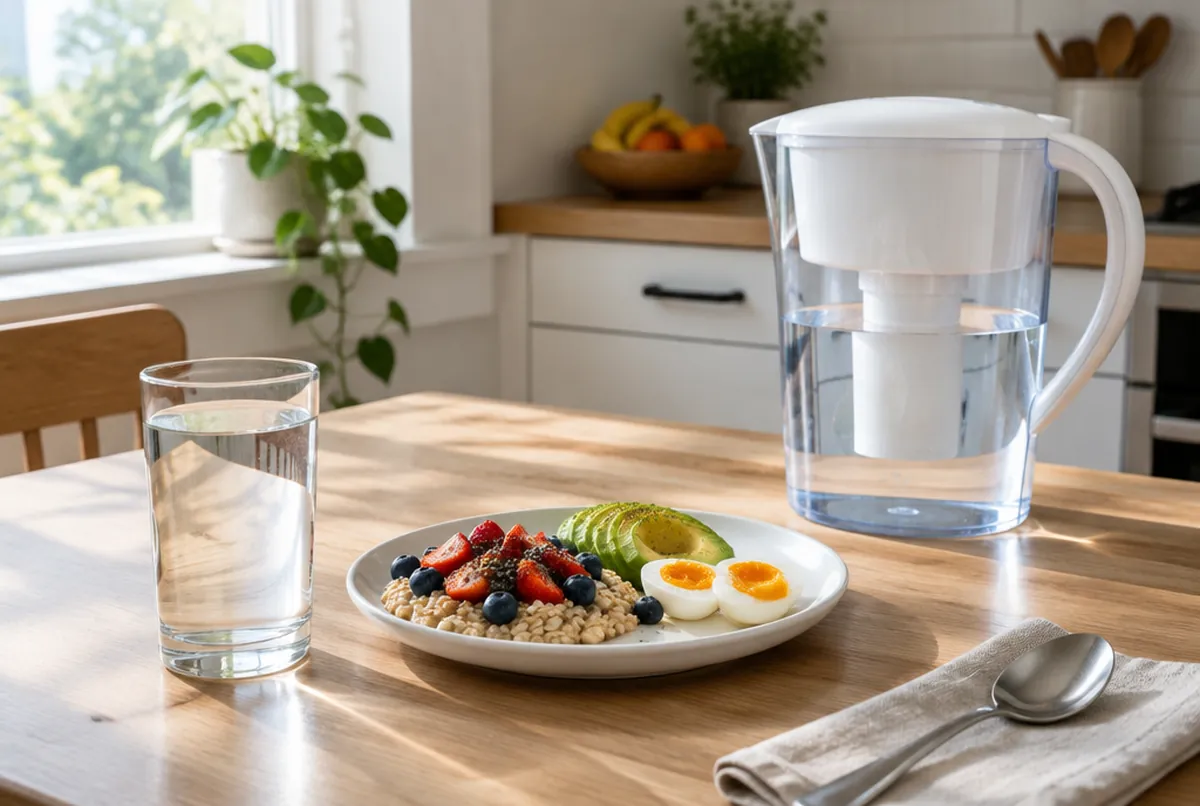
- Front-load your day. Prof. Pokotylo suggests 10–20 fl oz (300–600 mL) before breakfast, in three small servings, and about 80% of your water before 6 p.m. His full schedule is in How to drink hydrogen water.
- Have a glass before meals — 5–7 fl oz (150–200 mL) 30–40 minutes before each one, he recommends.
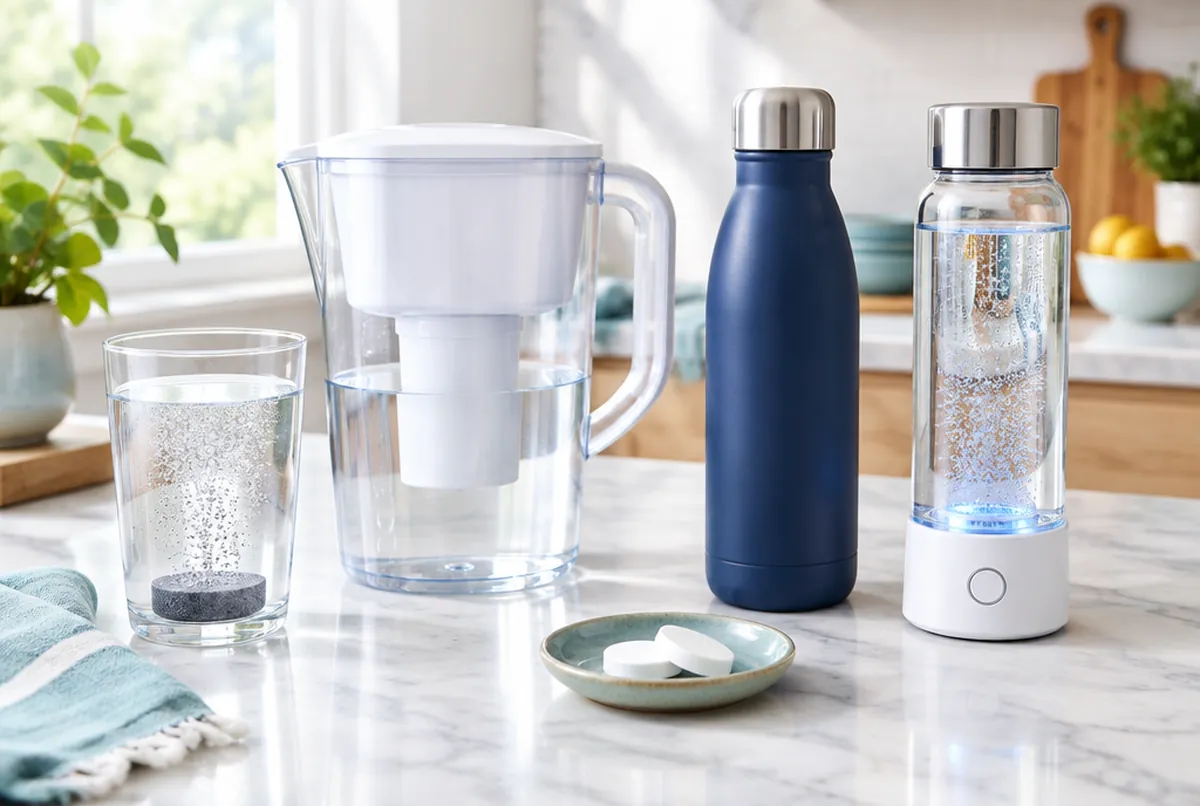
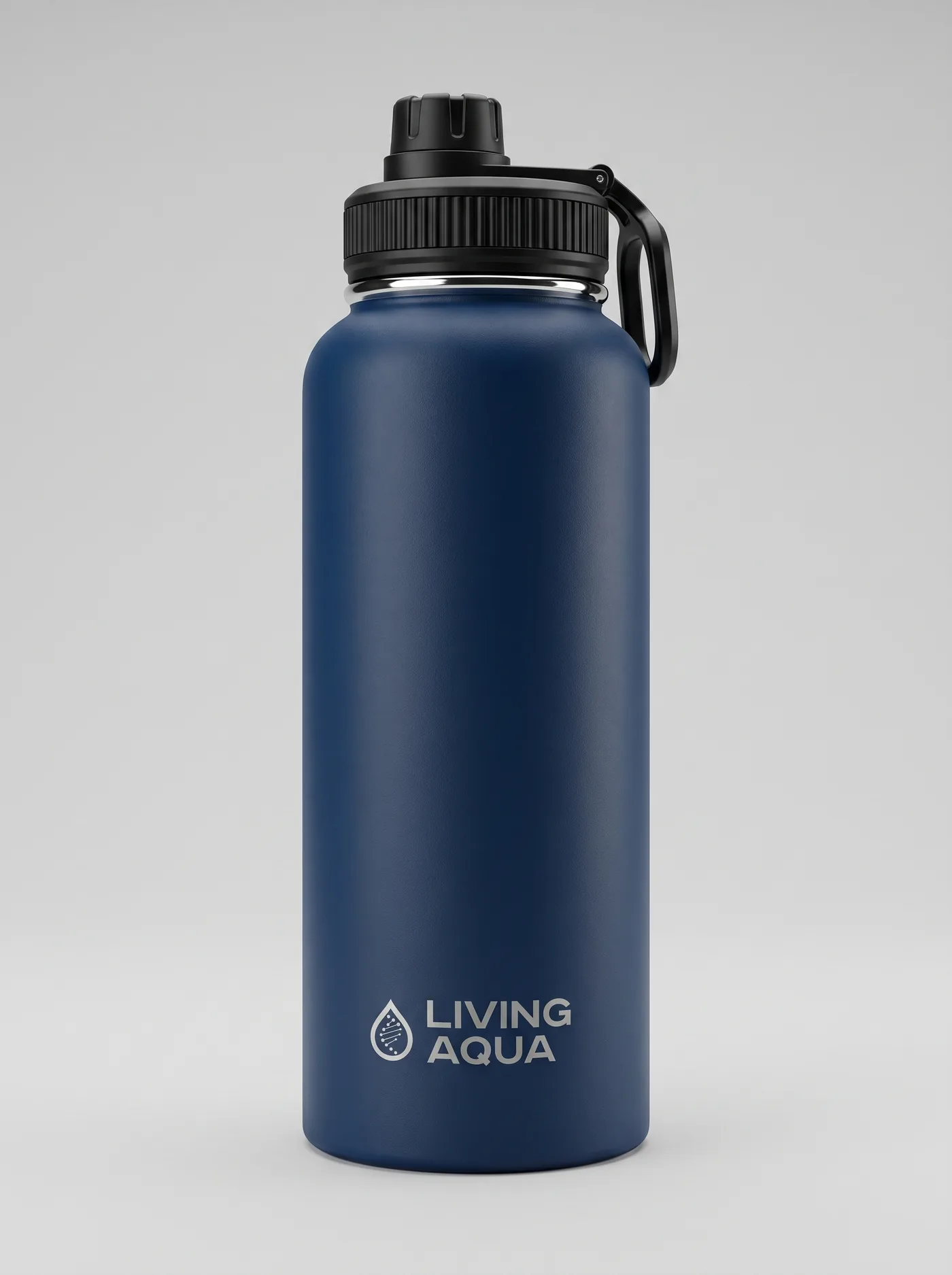
- Measure with a bottle. A 64 fl oz target is just two 32 oz bottles. The Living Aqua Insulated Bottle comes in 22 and 32 oz, is leak-proof and has a wide mouth.
- Keep water in sight at home. The Living Aqua Hydrogen-Rich Alkaline Water Pitcher holds 3.8 L (128 oz) and filters tap water in about 2 minutes, infusing it with hydrogen. Change the filter every 6–8 weeks or after 300–350 L (79–92 gal); spare filters are sold separately.
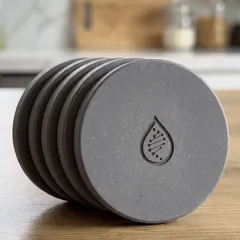
- Take hydrogen water with you. If your water is already safe to drink, drop a Living Aqua Hydrogen Water Disc into your bottle: it’s ready in 5 minutes, and in a closed bottle the water stays hydrogen-rich for up to 12 hours.
- Sip, don’t chug. Small servings through the day beat a big glass all at once.
Frequently asked questions
Is eight glasses of water a day enough?
Does coffee count toward my daily water?
Should I drink half my body weight in ounces?
Do I need more water when I’m pregnant or breastfeeding?
Key takeaways
- Total water isn’t glasses of water: about 125 fl oz (3.7 L) a day for men and 91 fl oz (2.7 L) for women, about 20% of it from food.
- Plain water, at least half: and no less than 51 fl oz (1.5 L) a day for an adult, by Prof. Pokotylo’s rule.
- Weight and activity set the rest: roughly 0.45–0.6 fl oz per pound (30–40 mL per kg), plus extra for heat, exercise, fever and illness.
- Coffee and tea count; alcohol doesn’t.
- More isn’t always better: spread water through the day, and with a heart or kidney condition, follow your doctor’s number.
For your own number, use the calculator at the end of this article. Start tomorrow with a glass before breakfast, and when you want your water filtered and hydrogen-rich, choose your product.
This is the fourth article in the “Five rules of drinking water” series, based on the book by Prof. Oleh Pokotylo. The rules so far: why drink water, who needs more of it and when to drink it, covered in How to drink hydrogen water. Next, the final rule: what kind of water to drink.
This article is for general information only and isn’t medical advice. If you have a health condition, ask your doctor how much and what kind of water is right for you.
Sources
- Pokotylo O. 5 Fundamental Postulations of Drinking Water. Ternopil; 2021.
- Institute of Medicine. “Water.” In: Dietary Reference Intakes for Water, Potassium, Sodium, Chloride, and Sulfate. Washington, DC: National Academies Press; 2005. nationalacademies.org
- National Academies (Institute of Medicine). “Report Sets Dietary Intake Levels for Water, Salt, and Potassium To Maintain Health and Reduce Chronic Disease Risk.” News release; 2004. nationalacademies.org
- Mayo Clinic Staff. “Water: How much should you drink every day?” Mayo Clinic; 2026. mayoclinic.org
- Valtin H. “Drink at least eight glasses of water a day.” Really? Is there scientific evidence for “8 × 8”? American Journal of Physiology — Regulatory, Integrative and Comparative Physiology. 2002;283(5):R993–R1004. PubMed 12376390
- U.S. Geological Survey, Water Science School. “The Water in You: Water and the Human Body.” usgs.gov
- Centers for Disease Control and Prevention. “About Water and Healthier Drinks.” 2026. cdc.gov
- National Institute for Occupational Safety and Health. Heat Stress: Hydration. DHHS (NIOSH) Publication No. 2017-126. cdc.gov
- Maughan RJ, Griffin J. Caffeine ingestion and fluid balance: a review. Journal of Human Nutrition and Dietetics. 2003;16(6):411–420. PubMed 19774754
- Killer SC, Blannin AK, Jeukendrup AE. No evidence of dehydration with moderate daily coffee intake: a counterbalanced cross-over study in a free-living population. PLoS One. 2014;9(1):e84154. PubMed 24416202
- U.S. Food and Drug Administration. “Spilling the Beans: How Much Caffeine Is Too Much?” fda.gov
- Polhuis KCMM, Wijnen AHC, Sierksma A, Calame W, Tieland M. The diuretic action of weak and strong alcoholic beverages in elderly men: a randomized diet-controlled crossover trial. Nutrients. 2017;9(7):660. PubMed 28657601
- American College of Sports Medicine; Sawka MN, Burke LM, Eichner ER, et al. American College of Sports Medicine position stand. Exercise and fluid replacement. Medicine & Science in Sports & Exercise. 2007;39(2):377–390. PubMed 17277604
- Almond CS, Shin AY, Fortescue EB, et al. Hyponatremia among runners in the Boston Marathon. New England Journal of Medicine. 2005;352(15):1550–1556. PubMed 15829535
- National Institute on Aging. “15 Tips To Keep Your Bladder Healthy.” nia.nih.gov
- American College of Obstetricians and Gynecologists. “How much water should I drink during pregnancy?” Ask ACOG; 2020. acog.org
Calculate your daily water target
Two numbers: all the fluid you need in a day, and how much of it should be plain water
Kids need different amounts — see Who needs to drink more water
Counted as fluid (7 fl oz a cup)
A 5-oz glass of wine, 12-oz beer or 1.5-oz shot — +1.7 fl oz of water
How we calculated this
- Base need — weight, sex, age84 fl oz
- Total fluids a day84 fl oz
- Water from food — vegetables, fruit, soups (20%)−16 fl oz
- Plain water left68 fl oz
With heart failure, kidney disease or cirrhosis, daily fluids are usually limited to 34–51 fl oz (1.0–1.5 L) — and your doctor should set the exact number, because it depends on swelling, blood sodium and your medications.
Don’t go by general guidelines — they’re for healthy kidneys and a healthy heart.
This is a guide, not medical advice. If you have kidney or heart disease, your doctor sets your number.
A Ukrainian manufacturer of hydrogen water devices.
Found your routine? We’ve got the device
Pitchers, discs and insulated bottles of our own making — no electricity needed, backed by lab test reports.
Read next